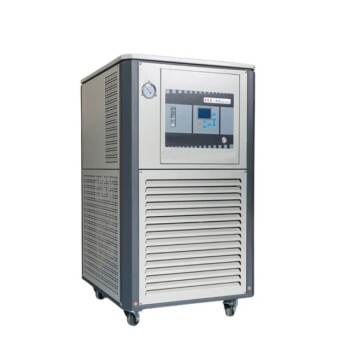
High-pressure hydrothermal reactors create a transformative subcritical or supercritical environment distinct from standard atmospheric synthesis. By sealing the reaction mixture within a high-pressure vessel, the system superheats the liquid medium, significantly enhancing precursor solubility and reactivity. This promotes uniform precipitation and regular crystal growth, allowing for the precise incorporation of molybdate ions into the hydroxyapatite lattice while generating a highly defined mesoporous structure.
The reactor's ability to maintain a sealed, high-pressure environment fundamentally alters the solvent's properties, enabling the reproducible synthesis of mesoporous structures with tunable pore sizes. This process is essential for effectively integrating molybdate ions and maximizing the specific surface area required for high-performance heterogeneous catalysis.
The Mechanics of the Hydrothermal Environment
Superheated Liquid as a Reaction Medium
The core mechanism relies on a sealed vessel that prevents solvents from boiling off as temperatures rise. This creates a superheated liquid environment, often approaching a near-supercritical or supercritical state.
In this state, the liquid medium possesses unique properties that significantly enhance the solubility of raw materials. This heightened solubility ensures that reactants are more uniformly dispersed, facilitating consistent chemical interactions that are difficult to achieve under ambient conditions.
Dissolution and Recrystallization
The high-pressure environment drives a continuous cycle of dissolution and recrystallization. As precursors dissolve more effectively, they re-precipitate in a highly controlled manner.
This mechanism promotes "regular crystal growth," meaning the hydroxyapatite crystals form with high structural integrity and uniformity. It prevents the rapid, chaotic precipitation that often leads to amorphous or low-quality powders in open systems.
Achieving Structural and Chemical Precision
Facilitating Molybdate Substitution
Synthesizing substituted hydroxyapatite requires forcing foreign ions (in this case, molybdate anions) into the crystal lattice. The reactor's elevated pressure and temperature provide the necessary thermodynamic energy for this ion exchange.
By precisely regulating these conditions, you can control the amount of molybdate doping. This ensures the ions are effectively integrated into the structure rather than merely sitting on the surface, which is critical for the material's final catalytic performance.
Tuning the Mesoporous Architecture
The reactor allows for the precise adjustment of process parameters, specifically temperature and pressure duration. These adjustments directly influence the pore size distribution and the specific surface area of the final powder.
Control over these physical characteristics is vital for catalytic applications. A well-defined mesoporous structure maximizes the available surface area, thereby enhancing the material's adsorption properties and heterogeneous catalytic activity.
Understanding the Trade-offs
Equipment Complexity and Cost
While hydrothermal synthesis offers superior product quality, it requires specialized, robust equipment capable of withstanding high internal pressures. This increases both the initial capital investment and the safety protocols required compared to simple precipitation methods.
Sensitivity to Parameter Fluctuations
The process is highly sensitive to changes in temperature and pressure. Small deviations in the reactor's preset conditions can significantly alter the phase composition or pore structure. Achieving high reproducibility requires precise instrumentation and rigorous process control.
Making the Right Choice for Your Goal
If your primary focus is Maximizing Catalytic Performance: Prioritize the optimization of pressure and temperature to maximize specific surface area, as this directly correlates to the material's adsorption capacity and reactivity.
If your primary focus is Material Consistency: Focus on the reproducibility capabilities of the reactor; ensuring exact repetition of the heating and cooling cycles is critical for maintaining identical phase compositions across batches.
By leveraging the high-pressure hydrothermal environment, you move beyond simple mixing to engineer the fundamental crystalline architecture of your catalyst.
Summary Table:
| Feature | Hydrothermal Synthesis Benefit | Impact on Catalyst |
|---|---|---|
| Superheated Medium | Enhanced precursor solubility | Uniform chemical interaction & purity |
| High Pressure | Forced ion exchange/incorporation | Effective molybdate lattice substitution |
| Recrystallization | Controlled, regular crystal growth | High structural integrity & uniformity |
| Parameter Tuning | Precise temperature/pressure control | Tunable pore size & high surface area |
Elevate Your Material Synthesis with KINTEK Precision
Unlock the full potential of your research with KINTEK’s advanced high-temperature high-pressure reactors and autoclaves. Whether you are engineering complex mesoporous catalysts or developing next-generation battery materials, our robust laboratory equipment is designed to withstand extreme conditions while providing the precise control needed for reproducible results.
Why choose KINTEK?
- Comprehensive Portfolio: From specialized hydrothermal reactors to muffle furnaces and hydraulic presses.
- Expert Solutions: Tailored equipment for crushing, milling, and high-performance material synthesis.
- Industry Reliability: Trusted by laboratories worldwide for consistency and safety.
Ready to optimize your catalytic performance? Contact KINTEK today to find the perfect reactor for your application!
References
- Avgustina Danailova, Velichka Strijkova. Characterization and degradation of natural polysaccharide multilayer films. DOI: 10.21175/rad.abstr.book.2023.3.2
This article is also based on technical information from Kintek Solution Knowledge Base .
Related Products
- Customizable Laboratory High Temperature High Pressure Reactors for Diverse Scientific Applications
- High Pressure Laboratory Autoclave Reactor for Hydrothermal Synthesis
- Customizable High Pressure Reactors for Advanced Scientific and Industrial Applications
- Stainless High Pressure Autoclave Reactor Laboratory Pressure Reactor
- Mini SS High Pressure Autoclave Reactor for Laboratory Use
People Also Ask
- How do high-pressure and high-temperature reactors ensure the effective treatment of lignocellulosic wastewater in WAO?
- What equipment is required for high-pressure high-temperature reactions? Master Extreme Chemistry Safely
- How do you control high pressure in a reactor? A Guide to Safe & Stable Operation
- Why is argon better than nitrogen for inert atmosphere? Ensure Absolute Reactivity & Stability
- How does initial oxygen pressure affect the wet oxidation of pharmaceutical sludge? Master Your Oxidation Depth