Knowledge How does a laboratory shaker or extractor function during 133Ba adsorption? Optimize Your Kinetic Evaluation
Author avatar

Tech Team · Kintek Solution

Updated 11 hours ago

How does a laboratory shaker or extractor function during 133Ba adsorption? Optimize Your Kinetic Evaluation


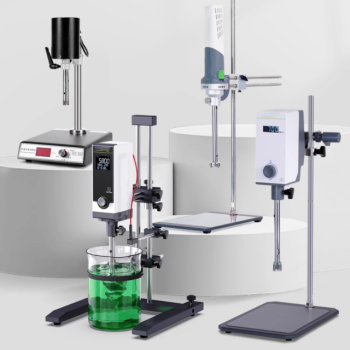
A laboratory shaker functions as the primary kinetic driver in barium ion (133Ba) adsorption experiments by applying a constant oscillation frequency to the reaction vessels. This mechanical action maintains the composite adsorbent particles in a continuously suspended state, preventing sedimentation and ensuring uniform interaction between the radioactive barium solution and the solid adsorbent surfaces.

The shaker does more than simply mix the solution; it significantly reduces liquid-film mass transfer resistance to accelerate kinetic equilibrium. By creating a controlled environment that mimics dynamic water treatment processes, it ensures that capacity evaluations are both accurate and representative of real-world performance.

The Mechanics of Suspension and Equilibrium

Maintaining a Suspended State

For accurate adsorption data, the adsorbent cannot be allowed to settle at the bottom of the container.

The shaker applies constant oscillation to keep composite particles effectively floating within the radioactive solution. This maximizes the active surface area available for capturing barium ions.

Reducing Mass Transfer Resistance

Surrounding every adsorbent particle is a stagnant layer of liquid known as the "liquid film."

This film acts as a barrier, slowing down the movement of 133Ba ions from the bulk solution to the particle's surface. The shaker’s oscillation disrupts this layer, significantly reducing resistance and allowing ions to penetrate the adsorbent faster.

Accelerating Kinetic Equilibrium

Adsorption experiments measure performance over time until the system reaches a steady state.

By optimizing contact and reducing resistance, the shaker ensures the system reaches this kinetic equilibrium quickly. This prevents artificially long experiment times and ensures data points represent the true maximum capacity of the material.

Simulating Real-World Conditions

Mimicking Dynamic Processes

Static lab tests rarely predict how materials behave in actual water treatment facilities where fluids are constantly moving.

The extractor creates a "controlled mixing environment" that simulates these dynamic working processes. This bridge between the lab and the field is essential for validating the material's practical utility.

Ensuring Data Reliability

Consistency is the bedrock of scientific evaluation.

By applying a fixed oscillation frequency, the shaker creates a reproducible environment. This eliminates variables caused by inconsistent manual mixing, ensuring that any changes in adsorption performance are due to the material itself, not the testing method.

Understanding the Trade-offs

The Importance of Frequency Control

While oscillation is necessary, the frequency must be constant and precise.

If the shaking speed fluctuates, the liquid-film resistance changes mid-experiment, rendering the kinetic data unreliable. The "constant" nature of the oscillation is just as critical as the motion itself.

Potential for Physical Stress

The goal is suspension, not destruction.

While the primary reference highlights the benefits of mixing, it is implied that the oscillation must be balanced. It must be vigorous enough to suspend particles but controlled enough to maintain the integrity of the "composite adsorbent particles" without mechanically degrading them.

Making the Right Choice for Your Goal

To get the most out of your adsorption performance evaluation, consider your specific experimental objectives:

  • If your primary focus is Speed of Acquisition: Ensure the oscillation frequency is high enough to minimize film resistance, allowing the system to reach equilibrium as fast as possible.
  • If your primary focus is Real-World Simulation: Select a mixing intensity that closely mirrors the hydrodynamic conditions expected in the target water treatment application.

By maintaining constant oscillation and particle suspension, you transform a simple mixture into a scientifically valid model of dynamic adsorption.

Summary Table:

Function Mechanism Benefit to Experiment
Particle Suspension Constant oscillation frequency Maximizes active surface area and prevents sedimentation
Film Disruption Reduction of liquid-film resistance Accelerates 133Ba ion movement to adsorbent surfaces
Kinetic Control Achievement of steady-state equilibrium Ensures fast, reliable data points for maximum capacity
Process Simulation Controlled mixing environment Mimics real-world dynamic water treatment conditions

Elevate Your Adsorption Research with KINTEK Precision

Consistency is the backbone of reliable scientific data. KINTEK specializes in high-performance laboratory equipment designed to meet the rigorous demands of radioactive ion research and material science.

Whether you are performing barium ion adsorption or complex material synthesis, our comprehensive range of laboratory shakers, homogenizers, and cooling solutions—alongside our specialized high-temperature furnaces, crushing systems, and hydraulic presses—provides the controlled environment your experiments deserve.

From advanced battery research tools to essential PTFE and ceramic consumables, KINTEK is your partner in achieving precision and reproducibility. Contact us today to optimize your laboratory workflow!

References

  1. Vipul Vilas Kusumkar, Martin Daňo. Sorptive Removal of 133Ba from Aqueous Solution Using a Novel Cellulose Hydroxyapatite Composite Derived from Cigarette Waste. DOI: 10.1007/s11270-024-07026-3

This article is also based on technical information from Kintek Solution Knowledge Base .

Related Products

People Also Ask

Related Products

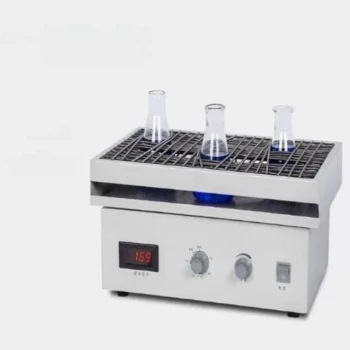
Laboratory Multifunctional Small Speed-Adjustable Horizontal Mechanical Shaker for Lab

Laboratory Multifunctional Small Speed-Adjustable Horizontal Mechanical Shaker for Lab

The laboratory multifunctional speed-regulating oscillator is a constant-speed experimental equipment specially developed for modern bioengineering production units.

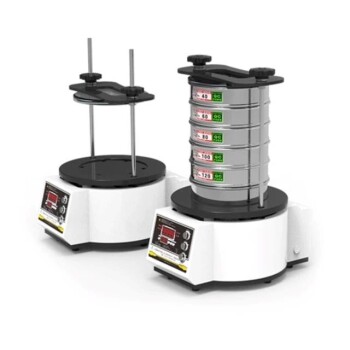
Vibratory Sieve Shaker Machine Dry Three-Dimensional Vibrating Sieve

Vibratory Sieve Shaker Machine Dry Three-Dimensional Vibrating Sieve

The KT-V200 product focuses on solving common sieving tasks in the laboratory. It is suitable for sieving 20g-3kg dry samples.

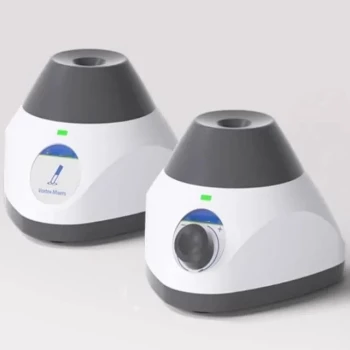
Laboratory Disc Rotary Mixer for Efficient Sample Mixing and Homogenization

Laboratory Disc Rotary Mixer for Efficient Sample Mixing and Homogenization

Efficient Laboratory Disc Rotary Mixer for Precise Sample Mixing, Versatile for Various Applications, DC Motor and Microcomputer Control, Adjustable Speed and Angle.

High Pressure Laboratory Autoclave Reactor for Hydrothermal Synthesis

High Pressure Laboratory Autoclave Reactor for Hydrothermal Synthesis

Discover the applications of Hydrothermal Synthesis Reactor - a small, corrosion-resistant reactor for chemical labs. Achieve rapid digestion of insoluble substances in a safe and reliable way. Learn more now.

Proton Exchange Membrane for Batteries Lab Applications

Proton Exchange Membrane for Batteries Lab Applications

Thin proton exchange membrane with low resistivity; high proton conductivity; low hydrogen permeation current density; long life; suitable for electrolyte separators in hydrogen fuel cells and electrochemical sensors.

Desktop Fast High Pressure Laboratory Autoclave Sterilizer 16L 24L for Lab Use

Desktop Fast High Pressure Laboratory Autoclave Sterilizer 16L 24L for Lab Use

The desktop fast steam sterilizer is a compact and reliable device used for rapid sterilization of medical, pharmaceutical, and research items.

Laboratory High Pressure Horizontal Autoclave Steam Sterilizer for Lab Use

Laboratory High Pressure Horizontal Autoclave Steam Sterilizer for Lab Use

The horizontal autoclave steam sterilizer adopts the gravity displacement method to remove the cold air in the inner chamber, so that the inner steam and cold air content is less, and the sterilization is more reliable.

Customizable Laboratory High Temperature High Pressure Reactors for Diverse Scientific Applications

Customizable Laboratory High Temperature High Pressure Reactors for Diverse Scientific Applications

High-pressure lab reactor for precise hydrothermal synthesis. Durable SU304L/316L, PTFE liner, PID control. Customizable volume & materials. Contact us!

Stainless High Pressure Autoclave Reactor Laboratory Pressure Reactor

Stainless High Pressure Autoclave Reactor Laboratory Pressure Reactor

Discover the versatility of Stainless High Pressure Reactor - a safe and reliable solution for direct and indirect heating. Built with stainless steel, it can withstand high temperatures and pressures. Learn more now.

Double Layer Five-Port Water Bath Electrolytic Electrochemical Cell

Double Layer Five-Port Water Bath Electrolytic Electrochemical Cell

Experience optimal performance with our Water Bath Electrolytic Cell. Our double-layer, five-port design boasts corrosion resistance and longevity. Customizable to fit your specific needs. View specs now.

XRF & KBR plastic ring lab Powder Pellet Pressing Mold for FTIR

XRF & KBR plastic ring lab Powder Pellet Pressing Mold for FTIR

Get precise XRF samples with our plastic ring lab powder pellet pressing mold. Fast tableting speed and customizable sizes for perfect molding every time.

Microwave Plasma Chemical Vapor Deposition MPCVD Machine System Reactor for Lab and Diamond Growth

Microwave Plasma Chemical Vapor Deposition MPCVD Machine System Reactor for Lab and Diamond Growth

Get high-quality diamond films with our Bell-jar Resonator MPCVD machine designed for lab and diamond growth. Discover how Microwave Plasma Chemical Vapor Deposition works for growing diamonds using carbon gas and plasma.

915MHz MPCVD Diamond Machine Microwave Plasma Chemical Vapor Deposition System Reactor

915MHz MPCVD Diamond Machine Microwave Plasma Chemical Vapor Deposition System Reactor

915MHz MPCVD Diamond Machine and its multi-crystal effective growth, the maximum area can reach 8 inches, the maximum effective growth area of single crystal can reach 5 inches. This equipment is mainly used for the production of large-size polycrystalline diamond films, the growth of long single crystal diamonds, the low-temperature growth of high-quality graphene, and other materials that require energy provided by microwave plasma for growth.

Optical Water Bath Electrolytic Electrochemical Cell

Optical Water Bath Electrolytic Electrochemical Cell

Upgrade your electrolytic experiments with our Optical Water Bath. With controllable temperature and excellent corrosion resistance, it's customizable for your specific needs. Discover our complete specifications today.

Visual High-Pressure Reactor for In-Situ Observation

Visual High-Pressure Reactor for In-Situ Observation

The visual high-pressure reactor uses transparent sapphire or quartz glass, maintaining high strength and optical clarity under extreme conditions for real-time reaction observation.

Laboratory manual slicer

Laboratory manual slicer

Manual microtome is a high-precision cutting device designed for laboratories, industry and medical fields. It is suitable for the preparation of thin slices of various materials such as paraffin samples, biological tissues, battery materials, food, etc.

Desktop Fast Laboratory Autoclave Sterilizer 35L 50L 90L for Lab Use

Desktop Fast Laboratory Autoclave Sterilizer 35L 50L 90L for Lab Use

The desktop fast steam sterilizer is a compact and reliable device used for rapid sterilization of medical, pharmaceutical, and research items. It efficiently sterilizes surgical instruments, glassware, medicines, and resistant materials, making it suitable for various applications.

Custom PTFE Teflon Parts Manufacturer for PTFE Mesh F4 Sieve

Custom PTFE Teflon Parts Manufacturer for PTFE Mesh F4 Sieve

PTFE mesh sieve is a specialized test sieve designed for particle analysis in various industries, featuring a non-metallic mesh woven from PTFE filament. This synthetic mesh is ideal for applications where metal contamination is a concern . PTFE sieves are crucial for maintaining the integrity of samples in sensitive environments, ensuring accurate and reliable results in particle size distribution analysis.

Super Negative Oxygen Ion Generator Machine for Air Purification

Super Negative Oxygen Ion Generator Machine for Air Purification

The super negative oxygen ion generator emits ions to purify indoor air, control viruses, and reduce PM2.5 levels below 10ug/m3. It protects against harmful aerosols entering the bloodstream through breathing.

Electrolytic Electrochemical Cell for Coating Evaluation

Electrolytic Electrochemical Cell for Coating Evaluation

Looking for corrosion-resistant coating evaluation electrolytic cells for electrochemical experiments? Our cells boast complete specifications, good sealing, high-quality materials, safety, and durability. Plus, they're easily customizable to meet your needs.


Leave Your Message