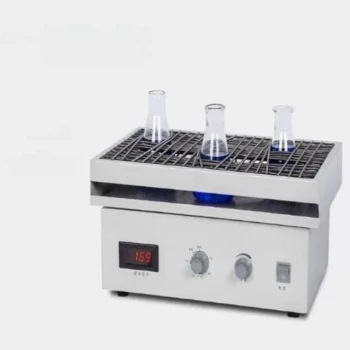
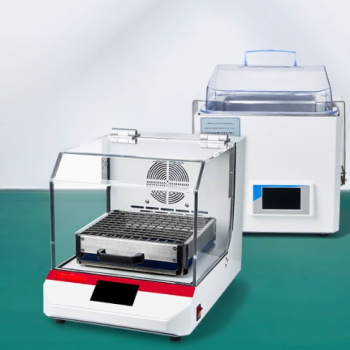
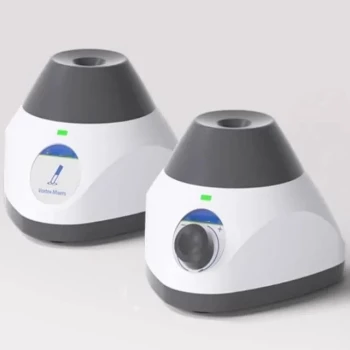
Laboratory shakers and centrifuges serve as the mechanical drivers for chemical release and sample purification. In phosphorus extraction experiments, the shaker provides the kinetic energy required for extraction agents to fully react with solid samples, while the centrifuge ensures the physical isolation of the resulting liquid for analysis.
By combining controlled agitation with high-speed separation, these instruments simulate the natural dissolution of phosphorus by plant roots and prepare the sample for precise quantification.
The Role of the Laboratory Shaker
Creating Controlled Kinetic Conditions
The primary function of the shaker is to establish specific kinetic conditions that drive the chemical reaction.
Simply adding a solvent to a sample is often insufficient for maximum recovery. The shaker ensures the reaction between the ash sample and extraction agents—such as citric acid or calcium lactate solutions—is complete.
Ensuring Thorough Contact
To extract phosphorus effectively, the solvent must access the surface area of the solid material.
Continuous mechanical agitation prevents the settling of solids. This maintains thorough contact between the ash particles and the liquid agents, maximizing the extraction efficiency.
Simulating Natural Processes
Beyond basic mixing, the shaker plays a biomimetic role in these experiments.
The agitation effectively simulates the environmental process where phosphorus is dissolved from ash via plant root exudates. This allows researchers to model how bio-available the phosphorus would be in a real-world agricultural setting.
The Role of the High-Speed Centrifuge
Efficient Solid-Liquid Separation
Once the extraction reaction is finished, the sample exists as a slurry of liquid and residual solids.
A high-speed centrifuge is employed to force these components apart. This step achieves efficient solid-liquid separation that gravity alone cannot accomplish in a reasonable timeframe.
Yielding a Clear Extract
The ultimate goal of the separation phase is to produce a supernatant free of particulate matter.
The centrifuge yields a clear extract, which is critical for the next stage of the experiment. Any remaining turbidity could interfere with the optical or chemical accuracy of the subsequent phosphorus content measurement.
Common Pitfalls to Avoid
Inadequate Agitation Dynamics
If the shaker speed is too low or the duration too short, the equilibrium of the reaction may not be reached.
This leads to an underestimation of the phosphorus content, as the solvent fails to interact with the entire sample mass.
Poor Separation Quality
Failing to centrifuge at a high enough speed or for a sufficient duration results in a cloudy extract.
Suspended micro-particles can scatter light or react unpredictably during analysis. This introduces noise to your data, rendering high-precision measurements unreliable.
Optimizing Your Extraction Protocol
To ensure your experimental results are both accurate and reproducible, consider the following based on your specific objectives:
- If your primary focus is biological accuracy: Calibrate your shaker's intensity to closely mimic the kinetic diffusion rates found in the soil-root interface you are studying.
- If your primary focus is analytical precision: Prioritize high-speed centrifugation to ensure the absolute removal of all suspended solids before introducing the sample to measurement instruments.
Success in phosphorus extraction relies on the balance between rigorous chemical interaction and absolute physical separation.
Summary Table:
| Equipment | Primary Function | Role in Phosphorus Extraction |
|---|---|---|
| Laboratory Shaker | Kinetic Agitation | Ensures thorough contact between ash samples and extraction agents; simulates natural dissolution. |
| High-Speed Centrifuge | Solid-Liquid Separation | Separates residual solids from the liquid slurry to produce a clear, particulate-free supernatant. |
| Combined Workflow | Sample Preparation | Drives the chemical reaction to equilibrium and prepares the extract for high-precision quantification. |
Elevate Your Phosphorus Research with KINTEK Precision
Achieving accurate and reproducible phosphorus quantification requires the perfect balance of kinetic agitation and high-speed separation. KINTEK specializes in high-performance laboratory equipment designed to meet the rigorous demands of agricultural and chemical research.
Our extensive portfolio includes:
- Advanced Shakers & Homogenizers: Achieve perfect reaction equilibrium and simulate complex environmental processes.
- Precision Centrifuges & Cooling Solutions: Ensure absolute sample clarity for noise-free analytical data.
- High-Temperature Systems: Muffle and tube furnaces for ash preparation, alongside high-pressure reactors and autoclaves.
- Essential Consumables: Durable ceramics, crucibles, and PTFE products for contamination-free processing.
Whether you are optimizing extraction protocols or scaling up your lab’s throughput, KINTEK provides the reliable tools and expertise you need. Contact us today to find the ideal solution for your laboratory!
References
- Zdzisław Adamczyk, Barbara Białecka. Phosphorus-Rich Ash from Poultry Manure Combustion in a Fluidized Bed Reactor. DOI: 10.3390/min11070785
This article is also based on technical information from Kintek Solution Knowledge Base .
Related Products
- Laboratory Multifunctional Small Speed-Adjustable Horizontal Mechanical Shaker for Lab
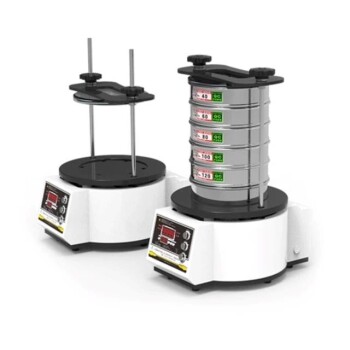
- Laboratory Vibratory Sieve Shaker Machine for Dry and Wet Three-Dimensional Sieving
- Laboratory Oscillating Orbital Shaker
- Shaking Incubators for Diverse Laboratory Applications
- Laboratory Vibratory Sieve Shaker Machine Slap Vibrating Sieve
People Also Ask
- How do static culture and shaking culture affect the morphology of BC? Optimize Lab Shaker Results
- What is the role of a laboratory shaker in silane sol preparation? Master Uniform Aramid Fabric Coating
- Why is a laboratory shaker required for continuous 24-hour catalyst treatment? Achieve Deep Uniform Impregnation
- What is the function of a laboratory shaker in evaluating Fe-C@C nanoparticles? Optimize Methylene Blue Adsorption
- How do laboratory shakers or stirrers influence the efficiency of hydrogen production during dark fermentation?