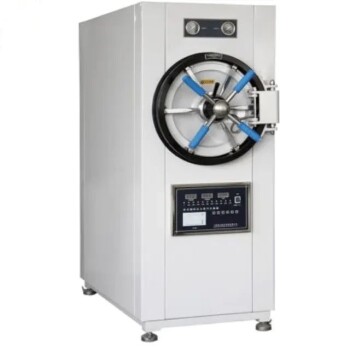
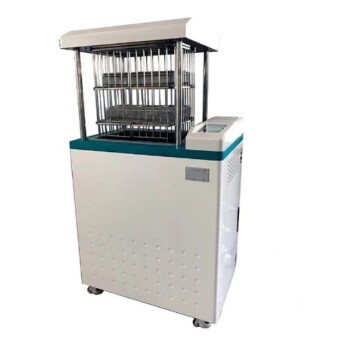
A slow strain rate testing (SSRT) system integrated with an autoclave functions as a comprehensive simulation environment that subjects materials to mechanical stress while simultaneously exposing them to supercritical water. This integration facilitates research by coupling controlled tensile testing with extreme high-temperature and high-pressure conditions to replicate aggressive service environments.
Core Insight: The unique value of this system lies in its ability to simulate the synergistic effect of mechanical load and environmental corrosion. By applying stress slowly in a supercritical environment, researchers can identify failure mechanisms, such as intergranular stress corrosion cracking, that would not occur under mechanical stress alone.
The Necessity of Coupled Conditions
To understand material performance in advanced energy systems, one cannot test stress and environment in isolation. The integrated system bridges this gap by merging physical simulation with mechanical testing.
Creating the Supercritical Environment
The autoclave serves as the containment vessel responsible for establishing the physical environment. It is engineered to withstand and maintain extreme parameters, such as temperatures exceeding 550 K and pressures above 6 MPa.
This creates a stable environment necessary for maintaining supercritical water or simulating pressurized water reactor conditions.
Chemical Accuracy and Immersion
Beyond temperature and pressure, the autoclave allows for precise control over water chemistry. It contains specific concentrations of corrosive elements like boron, lithium, and zinc.
This facilitates long-term static or dynamic immersion, allowing researchers to observe the real-time growth and evolution of oxide films on the material surface.
The Role of Controlled Strain
While the autoclave maintains the environment, the SSRT system applies tensile stress to the specimen. Crucially, this stress is applied at a slow, controlled rate.
A slow rate is vital because it gives the corrosive environment time to interact with the straining metal, specifically attacking grain boundaries as the material deforms.
Investigating Failure Mechanisms
The primary research application for this integrated system is the identification of intergranular stress corrosion cracking (IGSCC).
Targeting Nickel-Based Alloys
Research heavily focuses on nickel-based alloys, which are often used in these extreme environments. The system allows scientists to pinpoint the critical factors that lead to cracking in these specific materials.
Decoupling Variables
By controlling the strain rate and the environmental parameters independently, researchers can isolate specific variables. They can determine if a failure is driven primarily by the mechanical load or exacerbated by the supercritical water chemistry.
Understanding the Trade-offs
While this integrated system provides high-fidelity data, it introduces specific complexities regarding experimental duration and control.
The Constraint of Time
The nature of "slow strain rate" testing inherently requires significant time investments. Because the strain must be applied slowly to allow environmental interactions (like SCC) to manifest, these tests cannot be rushed without compromising the validity of the data.
Complexity of Control
Simulating a pressurized water reactor environment requires maintaining a delicate balance of chemical concentrations (boron, lithium, zinc) alongside extreme physical conditions. Any fluctuation in the autoclave's stability can alter the oxide film growth, potentially skewing the results regarding the material's corrosion resistance.
Making the Right Choice for Your Goal
When designing an experiment involving supercritical water, the configuration of your test depends on your specific research objectives.
- If your primary focus is oxide film characterization: Prioritize the autoclave's ability to maintain stable water chemistry and pressure for long-term static immersion, independent of mechanical stress.
- If your primary focus is predicting structural failure: You must utilize the full SSRT integration to apply slow tensile loading, as static immersion alone will not reveal susceptibility to stress corrosion cracking.
Ultimately, this integrated system is the only reliable method to validate how nickel-based alloys will survive the dual threat of mechanical tension and supercritical corrosion.
Summary Table:
| Feature | Function in Integrated SSRT-Autoclave System | Research Benefit |
|---|---|---|
| Autoclave Vessel | Maintains supercritical water (T > 550K, P > 6MPa) | Replicates extreme service environments |
| Chemical Control | Regulates boron, lithium, and zinc concentrations | Studies oxide film growth & chemical corrosion |
| Slow Strain Rate | Applies controlled tensile stress at low speeds | Allows time for environmental-mechanical synergy |
| Failure Mapping | Detects Intergranular Stress Corrosion Cracking (IGSCC) | Identifies critical failure points in alloys |
Advance Your Material Science with KINTEK Precision
Ensure the integrity of your materials in extreme environments with KINTEK’s advanced laboratory solutions. Whether you are researching nickel-based alloys or simulating supercritical water reactors, our specialized high-temperature high-pressure reactors and autoclaves provide the stability and control your data demands.
From high-performance crushing and milling systems to precision hydraulic presses and electrolytic cells, KINTEK empowers researchers with a comprehensive range of equipment and consumables tailored for energy and battery research.
Ready to validate your materials against the dual threats of tension and corrosion?
Contact KINTEK Experts Today to discover how our tailored equipment can enhance your research accuracy and lab efficiency.
References
- Yugo Ashida, Katsuo Sugahara. An Industrial Perspective on Environmentally Assisted Cracking of Some Commercially Used Carbon Steels and Corrosion-Resistant Alloys. DOI: 10.1007/s11837-017-2403-x
This article is also based on technical information from Kintek Solution Knowledge Base .
Related Products
- Laboratory Horizontal Autoclave Steam Sterilizer Lab Microcomputer Sterilizer
- Portable Digital Display Automatic Laboratory Sterilizer Lab Autoclave for Sterilization Pressure
- Desktop Fast Laboratory Autoclave Sterilizer 20L 24L for Lab Use
- Portable High Pressure Laboratory Autoclave Steam Sterilizer for Lab Use
- Desktop Fast Laboratory Autoclave Sterilizer 35L 50L 90L for Lab Use
People Also Ask
- What precautions should be taken during autoclave in laboratory? A Complete Safety Guide to Prevent Burns and Explosions
- What extreme conditions does a laboratory autoclave simulate? Testing Wear Resistance of Nuclear Fuel Cladding
- What role does a laboratory autoclave play in HEA corrosion research? Key to Validating Advanced Reactor Materials
- Why is a laboratory autoclave necessary for Postgate Medium B (PMB)? Ensure Pure SRB Cultures & Accurate MIC Research
- What is the importance of using a laboratory autoclave in ZSM-5 synthesis? Achieve Perfect Zeolite Crystallization