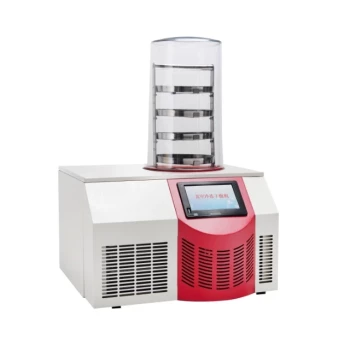
A vacuum drying oven is the critical final processing step to transition LiNi0.5Mn1.5O4 (LNMO) from a wet slurry into a functional solid electrode.
Operating at approximately 100 °C, the oven removes the organic solvent N-Methyl-2-pyrrolidone (NMP) and residual moisture from the slurry coated on aluminum foil. By combining heat with a vacuum environment, this process facilitates rapid evaporation while simultaneously preventing the oxidation of the electrode materials, ensuring a dense, stable active layer.
Core Takeaway: The vacuum drying oven solves the conflict between needing high heat for drying and needing to protect materials from heat-induced oxidation. It creates a low-pressure environment that accelerates solvent removal at safer temperatures, directly safeguarding the battery’s future cycling stability.
The Mechanism of Solvent Removal
Lowering the Boiling Point
The primary function of the vacuum environment is to lower the boiling point of solvents. N-Methyl-2-pyrrolidone (NMP), the standard solvent used in LNMO slurry, has a high boiling point at atmospheric pressure.
Under vacuum, NMP evaporates rapidly even at 100 °C. This ensures the solvent is removed efficiently without requiring excessive temperatures that could damage the active material or the binder.
Ensuring Complete Moisture Elimination
Beyond the organic solvent, the oven eliminates trace moisture. Water is a contaminant that can be catastrophic for lithium-ion batteries.
The vacuum pulls moisture out of the porous electrode structure. Removing this moisture is essential to prevent side reactions with the electrolyte later in the battery assembly process.
Protecting Electrode Integrity
Prevention of Oxidation
Heating metals and oxides in the presence of air often leads to unwanted oxidation. The LNMO material and the aluminum foil current collector are susceptible to degradation if heated in an oxygen-rich environment.
The vacuum drying oven removes air from the chamber. This creates an inert environment where the electrode can be heated to the necessary drying temperature without undergoing oxidative degradation.
Densification of the Active Layer
As the solvents evaporate, the solid particles in the slurry (the active material, conductive additives, and binder) must settle into a cohesive structure.
The controlled evaporation in the vacuum oven ensures the resulting electrode layer is dense and uniform. A dense electrode layer allows for better electron transport and energy density.
Understanding the Trade-offs
Temperature Sensitivity vs. Drying Speed
While the vacuum aids evaporation, the temperature must be strictly controlled.
If the temperature is too low, residual NMP may remain trapped deep within the electrode pores, leading to poor adhesion and eventual delamination. If the temperature is too high (significantly above 100 °C for this specific process), the binder may degrade or the active material may undergo structural changes despite the vacuum.
Throughput vs. Quality
Vacuum drying is inherently a batch process that takes time to reach equilibrium.
Rushing this stage by breaking the vacuum too early results in "surface drying," where the top layer is dry but solvents remain trapped underneath. This trapped solvent will eventually gas out inside the sealed battery, causing swelling and failure.
Making the Right Choice for Your Goal
The effectiveness of your drying process dictates the longevity of your battery. Adjust your parameters based on your specific quality metrics.
- If your primary focus is Cycle Life: Prioritize extending the drying duration at 100 °C to ensure absolutely zero residual moisture, as this is the leading cause of long-term degradation.
- If your primary focus is Electrode Adhesion: Ensure the vacuum ramp-up is controlled to prevent "skinning" (rapid surface drying), which ensures the binder distributes evenly for a dense, well-adhered layer.
A meticulously dried electrode is the foundation of a battery that remains stable and safe over thousands of cycles.
Summary Table:
| Feature | Function in LNMO Electrode Preparation | Impact on Battery Performance |
|---|---|---|
| Vacuum Environment | Lowers NMP boiling point and removes air | Prevents oxidation and accelerates solvent evaporation |
| 100 °C Heating | Facilitates rapid evaporation of solvents/moisture | Ensures dense active layer without binder degradation |
| Moisture Removal | Eliminates trace water from porous structures | Prevents catastrophic side reactions with electrolytes |
| Controlled Drying | Ensures uniform settling of active materials | Enhances adhesion and prevents electrode delamination |
Elevate Your Battery Research with KINTEK Precision
High-performance LNMO batteries demand a foundation of perfectly dried electrodes. KINTEK specializes in advanced laboratory solutions designed to meet the rigorous standards of battery material processing. Our comprehensive range of vacuum drying ovens and high-temperature furnaces ensures your materials are processed in the precise, oxidation-free environments required for maximum cycling stability.
From crushing and milling systems for slurry preparation to high-pressure reactors and battery research consumables, KINTEK provides the end-to-end equipment you need to transition from research to results.
Ready to optimize your electrode drying process?
Contact KINTEK experts today to find the perfect solution for your lab!
Related Products
- 56L Vertical Laboratory Vacuum Drying Oven
- 23L Laboratory Vacuum Drying Oven
- Laboratory Scientific Electric Heating Blast Drying Oven
- Benchtop Laboratory Vacuum Freeze Dryer
- Dental Porcelain Zirconia Sintering Ceramic Vacuum Press Furnace
People Also Ask
- Why is a laboratory vacuum drying oven recommended for rice straw residues? Protect Your Biomass Integrity
- What role does a laboratory vacuum drying oven play in the preparation of modified multi-walled carbon nanotubes?
- What is the importance of using a laboratory vacuum drying oven? Preserving Slow-Release Microcapsule Integrity
- Why is a Laboratory Vacuum Drying Oven recommended for PBAT microspheres? Protect Sensitive Polymer Integrity
- What role does a laboratory vacuum drying oven play in processing nanoparticle powder samples? Protect Sample Integrity