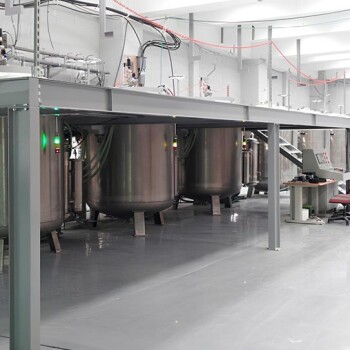
Anodic oxidation equipment facilitates nanotube growth by utilizing electrochemical control to treat a titanium alloy as the anode within an electrolytic cell. Under the application of a constant voltage, the equipment drives specific redox reactions between the electrolyte ions and the titanium surface. This controlled oxidation process results in the self-organization of highly regular titanium dioxide (TiO2) nanotube arrays.
By enabling the precise regulation of voltage and processing time, anodic oxidation equipment transforms a standard metal surface into a complex, bioactive structure. This process allows engineers to dictate the exact geometry of the nanotubes, which is essential for advanced biomedical applications.
The Electrochemical Mechanism
Establishing the Anodic Circuit
The fundamental requirement of this process is an electrolytic circuit.
The titanium alloy is connected as the anode (positive electrode) and submerged in a specific electrolyte solution.
Driving Redox Reactions
Once the equipment is activated, it applies a steady electrical potential.
This constant voltage forces oxidation-reduction (redox) reactions to occur at the interface between the metal and the liquid.
Instead of forming a solid, impenetrable barrier, the chemical interaction digs into the surface, creating the hollow, tubular structures characteristic of TiO2 arrays.
Controlling Nanotube Geometry
Regulating Diameter via Voltage
The equipment's primary control lever is voltage.
By adjusting the intensity of the applied voltage, operators can directly influence the diameter of the resulting nanotubes.
Higher or lower voltages yield wider or narrower tubes, allowing for customization based on the intended application.
Determining Length via Time
The second critical variable controlled by the equipment is processing duration.
The length of the nanotubes is determined by how long the anodic oxidation process is allowed to run.
Precise timing ensures the oxide layer reaches the necessary depth without compromising structural integrity.
Functional Benefits of the Process
Mimicking Natural Biology
The ability to produce highly regular arrays is not just for aesthetics; it serves a biological function.
The resulting surface texture closely mimics the natural bone matrix, which encourages better integration with biological tissues.
Enabling Drug Delivery systems
The hollow structure of the nanotubes serves as a microscopic storage vessel.
Because the equipment creates deep, accessible pores, these arrays can be loaded with pharmaceuticals, enabling the localized sustained release of drugs such as antibiotics.
Understanding the Constraints
Dependency on Stability
The quality of the nanotube array is entirely dependent on the stability of the power supply.
If the constant voltage fluctuates, the regularity of the nanotubes will be disrupted, leading to uneven surfaces that may fail in biomedical applications.
Electrolyte Specificity
The equipment cannot function with just any conductive liquid.
A specific electrolyte solution is required to facilitate the correct redox reactions; using an incorrect chemistry will result in simple corrosion or irregular oxide patches rather than nanotube growth.
Optimizing for Your Application
To maximize the value of anodic oxidation equipment, you must match the processing parameters to your specific engineering goals.
- If your primary focus is Osseointegration: Prioritize voltage settings that generate nanotube diameters mimicking the scale of natural bone matrix for improved tissue adhesion.
- If your primary focus is Drug Delivery: Adjust the processing time to increase nanotube length, thereby maximizing the internal volume available for storing antibiotics or therapeutic agents.
Mastering the relationship between voltage, time, and electrolyte chemistry is the key to unlocking the full potential of titanium interfaces.
Summary Table:
| Parameter | Control Mechanism | Impact on TiO2 Nanotube |
|---|---|---|
| Voltage | Constant Electrical Potential | Determines the diameter of the nanotubes |
| Processing Time | Duration of Electrolysis | Controls the length/depth of the nanotube array |
| Electrolyte | Chemical Composition | Facilitates specific redox reactions for self-organization |
| Stability | Power Supply Regulation | Ensures uniformity and regularity of the porous structure |
Elevate Your Material Science with KINTEK Precision
Unlock the full potential of your titanium interfaces with KINTEK’s advanced electrochemical solutions. Whether you are engineering bioactive surfaces for osseointegration or developing sophisticated drug delivery systems, our specialized anodic oxidation equipment and electrolytic cells provide the stability and control you need.
Why partner with KINTEK?
- Comprehensive Range: From high-temperature furnaces and high-pressure reactors to precision electrolytic cells and electrodes.
- Tailored for Research: Our tools are designed for the rigorous demands of battery research and biomedical engineering.
- End-to-End Support: We provide the high-quality consumables—like PTFE products, ceramics, and crucibles—essential for maintaining your lab's integrity.
Ready to transform your metal surfaces into high-performance structures? Contact KINTEK today to discuss your project requirements!
References
- Abhinay Thakur, Lei Guo. Recent Advancements in Surface Modification, Characterization and Functionalization for Enhancing the Biocompatibility and Corrosion Resistance of Biomedical Implants. DOI: 10.3390/coatings12101459
This article is also based on technical information from Kintek Solution Knowledge Base .
Related Products
- Iridium Dioxide IrO2 for Water Electrolysis
- Graphite Vacuum Furnace Negative Material Graphitization Furnace
- Oxygen Probe to Measure Temperature and Active Oxygen Content in Molten Steel
- Laboratory Oscillating Orbital Shaker
- Vacuum Arc Induction Melting Furnace
People Also Ask
- What advantages does supercritical fluid technology provide for Iridium catalysts? Achieve Precision Nano-Synthesis
- What are the different types of catalysts used in pyrolysis? A Guide to Optimizing Biomass Conversion
- How does catalyst work in pyrolysis? A Guide to Efficient and Selective Fuel Production
- Which catalyst is used in pyrolysis process? Choosing the Right Catalyst for Your Feedstock
- What is the best catalyst for pyrolysis? A Strategic Guide to Maximizing Bio-Oil Quality and Yield