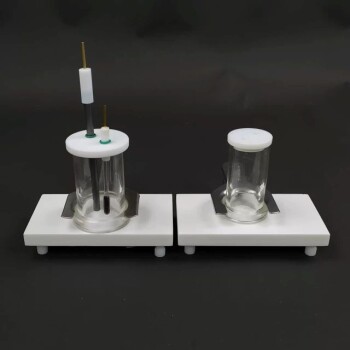
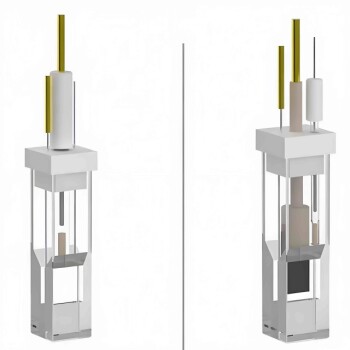
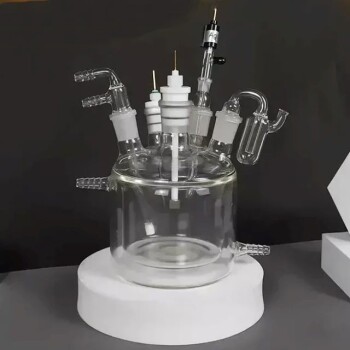
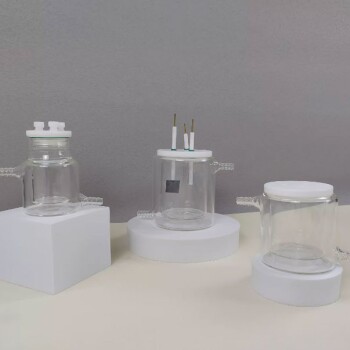
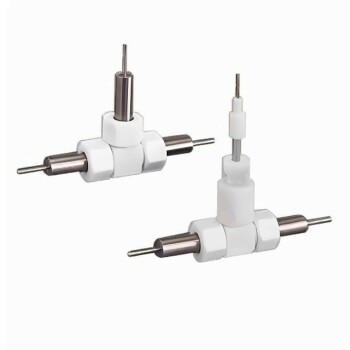
The design of an H-type electrolytic cell facilitates metal recovery by using a dual-chamber architecture to create and maintain a stable pH gradient. This configuration allows for the simultaneous leaching of metal oxides in the acidic anode chamber and the precipitation of metal ions in the alkaline cathode chamber within a single, integrated system.
The H-type cell’s primary advantage in metal recovery is its ability to physically separate competing chemical environments. By isolating the anode and cathode, the cell enables distinct, simultaneous reactions—acidic leaching and basic precipitation—that would otherwise neutralize each other in a single-chamber setup.
The Role of the Dual-Chamber Architecture
Creating the pH Gradient
The H-shape naturally divides the electrolytic process into two distinct zones: an anode chamber and a cathode chamber. During neutral water electrolysis, the anode generates $H^+$ ions, creating an acidic environment, while the cathode produces $OH^-$ ions, resulting in an alkaline environment.
Simultaneous Leaching and Precipitation
In the anode chamber, the localized acidity is utilized to leach reduced metal oxides, bringing them into the solution. These ions then migrate toward the cathode chamber, where the high concentration of $OH^-$ ions facilitates the direct precipitation of metals, completing the recovery process in one piece of equipment.
Ion-Exchange Membrane Functionality
A replaceable ion-exchange membrane or filter paper sits between the two chambers, acting as a selective barrier. This component allows for necessary ion conduction to complete the electrical circuit while preventing the bulk mixing of the two different electrolytes.
Enhancing Process Purity and Accuracy
Preventing Product Crossover
Physical separation prevents reduction products generated at the cathode from diffusing to the anode and being re-oxidized. For example, in complex recovery processes involving carbon-based side reactions, this prevents carbon monoxide from returning to the anode and interfering with the system’s efficiency.
Ensuring Gas Purity
The H-type design effectively prevents the mixing of hydrogen produced at the cathode and oxygen produced at the anode. This is critical for maintaining high gas purity and eliminating the risk of gas back-reactions at the counter electrode.
Faradaic Efficiency and Reproducibility
By isolating the chambers, researchers can achieve highly accurate measurements of Faradaic efficiency. The lack of interference between the two electrodes ensures that the electrical current is being used specifically for the intended chemical transformations, leading to better experimental reproducibility.
Understanding the Trade-offs
Increased Internal Resistance
The physical distance between the electrodes in an H-cell is typically greater than in a single-chamber cell. This increased path for ion travel, combined with the resistance of the membrane, can lead to higher Ohmic resistance and higher energy consumption.
Membrane Fouling and Maintenance
While the membrane is essential for the pH gradient, it is a common point of failure. Over time, metal ions or impurities can precipitate within the membrane structure (fouling), which reduces ion conductivity and requires regular replacement or cleaning.
Scalability Constraints
The complex geometry of the H-type cell makes it an excellent tool for laboratory-scale research and precision recovery. However, translating this design to massive industrial scales can be challenging due to the structural requirements of maintaining large-scale membranes and uniform flow across two separate chambers.
Applying the H-Type Design to Your Recovery Project
The H-type cell is a specialized tool that excels when chemical isolation is more important than raw power throughput.
- If your primary focus is high-purity metal extraction: Utilize the H-type cell to ensure that leaching and precipitation environments remain distinct and uncontaminated by secondary reactions.
- If your primary focus is experimental accuracy and testing: Leverage the dual-chamber design to isolate gas products and accurately calculate Faradaic efficiency without interference from back-reactions.
- If your primary focus is maximizing energy efficiency at scale: Consider that the H-type cell may introduce higher resistance, and you should evaluate whether a flow-cell or zero-gap design might better suit high-volume production.
The H-type electrolytic cell remains the definitive standard for processes requiring precise control over independent anodic and cathodic environments.
Summary Table:
| Feature | Mechanism | Key Benefit |
|---|---|---|
| Dual-Chamber | Physical separation of anode and cathode | Prevents product crossover and re-oxidation |
| pH Gradient | Acidic anode and alkaline cathode | Simultaneous leaching and metal precipitation |
| Ion Membrane | Selective ion conduction | Ensures high gas purity and circuit completion |
| Isolated Zones | Controlled chemical environment | High Faradaic efficiency and reproducibility |
Elevate Your Metal Recovery Research with KINTEK
Achieve unparalleled precision in your electrochemical experiments with KINTEK’s high-performance electrolytic cells and electrodes. Whether you are optimizing neutral water electrolysis or scaling complex recovery processes, our premium laboratory equipment—from high-temperature high-pressure reactors to specialized membranes and crucibles—ensures the accuracy and reliability your project demands.
Why partner with KINTEK?
- Precision Engineering: Designed for stable pH gradients, high gas purity, and superior Faradaic efficiency.
- Comprehensive Portfolio: Beyond electrolytic cells, we offer a full range of high-temperature furnaces (muffle, vacuum, CVD), crushing systems, and hydraulic presses.
- Expert Support: We provide specialized consumables like PTFE products and ceramics tailored for harsh electrochemical environments.
Ready to optimize your lab's workflow? Contact KINTEK Experts Today to find the perfect solution for your metal recovery and material research needs!
References
- Jiayin Zhou, Xiaofei Guan. The critical role of H <sub>2</sub> reduction roasting for enhancing the recycling of spent Li-ion battery cathodes in the subsequent neutral water electrolysis. DOI: 10.1039/d3su00201b
This article is also based on technical information from Kintek Solution Knowledge Base .
Related Products
- H-Type Double-Layer Optical Electrolytic Electrochemical Cell with Water Bath
- H Type Electrolytic Cell Triple Electrochemical Cell
- Customizable PEM Electrolysis Cells for Diverse Research Applications
- Electrolytic Electrochemical Cell with Five-Port
- Super Sealed Electrolytic Electrochemical Cell
People Also Ask
- What is the overall structure of the H-type double-layer optical water bath electrolytic cell? Precision Design for Controlled Experiments
- How is the electrolyte managed in H-type electrolytic cells for specific reactions? Achieve Precise Control and High Purity
- What checks should be performed on the H-type electrolytic cell before use? Ensure Accurate Electrochemical Data
- What is important regarding temperature control for the H-type electrolytic cell? Ensure Precision and Data Integrity
- What is the overall structure of the H-type electrolytic cell? Understanding Dual-Chamber Electrochemical Designs