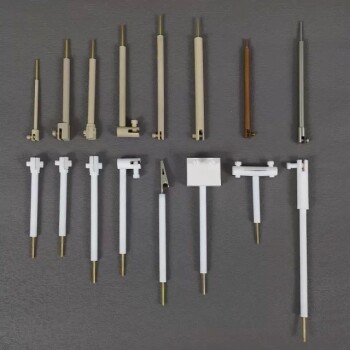
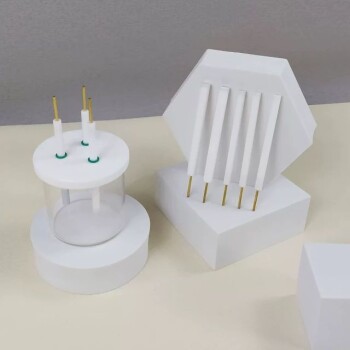
The Tubular Electrode Assembly Reactor (TEAR) implements Process Intensification (PI) by physically integrating a three-dimensional electrode layout with 3D-printed spiral static mixers. This design strategy significantly enhances reactor performance by increasing the mass transfer coefficient by approximately 1.2 times, achieving higher efficiency without the need for additional external energy sources for mixing.
The core innovation of the TEAR design is the transition from active to passive intensification. By coupling 3D electrodes with internal static mixers, the reactor overcomes traditional diffusion limitations and fouling issues, allowing for a higher volumetric treatment load within a compact footprint.
The Mechanics of Intensification
The TEAR design does not rely on complex external machinery to boost performance. Instead, it relies on advanced internal geometry to force efficient interactions.
Integrated Geometric Design
The reactor utilizes a three-dimensional electrode layout.
This layout is directly integrated with 3D-printed spiral static mixers. This combination ensures that the fluid dynamics within the reactor serve the electrochemical process directly.
Passive Enhancement
A key principle of Process Intensification in this context is the elimination of auxiliary equipment.
The TEAR design improves performance without requiring additional external power sources (such as mechanical stirrers). The geometry of the mixer itself does the work using the existing flow energy.
Performance Improvements
The physical design of the TEAR directly translates to measurable improvements in electrochemical efficiency.
Boosting Mass Transfer
The primary bottleneck in many electrochemical reactors is the rate at which reactants reach the electrode surface.
The integrated spiral mixers in the TEAR increase the mass transfer coefficient by approximately 1.2 times. This indicates a significantly more efficient reaction environment compared to standard tubular designs.
Reducing Concentration Polarization
Concentration polarization occurs when reactants are depleted near the electrode faster than they can be replenished.
The static mixers disrupt the boundary layer at the electrode surface. This continuous mixing reduces concentration polarization, maintaining consistent reaction rates.
Operational Stability
Beyond pure efficiency, the TEAR design addresses common operational failure points found in standard reactors.
Mitigating Fouling and Heat
Electrochemical reactors often suffer from electrode fouling (buildup of material) and localized hot spots.
The enhanced fluid dynamics provided by the spiral mixers mitigate electrode fouling. Furthermore, the constant fluid turnover prevents heat accumulation, ensuring thermal stability.
Maximizing Volumetric Load
Process Intensification often aims to do "more with less."
The TEAR allows for a higher volumetric treatment load relative to its size. This results in a more compact reactor space that can handle significant throughput.
Understanding the Trade-offs
While the TEAR design offers significant benefits, it is essential to recognize the inherent constraints of this approach to ensure it fits your specific application.
Manufacturing Complexity
The reliance on 3D-printed components introduces a dependency on specialized manufacturing techniques.
Unlike standard off-the-shelf piping, replacing these integrated spiral mixer-electrodes requires specific fabrication capabilities.
Flow Dynamics
While the reference notes no additional power is needed, static mixers inherently create resistance to fluid flow.
The design relies on the flow of the fluid itself to create mixing. Therefore, consistent performance relies on maintaining a stable flow rate to ensure the spiral mixers function as intended.
Making the Right Choice for Your Goal
The TEAR design represents a shift toward compact, high-efficiency reactor engineering. Use the following guide to determine if this approach aligns with your objectives.
- If your primary focus is maximizing throughput in limited space: The TEAR is ideal because it supports a higher volumetric treatment load within a compact reactor footprint.
- If your primary focus is reducing operational maintenance: The TEAR is a strong candidate due to its ability to mitigate electrode fouling and reduce concentration polarization.
- If your primary focus is energy efficiency: The TEAR is advantageous as it improves mass transfer coefficients (1.2x) without the energy cost of active mechanical stirring.
By leveraging static geometry to solve dynamic problems, the TEAR design effectively turns the reactor's physical structure into an active participant in the process.
Summary Table:
| Feature | Implementation in TEAR Design | PI Benefit |
|---|---|---|
| Mechanism | 3D-printed spiral static mixers | Passive intensification (no external energy) |
| Mass Transfer | 1.2x increase in coefficient | Faster reaction rates & higher efficiency |
| Operational Stability | Disruption of boundary layers | Mitigated fouling & reduced polarization |
| Footprint | Integrated geometry | Higher volumetric treatment load in compact space |
| Heat Control | Constant fluid turnover | Prevention of localized hot spots |
Elevate Your Electrochemical Research with KINTEK
Maximize your laboratory efficiency and throughput with KINTEK’s cutting-edge process solutions. Whether you are scaling up with high-temperature reactors and autoclaves or optimizing precision with our electrolytic cells and electrodes, our team is dedicated to providing the high-performance tools you need to overcome traditional diffusion limitations.
Why choose KINTEK?
- Advanced Engineering: Specialized in high-pressure systems and crushing/milling equipment.
- Comprehensive Range: From dental furnaces to battery research consumables and cooling solutions.
- Tailored Support: We help you select the right geometry and materials to mitigate fouling and reduce energy costs.
Contact KINTEK Today to Optimize Your Lab Workflow
References
- Jiabin Liang, Yuan Yuan. A tubular electrode assembly reactor for enhanced electrochemical wastewater treatment with a Magnéli-phase titanium suboxide (M-TiSO) anode and <i>in situ</i> utilization. DOI: 10.1039/d1ra02236a
This article is also based on technical information from Kintek Solution Knowledge Base .
Related Products
- Customizable Laboratory High Temperature High Pressure Reactors for Diverse Scientific Applications
- Electrode Fixture for Electrochemical Experiments
- Rotating Platinum Disk Electrode for Electrochemical Applications
- Stainless High Pressure Autoclave Reactor Laboratory Pressure Reactor
- Customizable High Pressure Reactors for Advanced Scientific and Industrial Applications
People Also Ask
- How do high-pressure and high-temperature reactors ensure the effective treatment of lignocellulosic wastewater in WAO?
- What equipment is required for high-pressure high-temperature reactions? Master Extreme Chemistry Safely
- How do you control high pressure in a reactor? A Guide to Safe & Stable Operation
- Why is argon better than nitrogen for inert atmosphere? Ensure Absolute Reactivity & Stability
- How does initial oxygen pressure affect the wet oxidation of pharmaceutical sludge? Master Your Oxidation Depth