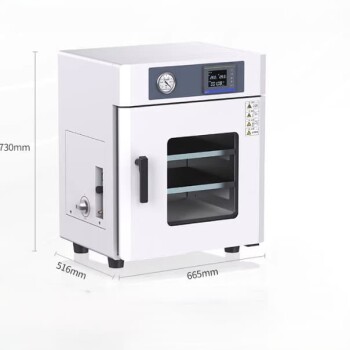
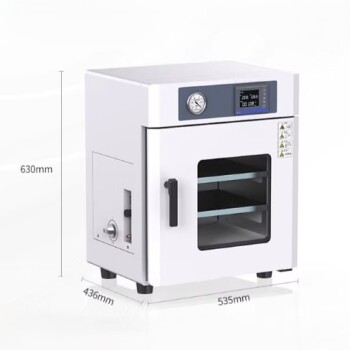
A vacuum oven serves as the decisive purification tool during the solution casting phase of gel polymer electrolyte (GPE) preparation. It is primarily used to subject the wet, cast membrane to negative pressure—often combined with mild heating—to force the complete evaporation of volatile organic solvents like acetone or acetonitrile without damaging the delicate polymer structure.
Core Takeaway The vacuum oven does not merely dry the material; it stabilizes the electrochemical environment of the battery. By lowering the boiling point of solvents and extracting trace moisture, it prevents dangerous side reactions and ensures the membrane has the chemical purity required for long-term cycling and safety.
The Mechanics of Solvent Removal
Overcoming High Boiling Points
In the solution casting method, polymers like PVDF-HFP are dissolved in solvents such as acetone to form a slurry. Simply air-drying this mixture is often insufficient to remove solvents trapped deep within the polymer matrix. The vacuum oven applies negative pressure, which significantly lowers the boiling point of these solvents, allowing them to evaporate efficiently even at room temperature or with very mild heating.
Ensuring Structural Homogeneity
As the solvent evaporates, the polymer chains re-organize to form the final membrane. The vacuum oven ensures this evaporation happens at a controlled, steady rate. This controlled removal is critical for creating a uniform electrolyte membrane, preventing the formation of skin layers or uneven densities that can occur with rapid, uncontrolled drying.
Why "Complete" Removal Matters
Maximizing Electrochemical Stability
The primary goal of the vacuum oven is to ensure there are no residues left in the GPE. Even trace amounts of organic solvents can lead to parasitic side reactions inside the battery. By thoroughly removing these contaminants, the vacuum drying process secures a wider electrochemical stability window, allowing the battery to operate at higher voltages without degrading the electrolyte.
Eliminating Fatal Moisture
Beyond solvents, the vacuum oven is essential for removing trace moisture, particularly for hygroscopic polymers like PEO. Water is a critical contaminant in lithium batteries; even minute amounts can react violently with lithium metal anodes. High-vacuum drying prevents these reactions, ensuring safety and cycle life stability.
Preventing Physical Defects
If volatile components remain trapped in the membrane, they can gas out later during battery operation or thermal stress. This leads to bubble formation within the membrane layer. Vacuum drying eliminates these volatiles during the manufacturing stage, ensuring the final membrane remains dense and physically intact.
Understanding the Trade-offs
Temperature vs. Integrity
While heat accelerates drying, excessive temperature can degrade the polymer or collapse the pore structure required for ion transport. For PVDF-HFP membranes, mild heating or room temperature under vacuum is often preferred. You must balance the need for speed with the thermal limits of your specific polymer backbone.
Time Intensity
Thorough vacuum drying is not a fast process. It often requires extended periods (e.g., up to 48 hours) to ensure diffusion of solvents from the core of the membrane. Rushing this step creates a "dry skin" on the surface while trapping liquid inside, compromising the final performance.
Making the Right Choice for Your Goal
To optimize your GPE preparation, tailor your vacuum drying protocol to your specific priorities:
- If your primary focus is Electrochemical Stability: Prioritize longer drying times (48+ hours) under high vacuum to eliminate every trace of solvent that could narrow the voltage window.
- If your primary focus is Membrane Morphology: Use lower temperatures (or room temperature) with consistent vacuum pressure to prevent pore collapse and ensure a uniform physical structure.
- If your primary focus is Safety: Ensure your vacuum system is capable of removing trace moisture, specifically if using reactive anodes like Lithium metal, to prevent hazardous chemical reactions.
The vacuum oven is not just a dryer; it is the gatekeeper of your electrolyte's purity and future performance.
Summary Table:
| Feature | Role in GPE Preparation | Impact on Performance |
|---|---|---|
| Negative Pressure | Lowers solvent boiling points | Ensures complete evaporation without thermal damage |
| Controlled Heating | Accelerates drying of PVDF-HFP/PEO | Maintains structural homogeneity and pore integrity |
| Moisture Removal | Extracts trace water molecules | Prevents parasitic reactions with lithium anodes |
| Vacuum Duration | Extended drying (up to 48 hours) | Eliminates bubble formation and ensures chemical purity |
Elevate Your Battery Research with KINTEK Precision
Don’t let trace contaminants compromise your energy storage innovations. KINTEK specializes in advanced laboratory solutions designed for rigorous battery material research. From high-performance vacuum ovens that ensure the structural integrity of your GPE membranes to battery research tools, electrolytic cells, and high-temperature furnaces, we provide the precision equipment you need for long-term cycling stability.
Ready to optimize your membrane preparation? Contact our specialists today to find the perfect drying solution!
Related Products
- 56L Vertical Laboratory Vacuum Drying Oven
- 23L Laboratory Vacuum Drying Oven
- Dental Porcelain Zirconia Sintering Ceramic Vacuum Press Furnace
- Vacuum Heat Treat Sintering Brazing Furnace
- Ultra-High Temperature Graphite Vacuum Graphitization Furnace
People Also Ask
- Why is a laboratory vacuum drying oven recommended for rice straw residues? Protect Your Biomass Integrity
- What role does a laboratory vacuum drying oven play in the preparation of modified multi-walled carbon nanotubes?
- What is the importance of using a laboratory vacuum drying oven? Preserving Slow-Release Microcapsule Integrity
- Why is a Laboratory Vacuum Drying Oven recommended for PBAT microspheres? Protect Sensitive Polymer Integrity
- What role does a laboratory vacuum drying oven play in processing nanoparticle powder samples? Protect Sample Integrity