The operating temperature of a rotary kiln varies significantly based on its design and industrial application, with no single answer fitting all types. Material temperatures can range from around 1100°C (2012°F) for controlled processes in electric kilns to over 1500°C (2732°F) for heavy industrial applications like cement manufacturing.
The crucial factor determining a rotary kiln's temperature is not the equipment itself, but its heating method—specifically, whether it is direct-fired or indirectly heated. This design choice is dictated entirely by the material being processed and the desired chemical reaction.
Direct vs. Indirect Heating: The Core Distinction
The vast temperature differences seen across various kilns stem from how heat is introduced to the material. This fundamental design choice separates kilns into two primary categories.
Direct-Fired Kilns for Extreme Temperatures
In a direct-fired system, a powerful burner shoots a flame directly into the kiln cylinder. The raw material comes into contact with the flame and hot combustion gases.
This method is used when the primary goal is to achieve extremely high temperatures. In cement production, for instance, flames can reach 1900°C (3452°F) to heat the raw material to the 1500°C (2732°F) needed for it to become partially molten clinker.
Heat is transferred to the material through a combination of radiation from the flame, convection from the hot gases, and conduction from the heated refractory lining of the kiln wall.
Indirectly Heated Kilns for Controlled Processes
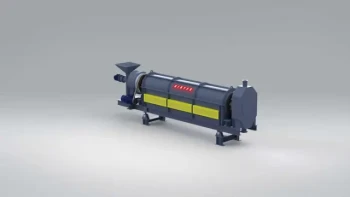
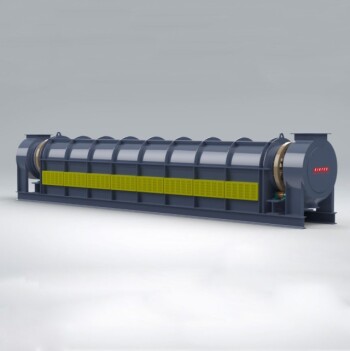
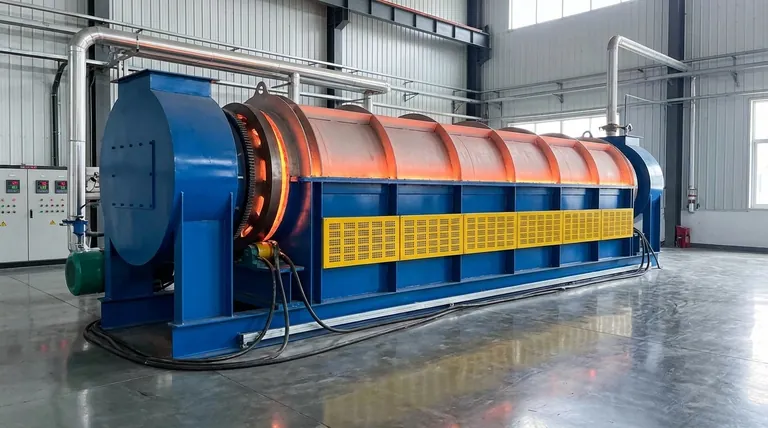
In an indirect system, the kiln's rotating shell is heated from the outside. The material inside never makes direct contact with the flame or heating elements.
This is often achieved with an external furnace or, in the case of an electric rotary kiln, with electric resistance wires. This design allows for much more precise temperature control.
These kilns operate at lower temperatures, typically with the furnace reaching 1200-1300°C (2192-2372°F), keeping the material temperature below 1150°C (2102°F).
Understanding the Trade-offs
Choosing a heating method is a critical engineering decision based on balancing process requirements against physical limitations. Each approach has distinct advantages and disadvantages.
Why Choose High-Temperature Direct Firing?
The primary advantage is the ability to achieve the extreme heat necessary for specific chemical transformations, like those in cement or lime production. It is a robust and powerful method for high-throughput thermal processing.
The main trade-off is a relative lack of precision. Furthermore, direct contact with combustion gases means this method is unsuitable for materials that could be contaminated by the byproducts of burning fuel.
Why Choose Lower-Temperature Indirect Heating?
The key benefit of indirect heating is process purity. Since the material is isolated from the heat source, there is no risk of contamination. This design also offers superior and highly accurate temperature control.
The limitation is a lower maximum operating temperature. The materials used to construct the kiln shell can only withstand so much external heat before their structural integrity is compromised, capping the effective process temperature.
Matching the Kiln to the Application
Your understanding of a kiln's temperature should be directly tied to the intended result of the process.
- If your primary focus is maximum thermal processing like cement or lime production: You will be dealing with direct-fired kilns where material temperatures must reach or exceed 1500°C.
- If your primary focus is material purity and precise temperature control for processes like calcination or oxidation: You are looking at indirectly heated or electric kilns, with operating temperatures typically between 1100°C and 1300°C.
Ultimately, a rotary kiln's temperature is not a fixed number but a direct reflection of its design and the specific chemical transformation it is engineered to achieve.
Summary Table:
| Heating Method | Typical Material Temperature Range | Key Application |
|---|---|---|
| Direct-Fired | > 1500°C (2732°F) | Cement, Lime Production |
| Indirect/Heated | 1100°C - 1150°C (2012°F - 2102°F) | Calcination, Oxidation, High-Purity Processes |
Need to find the perfect rotary kiln for your specific temperature and purity requirements?
KINTEK specializes in designing and supplying high-performance rotary kilns for diverse laboratory and industrial applications. Whether you require extreme heat for heavy processing or precise, contamination-free temperature control, our experts will help you select the ideal equipment to optimize your results.
Contact our thermal processing specialists today for a personalized consultation!
Visual Guide

Related Products
- Electric Rotary Kiln Small Rotary Furnace Biomass Pyrolysis Plant
- Electric Rotary Kiln Continuous Working Small Rotary Furnace Heating Pyrolysis Plant
- Electric Rotary Kiln Small Rotary Furnace for Activated Carbon Regeneration
- Electric Rotary Kiln Pyrolysis Furnace Plant Machine Calciner Small Rotary Kiln Rotating Furnace
- Vacuum Sealed Continuous Working Rotary Tube Furnace Rotating Tube Furnace
People Also Ask
- What are the reactors for fast pyrolysis? Choosing the Right System for Maximum Bio-Oil Yield
- What is a rotary kiln reactor? A Guide to Industrial Thermal Processing
- What are the reactions involved in pyrolysis of biomass? Unlock the Chemistry for Tailored Bio-Products
- What are the main parts of a rotary kiln? A Guide to Its Core Components and System
- What are the different types of calciners? A Guide to Selecting the Right Thermal Processing Equipment