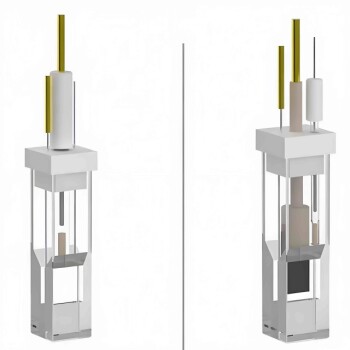
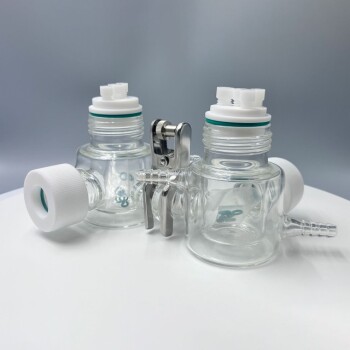
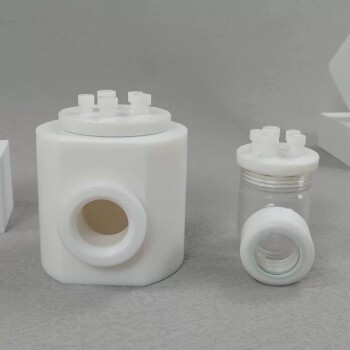
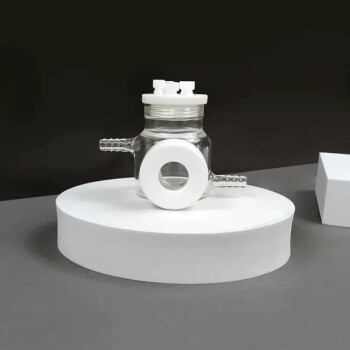
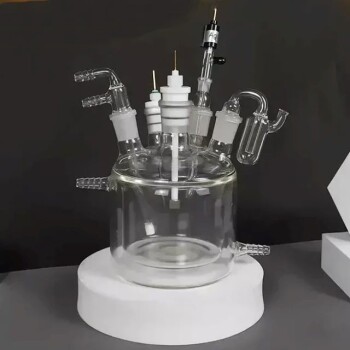
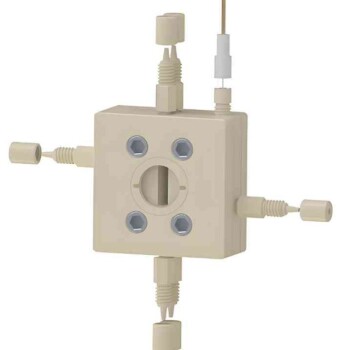
In a three-electrode electrochemical cell designed for testing duplex stainless steel, the specific roles are divided to isolate the material's behavior from the measurement artifacts. The duplex stainless steel sample acts as the working electrode, a high-purity graphite rod serves as the auxiliary (counter) electrode, and a saturated calomel electrode (SCE) functions as the reference electrode.
The three-electrode configuration is critical because it decouples the current flow from the potential measurement. This ensures that the voltage drop across the solution does not distort the reading, providing an accurate profile of the duplex stainless steel’s corrosion resistance without interference from the other components.
The Primary Subject: The Working Electrode
The Role of Duplex Stainless Steel
In this setup, the duplex stainless steel sample is the working electrode. This is the specific material under investigation and the site where the electrochemical reactions of interest occur.
Measuring the Reaction
Whether functioning as an anode (where oxidation occurs) or a cathode (where reduction occurs), the working electrode is where the system measures current response. This data reveals the material's open-circuit potential and polarization behavior in the simulated environment.
Completing the Circuit: The Auxiliary Electrode
The Function of High-Purity Graphite
A high-purity graphite rod acts as the auxiliary or counter electrode. Its primary role is to complete the electrical circuit, allowing current to flow through the cell without participating in the measurement data itself.
Ensuring Chemical Inertness
The auxiliary electrode must be chemically inert. High-purity graphite is selected to ensure it does not dissolve or introduce contaminating ions into the electrolyte, which could skew the corrosion results of the steel.
Establishing Accuracy: The Reference Electrode
The Standard of the Saturated Calomel Electrode (SCE)
The reference electrode, specifically a saturated calomel electrode (SCE) in this context, provides a stable, known potential baseline. It acts as the "ground truth" against which the potential of the working electrode is measured.
Eliminating Polarization Interference
Unlike the auxiliary electrode, the reference electrode does not carry the polarization current. This separation prevents polarization interference, ensuring the potential measured at the stainless steel surface is accurate and reliable.
Understanding the Trade-offs
The Importance of Counter Electrode Selection
While graphite is the standard for this setup, the choice of counter electrode material is strictly about chemical stability. If a counter electrode reacts with the electrolyte, it acts as a contaminant source; however, using a highly conductive material like platinum (as noted in general electrochemical theory) can also be valid if it remains inert in the specific corrosive environment.
Stability vs. Conductivity
Graphite is excellent for inertness but may differ in conductivity compared to metallic options like platinum. The trade-off in this specific duplex stainless steel setup favors graphite to prioritize extreme chemical inertness and prevent ion contamination in the test solution.
Making the Right Choice for Your Goal
To ensure your corrosion testing yields valid data for duplex stainless steels, consider these specific priorities:
- If your primary focus is data precision: Ensure your Reference Electrode (SCE) is properly maintained, as any drift in its potential will invalidate the entire voltage baseline.
- If your primary focus is solution purity: Verify that your Auxiliary Electrode (Graphite) is high-purity grade to prevent the leaching of carbon or impurities into the electrolyte.
By strictly isolating the roles of current transmission and potential measurement, you ensure that your data reflects the true properties of the steel, not the limitations of your equipment.
Summary Table:
| Electrode Type | Specific Component | Primary Role |
|---|---|---|
| Working Electrode | Duplex Stainless Steel | Site of electrochemical reactions; measures current response and corrosion behavior. |
| Auxiliary (Counter) | High-Purity Graphite Rod | Completes the electrical circuit; must be chemically inert to avoid contamination. |
| Reference Electrode | Saturated Calomel (SCE) | Provides a stable, known potential baseline for accurate voltage measurements. |
Elevate Your Electrochemical Research with KINTEK
Precision in corrosion testing starts with high-quality components. KINTEK specializes in advanced laboratory equipment and consumables, providing everything you need for reliable electrochemical analysis. From specialized electrolytic cells and electrodes to high-performance high-temperature furnaces and hydraulic presses, we support material scientists in achieving accurate, repeatable data.
Our value to you:
- Superior Quality: High-purity graphite and stable reference electrodes to prevent data distortion.
- Comprehensive Range: A full suite of tools including battery research consumables, cooling solutions, and specialized reactors.
- Expert Support: Specialized solutions tailored to your specific duplex stainless steel or material research needs.
Ready to optimize your lab setup? Contact KINTEK today for a consultation or quote and ensure your data reflects the true properties of your materials.
References
- Pratik Murkute, O. Burkan Isgor. Effect of thermal aging on corrosion behavior of duplex stainless steels. DOI: 10.1007/s42452-022-04978-1
This article is also based on technical information from Kintek Solution Knowledge Base .
Related Products
- H Type Electrolytic Cell Triple Electrochemical Cell
- PTFE Electrolytic Cell Electrochemical Cell Corrosion-Resistant Sealed and Non-Sealed
- Electrolytic Electrochemical Cell Gas Diffusion Liquid Flow Reaction Cell
- Electrolytic Electrochemical Cell with Five-Port
- Electrolytic Electrochemical Cell for Coating Evaluation
People Also Ask
- What is a H type cell? A Guide to Divided Electrochemical Cells for Accurate Experiments
- How should the electrolyte be prepared and added to the H-type electrolytic cell? Best Practices for Purity and Safety
- What is the technical necessity of using an H-type electrolytic cell for NO3RR tests? Protect Your Ammonia Yields
- How does the design of an H-type electrolytic cell benefit the neutral water electrolysis process for metal recovery?
- What is the primary function of an H-type electrolytic cell in NitRR? Ensure Accurate Product Yields