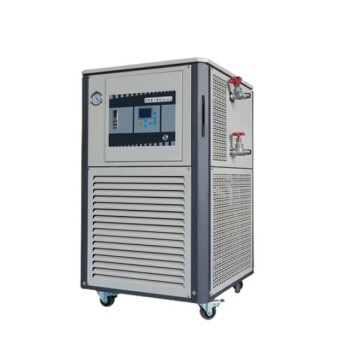
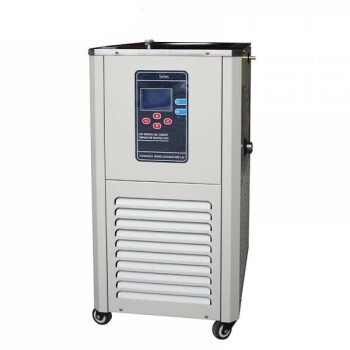
Hydrothermal reactors provide a sealed, high-pressure environment that is essential for synthesizing high-performance mesoporous hydroxyapatite-supported molybdenum catalysts. This equipment allows for the creation of a subcritical state that ensures the effective doping of molybdate anions into the material's structure while simultaneously regulating phase composition to maximize catalytic activity.
Core Takeaway By utilizing a controlled, subcritical hydrothermal environment, these reactors solve the challenge of inconsistent ion substitution and poor crystal growth. The result is a highly reproducible, chemically stable catalyst with a large specific surface area and a precise mesoporous structure that significantly enhances reaction efficiency.
Regulating the Reaction Environment
The Power of the Subcritical State
Hydrothermal reactors operate by creating a closed system capable of sustaining high temperatures and pressures. This brings the aqueous solution into a subcritical state.
In this state, the solubility of precursors is significantly increased, and reaction kinetics are enhanced. This allows reactants that might otherwise be insoluble or unreactive to interact effectively in the liquid phase.
Ensuring Effective Ion Doping
One of the primary challenges in synthesizing these catalysts is introducing the metal species into the support structure.
The high-pressure environment ensures that molybdate anions can be effectively and stably doped into the hydroxyapatite lattice. This is a spontaneous physicochemical process driven by the reactor's internal conditions, resulting in superior ion-exchange capabilities compared to standard methods.
Engineering the Catalyst Architecture
Optimizing Porosity and Surface Area
The physical structure of a catalyst dictates its performance. Hydrothermal reactors provide the control necessary to guide the self-assembly of hydroxyapatite crystals.
This controlled growth induces the formation of a mesoporous structure with a high specific surface area. A larger surface area increases the contact points for reactants, directly improving the material's efficiency in subsequent chemical oxidation reactions.
Achieving High Reproducibility
In catalytic synthesis, consistency is as important as activity. The sealed nature of the reactor ensures highly uniform contact between reactants.
Because the temperature, pressure, and time are "preset" and maintained in a closed loop, the process eliminates external variables. This leads to high reproducibility regarding phase composition, particle dispersion, and microscopic morphology across different batches.
Understanding the Operational Trade-offs
Sensitivity to Parameter Precision
While the reactor allows for control, it also demands it. The quality of the final catalyst is strictly dependent on the precise regulation of internal temperature and pressure parameters.
Slight deviations in these preset conditions can alter the crystal phase composition or the degree of molybdate doping. Therefore, the process requires rigorous calibration; it is not a "set and forget" method if high-specification results are required.
Complexity of Equipment
Unlike open-air precipitation methods, this synthesis requires specialized high-pressure vessels.
The requirement for a sealed, pressure-resistant environment adds a layer of operational complexity. You must ensure the equipment is rated for the specific subcritical conditions required to achieve the desired anisotropic crystal growth.
Making the Right Choice for Your Goal
Hydrothermal synthesis is a precision tool. To maximize its value, align your synthesis parameters with your specific performance targets:
- If your primary focus is Catalytic Activity: Prioritize the regulation of the subcritical state to maximize specific surface area and mesopore distribution, as these directly influence reaction efficiency.
- If your primary focus is Stability and Longevity: Focus on the pressure parameters that govern the doping process to ensure molybdate anions are deeply and stably integrated into the hydroxyapatite lattice.
- If your primary focus is Scalability and Consistency: Leverage the sealed nature of the reactor to standardize your temperature and time profiles, ensuring identical phase compositions across multiple production cycles.
By mastering the high-pressure environment of the hydrothermal reactor, you transform basic raw materials into sophisticated, high-stability heterogeneous catalysts.
Summary Table:
| Feature | Hydrothermal Synthesis Advantage | Impact on Catalyst Performance |
|---|---|---|
| Reaction State | Subcritical environment (high P/T) | Increases precursor solubility & reaction kinetics |
| Doping Efficiency | Stable molybdate anion integration | Enhances chemical stability & catalytic activity |
| Architecture | Controlled self-assembly | Creates high specific surface area & mesopores |
| Consistency | Sealed, closed-loop system | Ensures high reproducibility & phase purity |
| Morphology | Guided anisotropic crystal growth | Optimizes particle dispersion & reaction efficiency |
Elevate Your Catalyst Synthesis with KINTEK Precision
Unlock the full potential of your materials research with KINTEK’s high-performance hydrothermal reactors and autoclaves. Specifically designed to maintain the precise subcritical states required for advanced ion doping and mesoporous architecture control, our equipment ensures your catalysts achieve maximum surface area and reproducibility.
From high-temperature high-pressure reactors to specialized crushing, milling, and furnace systems, KINTEK provides the comprehensive tools necessary for sophisticated material science. Whether you are developing molybdenum-supported catalysts, battery materials, or dental ceramics, our solutions deliver the stability and precision your lab demands.
Ready to optimize your synthesis process? Contact our experts today to find the perfect reactor or laboratory solution for your specific application!
References
- Elena Ionela Neacşu, L. Done. ow and intermediate level aqueous radioactive waste treatment in a modular installation. DOI: 10.21175/rad.abstr.book.2023.44.5
This article is also based on technical information from Kintek Solution Knowledge Base .
Related Products
- High Pressure Laboratory Autoclave Reactor for Hydrothermal Synthesis
- Customizable Laboratory High Temperature High Pressure Reactors for Diverse Scientific Applications
- Custom PTFE Teflon Parts Manufacturer for Hydrothermal Synthesis Reactor Polytetrafluoroethylene Carbon Paper and Carbon Cloth Nano-growth
- Electric Rotary Kiln Small Rotary Furnace Biomass Pyrolysis Plant
- Customizable High Pressure Reactors for Advanced Scientific and Industrial Applications
People Also Ask
- What role does a high-pressure reactor (autoclave) play in the synthesis of NiCuFe-LDH? Master Hydrothermal Growth
- What Role Does a High-Pressure Reactor or Autoclave Play in HA Catalyst Synthesis? Achieve High Surface Area Materials
- What equipment is required for hydrothermal synthesis of Ga0.25Zn4.67S5.08? Optimize Your Semiconductor Production
- What is the function of a high-pressure reactor in the hydrothermal synthesis of boehmite? Expert Process Insights
- What role does an autoclave play in the synthesis of MnO2 nanofibers? Mastering Hydrothermal Growth