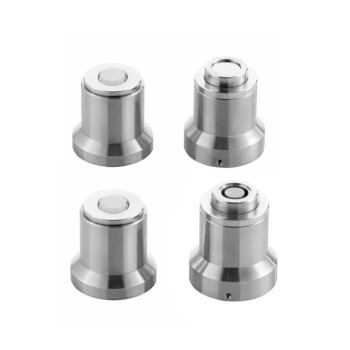
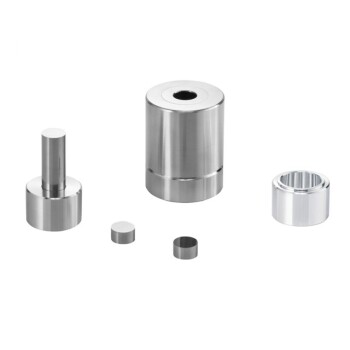
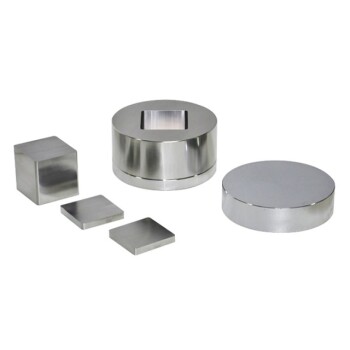
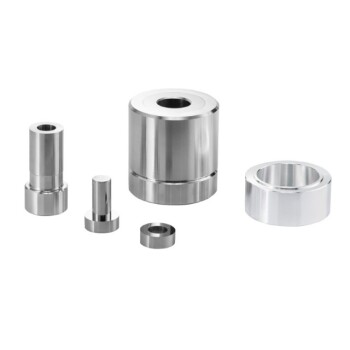
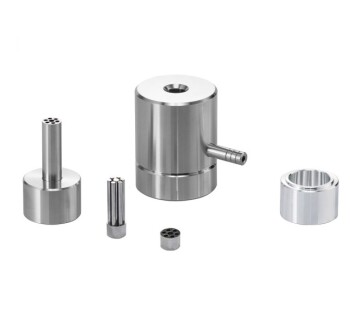
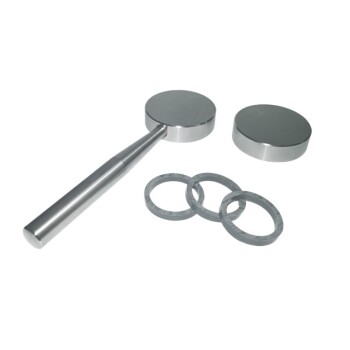
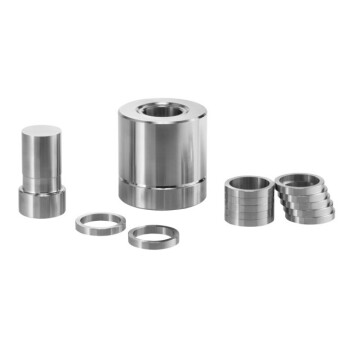
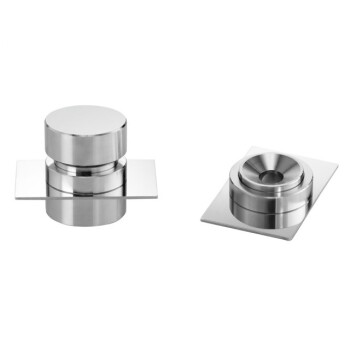
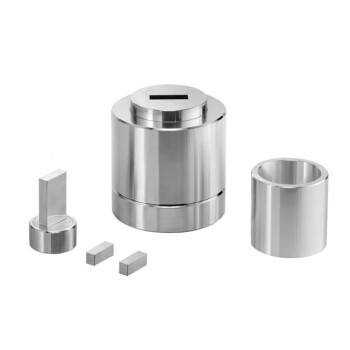
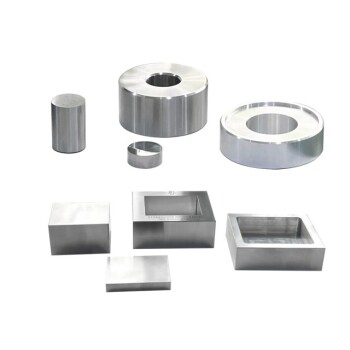
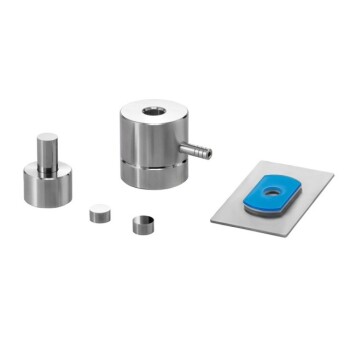
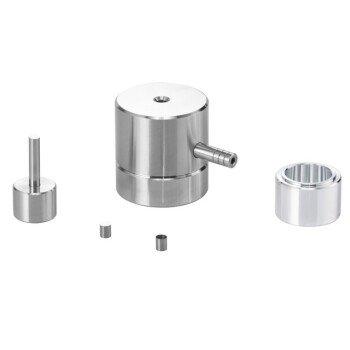
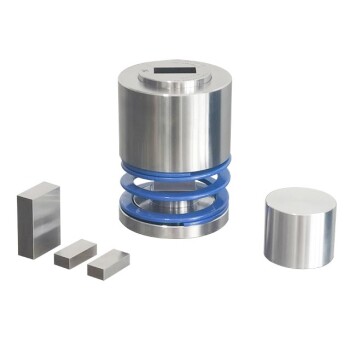
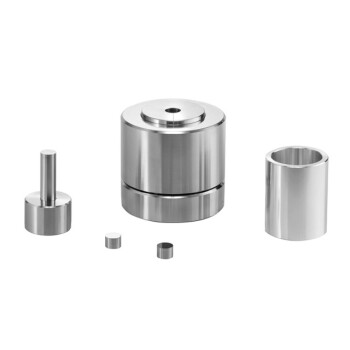
Standardized laboratory compression-cell molds are essential for obtaining reliable performance data when testing c-LLZO solid-state electrolytes. By creating a sealed environment and applying constant mechanical pressure, these molds ensure the rigorous physical contact required between the metallic lithium anode, the c-LLZO electrolyte pellet, and the LiCoO2 cathode to generate accurate electrochemical readings.
The primary value of these molds is their ability to stabilize the physical interface between solid components, allowing for the precise measurement of cyclic voltammetry and charge-discharge characteristics that would otherwise be impossible due to poor contact.
The Role of Mechanical Pressure in Evaluation
Overcoming Interfacial Resistance
The most significant challenge in solid-state battery testing is ensuring ions can move between layers. Unlike liquid electrolytes, c-LLZO pellets cannot "wet" the electrode surfaces.
Standardized molds address this by applying constant mechanical pressure. This force physically presses the metallic lithium anode and LiCoO2 cathode against the c-LLZO pellet, minimizing gaps and ensuring tight contact.
Stabilizing the Testing Environment
Reliable evaluation requires isolation from external variables. The compression-cell molds provide a sealed environment for the delicate components.
This sealing protects the cell chemistry during the testing process. It ensures that the performance data reflects the intrinsic properties of the materials rather than reactions with the ambient atmosphere.
Enabling Accurate Data Collection
The ultimate goal of using these molds is data integrity. The combination of pressure and sealing creates a stable baseline for testing.
This stability allows researchers to capture accurate cyclic voltammetry profiles. It also ensures that charge-discharge characteristics are representative of the cell's true potential, rather than artifacts of poor connectivity.
Understanding the Trade-offs
Dependence on Uniform Pressure
While these molds are designed to apply constant pressure, the reliability of your data depends entirely on that pressure remaining uniform.
If the mechanical pressure fluctuates or is applied unevenly across the pellet, the physical contact described in the reference will be compromised. This can lead to localized "hotspots" of high resistance, skewing the charge-discharge data and leading to false conclusions about the material's performance.
Making the Right Choice for Your Goal
To maximize the utility of standardized compression-cell molds, align your testing protocols with your specific objectives:
- If your primary focus is Fundamental Material Analysis: Prioritize the sealed environment aspect to ensure your cyclic voltammetry data represents the pure material response without environmental contamination.
- If your primary focus is Full Cell Performance: Focus on the regulation of constant mechanical pressure to ensure the charge-discharge characteristics reflect the optimal interfacial contact between the anode, cathode, and electrolyte.
By controlling the physical environment, you transform variable solid-state components into a reliable testing system.
Summary Table:
| Feature | Benefit for c-LLZO Testing | Impact on Data Accuracy |
|---|---|---|
| Constant Mechanical Pressure | Minimizes interfacial resistance between solid layers | Ensures representative charge-discharge profiles |
| Sealed Environment | Protects cell chemistry from atmospheric contamination | Prevents artifacts in cyclic voltammetry results |
| Stabilized Interface | Ensures tight contact between anode, pellet, and cathode | Eliminates hotspots and localized resistance |
| Physical Isolation | Creates a stable baseline for long-term cycling | Enables precise measurement of material properties |
Elevate Your Solid-State Battery Research with KINTEK
Maximize the potential of your c-LLZO electrolytes and electrode materials with KINTEK’s precision engineering. Whether you are conducting fundamental material analysis or full-cell performance testing, our standardized compression-cell molds and hydraulic presses provide the constant pressure and sealed environments necessary for reproducible results.
Beyond battery research tools, KINTEK specializes in a comprehensive range of laboratory solutions, including high-temperature furnaces (muffle, vacuum, CVD), high-pressure reactors, and homogenizers. Our expertise helps laboratory professionals achieve the rigorous physical contact and atmospheric control required for cutting-edge energy storage innovation.
Ready to refine your data integrity? Contact KINTEK today for a customized solution.
Related Products
- Ball Press Mold for Lab
- Button Battery Disassembly and Sealing Mold for Lab Use
- Carbide Lab Press Mold for Laboratory Applications
- Round Bidirectional Press Mold for Lab
- XRF Boric Acid Lab Powder Pellet Pressing Mold for Laboratory Use
People Also Ask
- What are the advantages of using a laboratory hydraulic press for hot pressing? Achieve Peak Nano-Composite Density
- How to use a press mold? Master the Art of Creating Consistent Ceramic Forms
- What is the press mould method? A Guide to Consistent, Detailed Ceramic Forms
- What is the purpose of specialized pressure devices in sulfide solid-state batteries? Ensure Chemo-Mechanical Stability
- Why are pressure molds with non-conductive resin inner walls required for battery testing? Ensure Data Accuracy