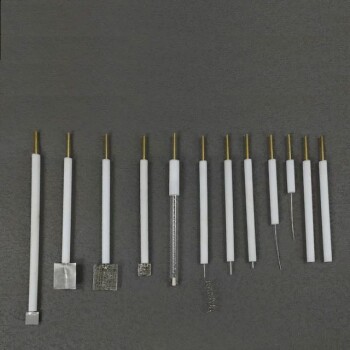
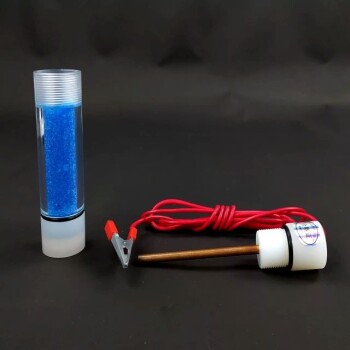
The primary advantage of a laboratory three-electrode system is its ability to isolate and quantify specific electrochemical behaviors. By utilizing a setup that includes a glassy carbon working electrode, a platinum sheet counter electrode, and a reference electrode, researchers can accurately simulate the cathode environment of a Direct Methanol Fuel Cell (DMFC). This precision allows for the direct observation of AgPd/C’s superior resistance to methanol crossover.
The three-electrode system provides a controlled environment to verify methanol tolerance. By using cyclic voltammetry to detect low oxidation currents, it offers definitive proof that AgPd/C catalysts perform efficiently even when methanol permeates the electrolyte.
Simulating the Cathode Environment
Replicating Real-World Conditions
To understand how a catalyst will perform in a deployed fuel cell, you must first replicate its operating environment. The three-electrode system mimics the specific conditions found at the cathode of a DMFC.
The Component Hierarchy
The setup relies on a precise trio of components: a glassy carbon working electrode, a platinum sheet counter electrode, and a stable reference electrode. This configuration ensures that the data collected reflects the catalyst's intrinsic properties, rather than artifacts of the testing apparatus.
The Mechanics of Detection
Utilizing Cyclic Voltammetry
The core diagnostic tool in this setup is cyclic voltammetry (CV). By running these scans, researchers generate current-voltage curves that reveal exactly how the material interacts with the electrolyte.
Identifying Methanol Tolerance
The definitive test involves comparing CV curves in electrolytes containing methanol. A traditional catalyst often shows a high oxidation current, indicating it is reacting with the methanol (which is undesirable at the cathode).
Evidence of Superiority
When testing AgPd/C, the system detects a notably low methanol oxidation current. This low current is the direct metric of success, providing quantitative evidence that the material possesses superior resistance to methanol crossover effects compared to traditional catalysts.
Critical Considerations for Analysis
The Necessity of Comparison
While the three-electrode system is powerful, the data it generates is most valuable when comparative analysis is employed. The system's ability to "prove" superiority relies on benchmarking the AgPd/C results against known standards (like pure Platinum).
Focus on Electrochemical Response
It is important to remember that this system isolates electrochemical response. It confirms the chemical tolerance of the catalyst but must be part of a broader testing regime to validate full fuel cell assembly performance.
Applying This to Your Research
To maximize the value of your testing data, consider the following approach:
- If your primary focus is material verification: Use the low methanol oxidation current as your specific pass/fail metric for AgPd/C quality.
- If your primary focus is competitive analysis: Overlay the CV curves of AgPd/C against traditional catalysts to visually demonstrate the reduction in crossover effects.
The three-electrode system transforms theoretical methanol tolerance into measurable, irrefutable data.
Summary Table:
| Feature | Laboratory Three-Electrode System Advantage |
|---|---|
| Environment Simulation | Accurately replicates DMFC cathode conditions |
| Core Components | Glassy carbon (WE), Pt sheet (CE), and stable Reference Electrode |
| Diagnostic Tool | Cyclic Voltammetry (CV) for precise current-voltage mapping |
| Key Metric | Quantifies low methanol oxidation current for AgPd/C |
| Primary Benefit | Isolates catalyst-intrinsic properties from apparatus artifacts |
Elevate Your Fuel Cell Research with KINTEK Precision
Validation of high-performance catalysts like AgPd/C requires reliable, high-precision electrochemical testing tools. At KINTEK, we specialize in providing researchers with the robust laboratory equipment needed to generate irrefutable data, from advanced electrolytic cells and electrodes to high-performance catalysts and battery research consumables.
Whether you are conducting material verification or competitive performance analysis, our comprehensive portfolio—including glassy carbon electrodes, platinum counter electrodes, and high-temperature reactors—is designed to meet the rigorous demands of modern electrochemistry.
Ready to optimize your lab's testing capabilities? Contact us today to discover how KINTEK’s specialized solutions can bring measurable precision to your next breakthrough.
References
- Emerson Brito Mourão De Oliveira, Marco Aurélio Suller Garcia. Highly Selective Hydrogen Peroxide Production Using an AgPd-Based Electrocatalyst with Ultralow Pd Loading. DOI: 10.1021/acsomega.5c04823
This article is also based on technical information from Kintek Solution Knowledge Base .
Related Products
- Gold Disc Electrode
- Metal Disc Electrode Electrochemical Electrode
- H Type Electrolytic Cell Triple Electrochemical Cell
- Reference Electrode Calomel Silver Chloride Mercury Sulfate for Laboratory Use
- Rotating Platinum Disk Electrode for Electrochemical Applications
People Also Ask
- What is the typical role of a gold disc electrode in an electrochemical setup? Your Guide to a Precise Working Electrode
- How should a gold disc electrode be handled during an experiment? Ensure Accurate Electrochemical Measurements
- What are gold electrodes used for? Achieve Unmatched Sensitivity in Biosensing and Research
- What are the disadvantages of gold electrodes? Key Limitations for Your Lab Projects
- What is the proper post-treatment and storage procedure for a gold disc electrode? Ensure Reliable Electrochemical Data