The primary advantage of a three-electrode system is its ability to isolate the working electrode's potential from current-induced interference during electrochemical characterization. By utilizing a working electrode (the aged stainless steel), an auxiliary electrode (often graphite), and a stable reference electrode (like SCE), this setup eliminates the influence of counter-electrode polarization on your measurement results.
Core Takeaway The three-electrode configuration is the standard for high-precision corrosion analysis because it decouples the current path from the voltage measurement loop. This ensures that the data accurately reflects the intrinsic behavior of the stainless steel—specifically the dissolution of precipitated phases—rather than artifacts of the experimental setup.
Precision and Signal Integrity
Eliminating Polarization Interference
In a two-electrode system, the counter electrode can become polarized as current flows, introducing errors into the potential reading. A three-electrode system introduces an auxiliary electrode (often a graphite rod) to carry the current.
This isolates the reference electrode (such as a Saturated Calomel Electrode or SCE), ensuring it remains in equilibrium. Consequently, the potential measured at the 316LN stainless steel surface is accurate, reliable, and free from external interference.
Stable Potential Reference
For aged stainless steel, accurately capturing anodic polarization curves is critical. The three-electrode setup provides a highly stable potential reference, which is essential for repeatability.
This stability is vital when measuring subtle changes, such as the dissolution current of different precipitated phases or obtaining precise corrosion potentials in simulated environments.
Environmental Control and Material Purity
Maintaining Chemical Inertness
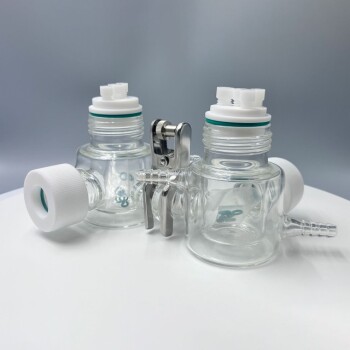
The physical composition of the cell matters as much as the electrode configuration. Using a glass electrolytic cell provides excellent chemical inertness.
This resistance to corrosion—even against strong acids like sulfuric acid—ensures that no metallic ion impurities leach into the electrolyte. This maintains the integrity of the results, ensuring that detected ions originate solely from the aged stainless steel.
Reliability in Alkaline Environments
Aged stainless steel is often characterized in corrosive environments, such as 1 N KOH alkaline electrolytes or simulated concrete pore solutions.
The three-electrode system is specifically designed to handle these high-pH conditions. It ensures the repeatability of polarization curves where a less robust setup might succumb to drift or instability.
Operational Considerations: Visualization and Control
Precise Electrochemical Control
This system allows for the independent control of the working electrode's potential regardless of the current flowing through the cell.
Parameters such as voltage, current, and electrolyte composition can be fine-tuned. This enables researchers to simulate specific aging conditions or stress tests with high fidelity.
Real-Time Visual Monitoring
Using a transparent electrolytic cell allows for direct observation of the steel surface during long-duration measurements (e.g., 9000 seconds).
Researchers can visually monitor phenomena that correlate with potential fluctuation curves. This includes the formation of gas bubbles, changes in corrosion product color, or the localized breakdown of the passive film.
Understanding the Requirements
The Necessity of Proper Geometry
While this system eliminates polarization errors, it requires a specific configuration to function correctly. The auxiliary electrode must be positioned to ensure uniform current distribution, while the reference electrode must be placed close to the working electrode to minimize resistance errors (IR drop).
Material Compatibility
To fully leverage the advantages of this system, the auxiliary electrode material must be carefully chosen. Using materials like graphite prevents the introduction of foreign metal ions, which is a risk if a metallic counter electrode corrodes during the test.
Making the Right Choice for Your Goal
- If your primary focus is quantitative accuracy: Utilize a glass three-electrode cell to eliminate impurity leaching and ensure the precise measurement of polarization resistance and corrosion potentials.
- If your primary focus is mechanism analysis: Opt for a transparent cell setup to correlate real-time visual changes (like bubble formation) with the recorded potential fluctuation curves.
The three-electrode system transforms electrochemical testing from a general estimation into a precise, repeatable science capable of detecting the subtle degradation mechanisms in aged materials.
Summary Table:
| Feature | Advantage for Aged Stainless Steel Analysis |
|---|---|
| Three-Electrode Setup | Isolates working electrode potential; eliminates counter-electrode polarization. |
| Reference Electrode (SCE) | Provides a stable equilibrium potential for accurate anodic polarization curves. |
| Graphite Auxiliary Electrode | Carries current without introducing metallic ion impurities or interference. |
| Glass Cell Body | Ensures chemical inertness and prevents leaching in acidic or alkaline (KOH) media. |
| Transparent Design | Enables real-time visual monitoring of gas formation and surface film breakdown. |
Elevate Your Electrochemical Research with KINTEK
Precision in material characterization starts with the right equipment. KINTEK specializes in high-performance electrolytic cells and electrodes designed to meet the rigorous demands of stainless steel and corrosion analysis.
Whether you require high-temperature furnaces for aging simulations or precision glass electrolytic cells for electrochemical testing, our comprehensive laboratory portfolio ensures reliable, repeatable results. From battery research tools to specialized ceramics and crucibles, we provide the durability and accuracy your lab deserves.
Ready to upgrade your laboratory setup? Contact us today to find the perfect solution for your research!
References
- Maribel L. Saucedo‐Muñoz, Erika O. Ávila-Dávila. Analysis of Intergranular Precipitation in Isothermally Aged Nitrogen-Containing Austenitic Stainless Steels by an Electrochemical Method and Its Relation to Cryogenic Toughness. DOI: 10.1155/2011/210209
This article is also based on technical information from Kintek Solution Knowledge Base .
Related Products
- H Type Electrolytic Cell Triple Electrochemical Cell
- Electrolytic Electrochemical Cell Gas Diffusion Liquid Flow Reaction Cell
- Electrolytic Electrochemical Cell with Five-Port
- PTFE Electrolytic Cell Electrochemical Cell Corrosion-Resistant Sealed and Non-Sealed
- Super Sealed Electrolytic Electrochemical Cell
People Also Ask
- What is a H type cell? A Guide to Divided Electrochemical Cells for Accurate Experiments
- How should the electrolyte be prepared and added to the H-type electrolytic cell? Best Practices for Purity and Safety
- What is the technical necessity of using an H-type electrolytic cell for NO3RR tests? Protect Your Ammonia Yields
- How does the design of an H-type electrolytic cell benefit the neutral water electrolysis process for metal recovery?
- What is the primary function of an H-type electrolytic cell in NitRR? Ensure Accurate Product Yields