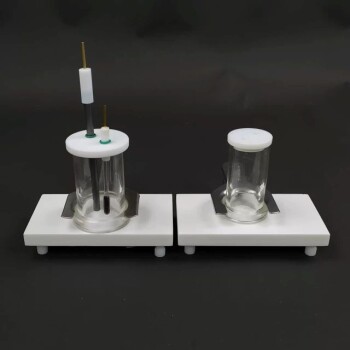
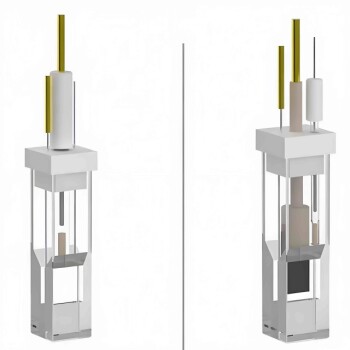
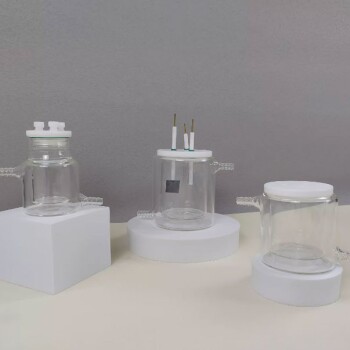
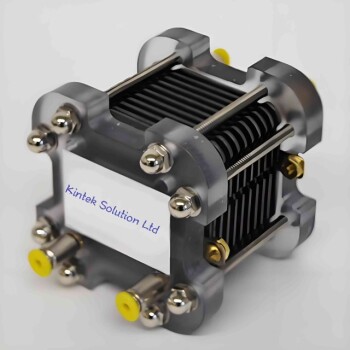
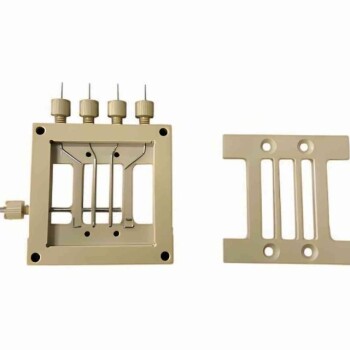
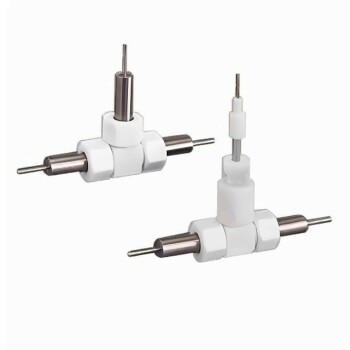
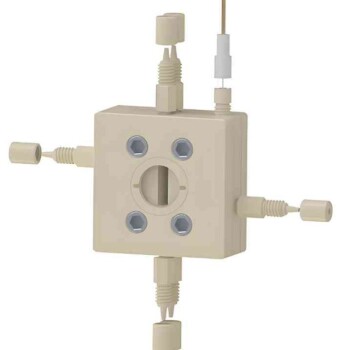
The primary advantage of using a three-electrode flat electrolytic cell is its ability to rigorously control experimental variables to isolate the true corrosion behavior of 1020C low carbon steel. By defining a fixed exposed surface area and utilizing a specific electrode configuration, this setup effectively eliminates the interference of solution resistance, ensuring that impedance measurements accurately reflect the corrosion rate at the metal interface.
In electrochemical corrosion testing, accuracy relies on isolation. This cell configuration standardizes the test environment, transforming raw data into precise, comparable insights regarding the steel's durability and reaction mechanics.
Achieving Experimental Precision
Controlled Surface Area
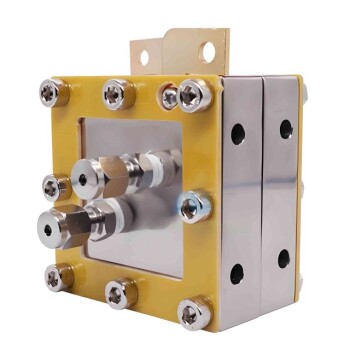
One of the most critical variables in corrosion testing is the size of the area exposed to the electrolyte. The flat electrolytic cell ensures consistency by exposing a fixed 1.0 cm² area of the metal sample.
This standardization allows for the precise calculation of current density. Without a defined area, comparing corrosion rates between different samples of 1020C steel becomes mathematically unreliable.
Elimination of Solution Resistance
In simpler setups, the resistance of the electrolyte (such as 3 wt.% NaCl) can skew the voltage readings. The three-electrode system solves this by decoupling the current path from the voltage measurement path.
By measuring potential against a stable reference electrode, the system eliminates the interference of solution resistance. This ensures that the data captures the impedance at the working electrode interface, not the resistance of the liquid between electrodes.
Advanced Measurement Capabilities
Precise Impedance Analysis
The configuration allows for high-fidelity Electrochemical Impedance Spectroscopy (EIS). The primary reference highlights that this setup is specifically capable of precise measurement of impedance.
This data is fundamental for calculating the polarization resistance. From this, you can derive the accurate corrosion rate of the low carbon steel in the chosen medium.
Standardized Electrode Roles
The system utilizes a specific hierarchy of components to maintain stability. A platinum counter electrode facilitates the current flow, while a silver/silver chloride (Ag/AgCl) reference electrode provides a stable potential baseline.
While some systems may use a saturated calomel electrode (SCE), the principle remains the same. The use of a dedicated reference electrode allows for the accurate tracking of Open Circuit Potential (OCP) and repassivation potentials, which are essential for assessing localized corrosion risks like pitting.
Understanding the Constraints
Sample Geometry Requirements
The term "flat" in the cell description is a functional constraint. The sample of 1020C steel must be machined or polished to a perfectly flat surface to seal correctly against the cell aperture.
Irregularly shaped scraps or components with complex geometries cannot be tested easily in this specific apparatus.
Setup Complexity
Compared to a simple immersion test, this setup requires precise instrumentation. You must manage three distinct leads and ensure the reference electrode is properly maintained (e.g., checking the Ag/AgCl filling solution).
Failure to maintain the reference electrode will result in potential drift, rendering the precise impedance data invalid.
Optimizing Your Experimental Setup
To determine if this is the right apparatus for your 1020C steel research, consider your specific analytical needs:
- If your primary focus is quantitative corrosion rates: This cell is ideal because it removes solution resistance errors, giving you the most accurate calculation of material loss over time.
- If your primary focus is comparative benchmarking: The fixed 1.0 cm² area is essential for standardized comparisons between different steel batches or treatment types.
By isolating the metal surface and controlling the electrical environment, the three-electrode flat cell provides the fidelity required for scientific publication and high-level engineering analysis.
Summary Table:
| Feature | Advantage for 1020C Steel Testing |
|---|---|
| Fixed Surface Area | Standardized 1.0 cm² exposure for precise current density calculation. |
| Three-Electrode Setup | Decouples current/voltage to eliminate solution resistance (IR drop). |
| Impedance Fidelity | Enables high-fidelity EIS for accurate polarization resistance data. |
| Standardized Reference | Stable Ag/AgCl reference ensures accurate OCP and potential tracking. |
| Surface Control | Flat aperture design ensures a tight seal for reproducible measurements. |
Elevate Your Electrochemical Research with KINTEK
Precision in corrosion testing requires more than just high-quality steel; it demands the right environment. KINTEK specializes in high-performance electrolytic cells and electrodes, providing researchers with the tools needed to eliminate experimental variables and achieve publication-grade accuracy.
Whether you are analyzing 1020C carbon steel or advanced alloys, our comprehensive range of laboratory equipment—including high-temperature high-pressure reactors, precision milling systems, and advanced cooling solutions—ensures your lab is equipped for excellence.
Ready to optimize your experimental setup? Contact KINTEK today to find the perfect electrochemical cell and consumables for your specific research needs.
References
- Samuel J. Gana, Ramble Ankumah. Effect of High Temperature Treatment on Aqueous Corrosion of Low-Carbon Steel by Electrochemical Impedance Spectroscopy. DOI: 10.4236/msa.2011.22011
This article is also based on technical information from Kintek Solution Knowledge Base .
Related Products
- H Type Electrolytic Cell Triple Electrochemical Cell
- PTFE Electrolytic Cell Electrochemical Cell Corrosion-Resistant Sealed and Non-Sealed
- Flat Corrosion Electrolytic Electrochemical Cell
- Electrolytic Electrochemical Cell Gas Diffusion Liquid Flow Reaction Cell
- Electrolytic Electrochemical Cell with Five-Port
People Also Ask
- What is a H type cell? A Guide to Divided Electrochemical Cells for Accurate Experiments
- How should the electrolyte be prepared and added to the H-type electrolytic cell? Best Practices for Purity and Safety
- What is the technical necessity of using an H-type electrolytic cell for NO3RR tests? Protect Your Ammonia Yields
- How does the design of an H-type electrolytic cell benefit the neutral water electrolysis process for metal recovery?
- What is the primary function of an H-type electrolytic cell in NitRR? Ensure Accurate Product Yields