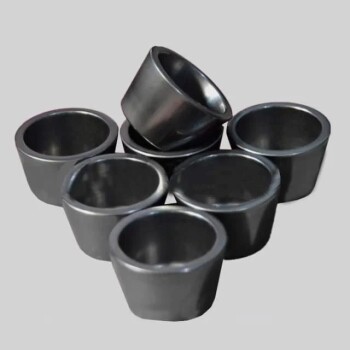
Graphite crucibles serve as indispensable reaction vessels for the carbothermic reduction of high-carbon ferromanganese due to their ability to withstand temperatures exceeding 1500°C without melting. These vessels do more than just hold the sample; they actively maintain a strong reducing environment by working in synergy with the coke in the material to simulate an industrial coke bed. This ensures that metal oxides are effectively converted into distinct metal and slag phases while preserving the structural integrity of the container.
Graphite crucibles provide a unique combination of extreme refractoriness and chemical synergy, enabling the simulation of industrial-scale reducing atmospheres within a controlled laboratory or pilot environment. This ensures both the accuracy of the metallurgical reaction and the longevity of the vessel.
Superior Thermal and Structural Stability
Exceptional Refractoriness and Strength
Graphite is one of the few materials that maintains its structural strength at the extreme temperatures required for ferromanganese production. It can reliably operate at 1500°C and above, where most other materials would soften or undergo catastrophic failure.
Thermal Field Uniformity
High thermal conductivity allows graphite to act as a rapid preheating device, ensuring a uniform thermal field throughout the sample. This thermal consistency is critical for achieving isothermal reduction, which allows for more accurate data collection during the reaction.
Resistance to Thermal Shock
Because of its unique atomic structure, graphite handles rapid temperature changes without cracking. This stability allows researchers to move from ambient temperatures to reduction temperatures quickly, increasing experimental throughput without risking vessel failure.
Chemical Synergy in Reducing Environments
Simulation of Industrial Coke Beds
In ferromanganese production, the crucible must mimic the conditions of a blast furnace or electric arc furnace. Graphite crucibles work in conjunction with the carbon reductants in the sample to create a "micro-chamber" that replicates the high-carbon environment of an industrial coke bed.
Maintaining CO/CO2 Equilibrium
At processing temperatures, graphite vessels spontaneously help create a CO/CO2 equilibrium environment with extremely low oxygen partial pressure. This atmosphere is essential for the carbothermic reduction process, as it prevents the re-oxidation of the metal and keeps the sample surface clean.
High Purity and Low Contamination
Specialized high-purity graphite is used to prevent volatile substances from contaminating the reaction. The low ash content ensures that no unwanted impurities are introduced into the ferromanganese or the resulting slag, which is vital for precise phase analysis.
Durability and Erosion Resistance
High Bulk Density and Low Porosity
Modern graphite crucibles are produced using specialized technology to achieve high density and minimal porosity. This structure resists the penetration and erosion typically caused by aggressive molten slag and gas particles generated during reduction.
Anti-Oxidation Treatments
While graphite is susceptible to oxygen at high temperatures, many technical-grade crucibles receive specific anti-oxidation surface treatments. These coatings maximize the service life of the crucible, allowing it to be reused for multiple experimental runs.
Precise Machining for Accurate Results
Graphite can be machined to exact specifications and polished to a mirror finish. This precision ensures that sample volumes are consistent and that the interface between the sample and the vessel is predictable.
Understanding the Technical Trade-offs
Susceptibility to Air Oxidation
Despite their high-temperature capabilities, graphite crucibles will oxidize and degrade rapidly if exposed to oxygen at high temperatures. They must be used in inert or reducing atmospheres, or they require specialized coatings to prevent the vessel itself from being consumed.
Carbon Pickup Considerations
Because the crucible is made of carbon, it can contribute carbon to the melt. While this is ideal for "high-carbon" ferromanganese, it makes graphite an unsuitable choice for producing low-carbon or "ultra-low carbon" alloys where carbon levels must be strictly minimized.
Cost vs. Purity Balance
Higher-purity graphite significantly reduces the risk of sample contamination but comes at a higher price point. Users must balance the need for experimental precision against the consumable cost of high-purity versus standard-grade graphite.
Optimizing Crucible Selection for Your Project
Choosing the right graphite vessel depends on your specific experimental parameters and the desired purity of your final alloy.
- If your primary focus is industrial simulation: Utilize standard-density graphite crucibles that emphasize the creation of a stable CO/CO2 micro-environment.
- If your primary focus is high-precision phase analysis: Invest in high-purity, low-ash graphite to ensure that no trace elements from the vessel contaminate the slag or metal phases.
- If your primary focus is vessel longevity: Opt for crucibles with specialized anti-oxidation coatings and high bulk density to resist erosion from molten slag.
By leveraging the inherent chemical and thermal properties of graphite, researchers can achieve the highly controlled reducing conditions necessary for successful ferromanganese production.
Summary Table:
| Key Feature | Benefit for Ferromanganese Reduction | Technical Highlight |
|---|---|---|
| Extreme Refractoriness | Operates at temperatures >1500°C | Maintains structural strength where others fail |
| Chemical Synergy | Simulates industrial coke beds | Maintains CO/CO2 equilibrium & low oxygen pressure |
| Thermal Conductivity | Ensures a uniform thermal field | Allows for accurate isothermal reduction data |
| Erosion Resistance | Resists aggressive molten slag | High bulk density and low porosity structure |
| High Purity | Prevents sample contamination | Low ash content for precise metallurgical analysis |
Elevate Your Metallurgical Research with KINTEK
Precision in carbothermic reduction requires more than just high heat—it demands the right environment. KINTEK provides a comprehensive range of premium laboratory equipment and consumables tailored for extreme thermal processing. From our specialized high-purity graphite crucibles and ceramics to advanced high-temperature furnaces (muffle, vacuum, and atmosphere), we ensure your lab replicates industrial conditions with absolute accuracy.
Whether you are refining high-carbon alloys or developing new materials, our portfolio includes everything from crushing and milling systems to hydraulic pellet presses and high-pressure reactors. Partner with KINTEK for durable, high-performance solutions that guarantee reliable results.
Ready to optimize your high-temperature experiments? Contact our experts today to find the perfect equipment for your specific application!
References
- Michel Kalenga WA KALENGA, Didier Kasongo NYEMBWE. impact of Al2O3/SiO2 on the SLAG system in the COKE BED zone during high carbon ferromanganese production using basic manganese ores. DOI: 10.37904/metal.2023.4625
This article is also based on technical information from Kintek Solution Knowledge Base .
Related Products
- High Purity Pure Graphite Crucible for Electron Beam Evaporation
- High Purity Pure Graphite Crucible for Evaporation
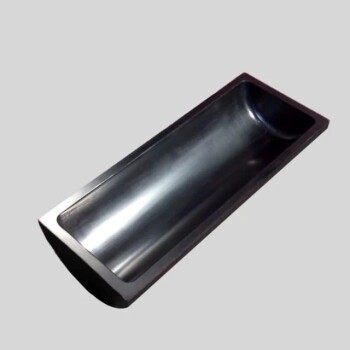
- Carbon Graphite Boat -Laboratory Tube Furnace with Cover
- Graphite Vacuum Continuous Graphitization Furnace
- Arc-Shaped Alumina Ceramic Crucible High Temperature Resistant for Engineering Advanced Fine Ceramics
People Also Ask
- What is the container that holds the metal source material called in e-beam evaporation? Ensure Purity and Quality in Your Thin-Film Deposition
- What role do high-purity graphite crucibles play in molten salt corrosion research? Ensure Reactor-Grade Precision
- Why is a high-purity graphite crucible ideal for nitrogen-doped graphene at 1500 °C? Maximize Purity and Stability
- What dual roles do high-purity graphite crucibles play? Expert Insights into Fluoride Salt Testing
- What role does a high-purity graphite crucible play in CaO-MgO-Al2O3-SiO2 system equilibrium experiments? Maximize Accuracy