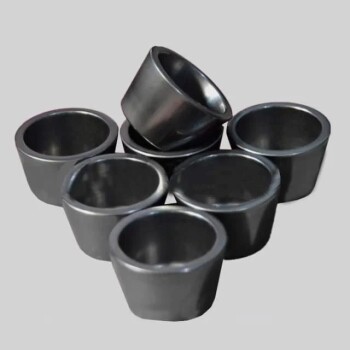
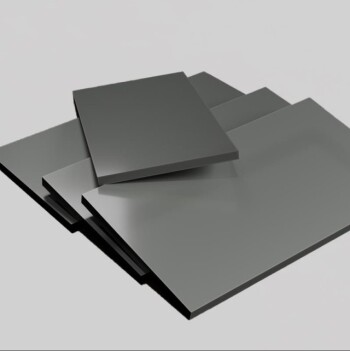
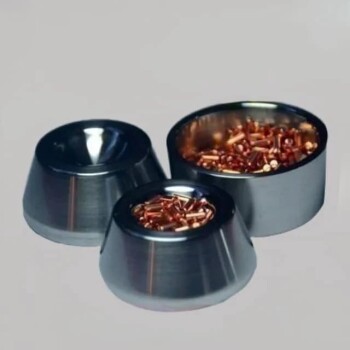
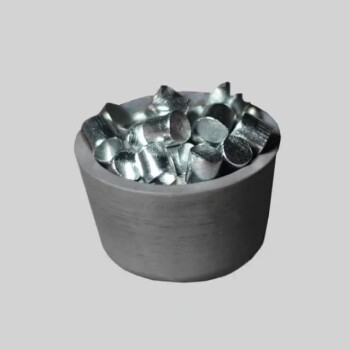
High-purity graphite provides the critical thermal and chemical stability required to process Chromel-TaC composites without degrading the material. Specifically, it serves as a robust containment vessel capable of withstanding melting temperatures up to 1400°C while remaining chemically inert to the chromium-nickel (Chromel) alloy. This combination ensures that the molten matrix melts efficiently without absorbing impurities from the crucible walls.
The selection of a high-purity graphite crucible is dictated by the need for a vessel that offers high thermal conductivity and stability at extreme temperatures. Crucially, its chemical inertness ensures the molten Chromel matrix remains free from contamination, guaranteeing the final composite's purity and performance.
The Critical Role of Thermal Stability
Processing metal matrix composites requires reaching temperatures that would compromise lesser materials. Graphite is uniquely and specifically suited for this thermal environment.
Withstanding Extreme Heat
The preparation of Chromel-TaC composites involves melting temperatures capable of reaching 1400°C.
High-purity graphite maintains its structural integrity under these extreme conditions. It does not soften, deform, or melt, providing a stable vessel throughout the entire heating cycle.
Efficient Heat Transfer
Beyond simply surviving the heat, the vessel must transfer it effectively to the composite materials.
Graphite possesses excellent thermal conductivity. This ensures that heat is distributed evenly to the Chromel alloy and TaC reinforcement, facilitating a uniform melt and consistent composite structure.
Preserving Material Integrity
The greatest risk in high-temperature metallurgy is the reaction between the molten metal and its container. High-purity graphite eliminates this variable.
Chemical Inertness
At high temperatures, many vessel materials become reactive, potentially bonding with the molten alloy.
However, graphite remains chemically inert to chromium-nickel alloys (Chromel). This lack of reactivity prevents the vessel from degrading or altering the chemical composition of the alloy matrix during the melt.
Preventing Impurity Contamination
The purity of the crucible material itself is just as important as its inertness.
Using high-purity graphite ensures that no foreign contaminants leach from the crucible into the molten state. This safeguards the alloy matrix, ensuring the final composite retains its intended mechanical and chemical properties.
Understanding the Trade-offs
While high-purity graphite is the superior choice for this application, it is important to understand the specific constraints of using this material.
The Necessity of "High Purity"
Not all graphite is created equal. Standard industrial graphite may contain trace elements or binders that could burn off or leach into the melt at 1400°C.
If you compromise on the purity grade of the graphite, you negate the benefits of the material. You risk introducing the very impurities you are trying to avoid, which can compromise the structural performance of the Chromel-TaC composite.
Making the Right Choice for Your Goal
To ensure the successful preparation of your composite, your equipment choices must align with the material's chemical demands.
- If your primary focus is preventing contamination: Ensure the crucible is certified as "high-purity" graphite to guarantee zero leaching into the alloy matrix.
- If your primary focus is process stability: Verify that the crucible specifications explicitly support sustained operation at or above 1400°C to prevent structural failure during the melt.
By prioritizing high-purity graphite, you ensure that the vessel remains a neutral, passive participant in the manufacturing process, allowing the intrinsic properties of the Chromel-TaC composite to emerge without interference.
Summary Table:
| Feature | Benefit for Chromel-TaC Preparation |
|---|---|
| Melting Point | Withstands extreme temperatures up to 1400°C without deformation |
| Thermal Conductivity | Ensures uniform heat distribution for a consistent composite melt |
| Chemical Inertness | Prevents reactions between the vessel and the chromium-nickel alloy |
| High Purity Grade | Eliminates risk of trace element leaching or impurity contamination |
Elevate Your Composite Manufacturing with KINTEK
Precision in material science starts with the right containment. KINTEK specializes in high-performance laboratory equipment and consumables designed to withstand the rigors of advanced metallurgy. Whether you are preparing Chromel-TaC composites or conducting specialized research, our high-purity graphite crucibles, high-temperature furnaces, and ceramics provide the thermal stability and chemical inertness your process demands.
From high-temperature vacuum furnaces and induction melting systems to essential consumables like PTFE products and crucibles, KINTEK delivers the reliability needed for zero-contamination results.
Ready to optimize your lab's performance? Contact KINTEK today to discover how our comprehensive range of high-temperature solutions can enhance your research and production outcomes.
References
- B. Mohmed Fazil, P.M. Suresh. Tribological Behaviors Analysis of Synthesized Chromel Composite. DOI: 10.1590/1980-5373-mr-2022-0008
This article is also based on technical information from Kintek Solution Knowledge Base .
Related Products
- High Purity Pure Graphite Crucible for Evaporation
- High Purity Pure Graphite Crucible for Electron Beam Evaporation
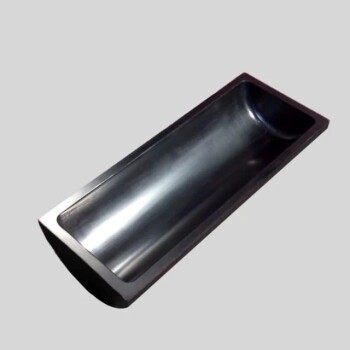
- Carbon Graphite Boat -Laboratory Tube Furnace with Cover
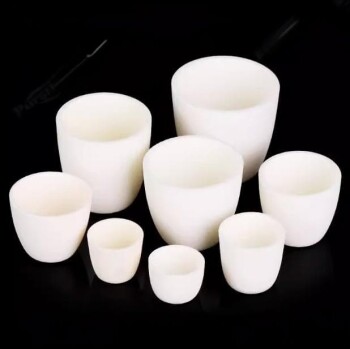
- Arc-Shaped Alumina Ceramic Crucible High Temperature Resistant for Engineering Advanced Fine Ceramics
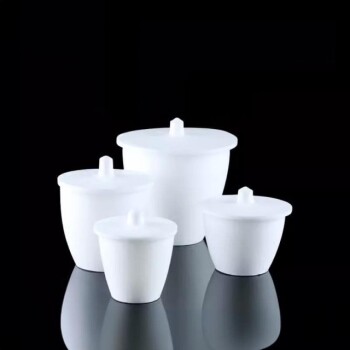
- Custom Machined and Molded PTFE Teflon Parts Manufacturer with PTFE Crucible and Lid
People Also Ask
- Why are high-purity graphite crucibles preferred for sulfide solid electrolytes? Achieve Superior Material Purity
- What role do high-purity graphite crucibles play in molten salt corrosion research? Ensure Reactor-Grade Precision
- Why are high-purity graphite crucibles used for magnesium distillation? Ensure 3N8 Purity & Thermal Stability
- Why is a high-purity graphite crucible ideal for nitrogen-doped graphene at 1500 °C? Maximize Purity and Stability
- What role does a high-purity graphite crucible play in CaO-MgO-Al2O3-SiO2 system equilibrium experiments? Maximize Accuracy