High-purity alumina crucibles are the critical barrier between your reactants and synthesis failure during the calcination of Ruddlesden–Popper perovskite oxide (RPPO) precursors. They are strictly necessary because they possess the chemical inertness to withstand corrosive alkali metals (such as lithium or sodium) at temperatures up to 1150°C without softening or reacting. This specific stability prevents the crucible from contaminating the precursor mixture, ensuring the final material retains its precise chemical stoichiometry.
The synthesis of RPPO materials is highly sensitive to compositional deviations, particularly the loss of volatile alkali metals. High-purity alumina serves as a stable containment vessel that prevents side reactions with the container walls, ensuring the final powder matches the intended atomic formula exactly.
The Critical Role of Chemical Stability
Preventing Reaction with Alkali Metals
RPPO precursors often contain alkali metals like lithium or sodium, which become highly reactive and volatile at elevated temperatures.
Standard ceramic vessels often degrade when exposed to these elements in a molten or vapor state. High-purity alumina resists this attack, preventing the alkali components from leaching into the crucible wall. This ensures the full amount of reactants remains in the powder to form the correct crystal phase.
Maintaining Precise Stoichiometry
The performance of RPPO materials depends entirely on their stoichiometric ratio—the exact balance of atoms in the crystal structure.
If the crucible reacts with the precursor, it consumes specific elements, altering this ratio. Using high-purity alumina ensures that the input ratio of chemicals matches the output ratio, preventing the formation of impurity phases that would degrade the material's electrical or catalytic properties.
Eliminating Contamination Sources
At high temperatures, impurities from a low-quality crucible can diffuse into the sample.
High-purity alumina is chemically inert, meaning it does not release aluminum or other trace elements into the RPPO powder. This is vital for producing "clean" electrolyte powders where even trace contaminants can block ion transport channels.
Thermal Integrity at 1150°C
Resistance to Softening
Calcination of RPPO precursors requires prolonged exposure to temperatures around 1150°C.
Many materials begin to soften, warp, or lose structural integrity at this heat level. High-purity alumina maintains its physical rigidity, ensuring the crucible does not collapse or deform during the long heating cycle required to fully crystallize the perovskite structure.
Stability in Oxidizing Atmospheres
These calcination processes typically occur in an air or oxidizing atmosphere.
Alumina remains stable in these environments, preventing oxidation-reduction reactions that could degrade the crucible or alter the valence state of the transition metals within the RPPO precursor.
Understanding the Trade-offs
While high-purity alumina is the standard for RPPO calcination, it is not a universal solution for all ceramic processing.
The Limits of Inertness
While excellent for calcination up to 1150°C, alumina may not be suitable for extremely high sintering temperatures (approaching 1450°C) or for materials with exceptionally high lithium activity. Under those extreme conditions, even alumina can participate in side reactions, necessitating alternative materials like zirconia.
Thermal Shock Sensitivity
High-purity alumina is a dense ceramic and can be susceptible to thermal shock. Rapid heating or cooling rates can cause the crucible to crack. Users must adhere to controlled ramp rates to preserve the lifespan of the crucible and the safety of the sample.
Making the Right Choice for Your Goal
Selecting the correct crucible is about matching the vessel's capabilities to your specific processing parameters.
- If your primary focus is Phase Purity: Use high-purity alumina (>99.5%) to ensure absolutely no foreign elements leach into your RPPO lattice.
- If your primary focus is Stoichiometric Control: Rely on alumina to prevent the loss of active lithium or sodium into the container walls, guaranteeing the correct atomic ratio.
- If your primary focus is Extreme Temperature Sintering (>1300°C): Evaluate whether alumina is still sufficient, or if a switch to zirconia is required to prevent reaction at liquid-phase sintering temperatures.
By using high-purity alumina, you remove the variable of container interference, allowing you to attribute material performance solely to your synthesis design.
Summary Table:
| Feature | High-Purity Alumina Benefit |
|---|---|
| Chemical Inertness | Resists corrosive alkali metals (Li, Na) at high temperatures |
| Stoichiometry | Prevents reactant leaching, ensuring exact atomic ratios |
| Thermal Limit | Maintains structural integrity and rigidity up to 1150°C |
| Atmosphere | Remains stable in oxidizing environments (air) |
| Purity Control | Eliminates diffusion of trace elements into the sample |
Elevate Your Materials Synthesis with KINTEK Precision
Don't let container contamination compromise your research. KINTEK specializes in high-performance laboratory equipment and consumables, providing the high-purity alumina and zirconia crucibles essential for sensitive RPPO calcination.
Our extensive portfolio supports every stage of your workflow, from high-temperature muffle and tube furnaces to crushing systems, hydraulic presses, and advanced battery research tools. Ensure absolute phase purity and stoichiometric control in your next experiment.
Contact KINTEK Experts Today to find the perfect ceramic solutions and thermal processing equipment for your laboratory.
Related Products
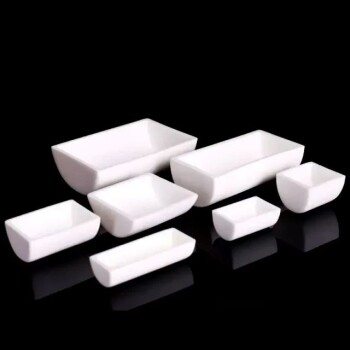
- Arc-Shaped Alumina Ceramic Crucible High Temperature Resistant for Engineering Advanced Fine Ceramics
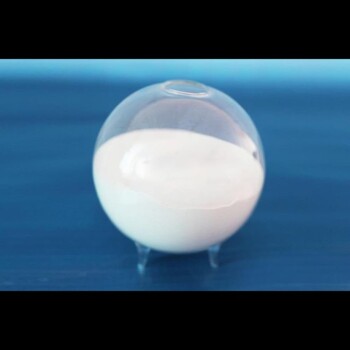
- High Purity Alumina Granulated Powder for Engineering Advanced Fine Ceramics
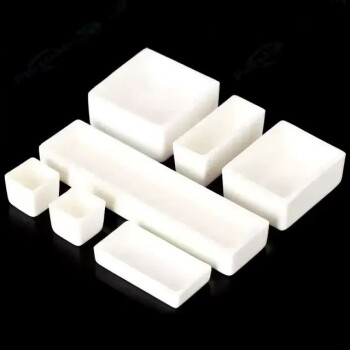
- Engineering Advanced Fine Alumina Al2O3 Ceramic Crucible for Laboratory Muffle Furnace
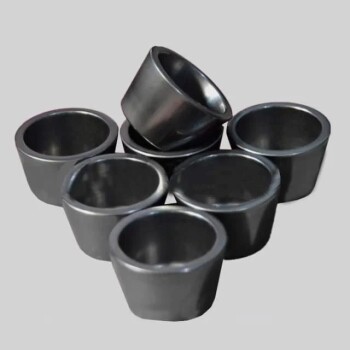
- High Purity Pure Graphite Crucible for Evaporation
- High Purity Pure Graphite Crucible for Electron Beam Evaporation
People Also Ask
- Why Use Alumina Crucibles & Powder Burial for NaSICON? Ensure Phase Purity and Prevent Elemental Volatilization
- What is the primary purpose of using alumina crucibles for LLTO ceramics? Optimize Your High-Temperature Sintering
- Why are alumina crucibles and mother powder essential for LATP sintering? Optimize Your Solid Electrolyte Performance
- Why are high-purity alumina crucibles used for liquid lead corrosion experiments? Ensure Data Accuracy at 550°C
- Primary considerations for choosing alumina crucibles and quartz tubes in indium intercalation: Ensure Material Purity