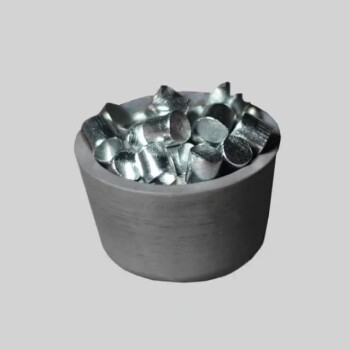
Graphite crucibles are the definitive choice for experiments requiring temperatures up to 3000°C due to their unique ability to maintain structural integrity where other materials fail. Beyond mere survival, they actively facilitate the graphitization process through superior electrical conductivity, allowing for precise induction heating while preventing metal contamination in the final sample.
Core Takeaway Success at 3000°C requires a material that is not only heat-resistant but also chemically compatible with the graphitization process. Graphite crucibles provide a chemically inert environment that withstands extreme thermal stress while acting as a conductive medium for efficient, uniform heat distribution.
Thermal and Structural Integrity
Withstanding the 3000°C Barrier
For graphitization experiments, the primary challenge is finding a container that does not melt or deform. Graphite crucibles possess exceptional thermal stability, maintaining their shape and strength even at operating temperatures of 3000°C.
High Bulk Density and Erosion Resistance
Modern manufacturing techniques produce graphite with high bulk density and low porosity. This structural density allows the crucible to resist erosion from molten materials and gas particles, significantly extending the equipment's operational life.
Exact Machining for Stability
Graphite can be machined to precise sizes with a polished mirror surface. This mechanical precision ensures a stable fit within the furnace and consistent thermal contact, which is critical for reproducibility in high-stakes experiments.
Optimizing Heat Transfer Mechanics
The Advantage of Electrical Conductivity
Unlike ceramic insulators, graphite is electrically conductive. This property is vital for induction coupling, allowing the crucible itself to generate heat when used in an induction furnace.
Ensuring Uniform Thermal Treatment
Because the crucible couples directly with the induction field, it facilitates efficient and uniform heat transfer to the sample. This ensures that the carbon material inside undergoes consistent thermal treatment throughout its volume, rather than experiencing gradients that could skew experimental results.
Purity and Chemical Compatibility
preventing Metallic Contamination
Standard metal crucibles would melt or leach impurities at these temperatures. Graphite crucibles eliminate the introduction of external metal impurities, ensuring that the chemical composition of your sample remains uncompromised.
Minimizing Volatile Defects
Using high-purity, low-ash graphite prevents the release of volatile substances during heating. This is crucial for avoiding surface defects, such as spots and holes, which can ruin coatings or alter the physical properties of the carbon sample.
Understanding the Trade-offs
The Oxidation Challenge
While graphite is thermally stable, it is highly reactive to oxygen at high temperatures. Without a protective atmosphere (vacuum or inert gas) or specialized anti-oxidation coatings, the crucible will degrade rapidly.
Porosity Management
Although processed for low porosity, graphite is not inherently non-porous. Depending on the specific experiment, you must ensure the crucible's density is sufficient to prevent the infiltration of specific molten materials or gases that could weaken the vessel over time.
Making the Right Choice for Your Goal
To maximize the success of your graphitization experiment, align your crucible selection with your specific technical priority:
- If your primary focus is Sample Purity: Prioritize high-purity, low-ash content graphite to eliminate the risk of volatile substances creating defects or contaminating the carbon structure.
- If your primary focus is Equipment Longevity: Select crucibles with high bulk density and anti-oxidation treatments to resist erosion and extend the usable life of the container across multiple cycles.
By selecting the correct grade of graphite, you turn the container from a simple vessel into an active component of your thermal processing strategy.
Summary Table:
| Feature | Advantage for 3000°C Graphitization |
|---|---|
| Thermal Stability | Maintains structural integrity without melting or deforming. |
| Electrical Conductivity | Enables direct induction coupling for uniform and efficient heating. |
| Chemical Purity | High-purity, low-ash graphite prevents metallic contamination and defects. |
| Mechanical Precision | High bulk density and precise machining ensure erosion resistance and stability. |
| Thermal Transfer | Facilitates consistent heat distribution, reducing temperature gradients. |
Elevate Your High-Temperature Research with KINTEK
Precision at 3000°C requires more than just heat; it requires the right materials. KINTEK specializes in high-performance laboratory equipment, providing the graphite crucibles, ceramics, and high-temperature furnaces essential for advanced graphitization and materials science.
Whether you are managing complex CVD/PECVD processes or require specialized crushing and milling systems for sample preparation, our team delivers the expertise and tools to ensure your results are consistent and contamination-free.
Ready to optimize your thermal processing strategy? Contact KINTEK today for a customized solution and discover how our comprehensive portfolio—from vacuum furnaces to high-pressure reactors—can drive your next breakthrough.
References
- Zdzisław Adamczyk, Agnieszka Klupa. Possibilities of Graphitization of Unburned Carbon from Coal Fly Ash. DOI: 10.3390/min11091027
This article is also based on technical information from Kintek Solution Knowledge Base .
Related Products
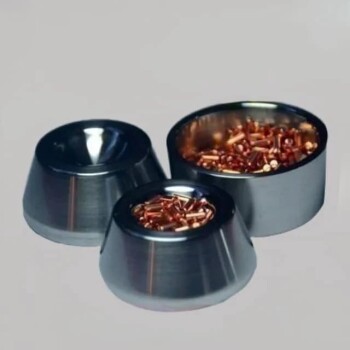
- High Purity Pure Graphite Crucible for Evaporation
- High Purity Pure Graphite Crucible for Electron Beam Evaporation
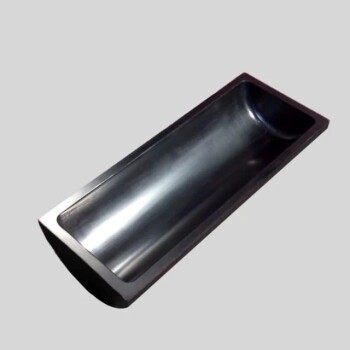
- Carbon Graphite Boat -Laboratory Tube Furnace with Cover
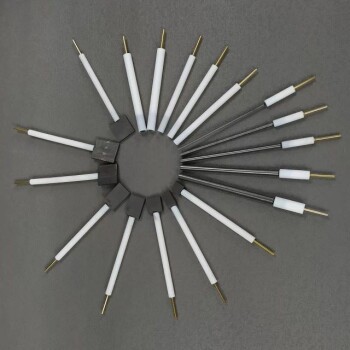
- Graphite Disc Rod and Sheet Electrode Electrochemical Graphite Electrode
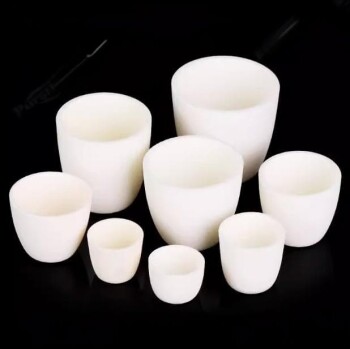
- Arc-Shaped Alumina Ceramic Crucible High Temperature Resistant for Engineering Advanced Fine Ceramics
People Also Ask
- Why are high-purity graphite crucibles preferred for sulfide solid electrolytes? Achieve Superior Material Purity
- Why is a high-purity graphite crucible required for Chromel-TaC composites? Ensure Peak Purity at 1400°C
- What role do high-purity graphite crucibles play in molten salt corrosion research? Ensure Reactor-Grade Precision
- Why are high-purity graphite crucibles used for magnesium distillation? Ensure 3N8 Purity & Thermal Stability
- Why is a high-purity graphite crucible ideal for nitrogen-doped graphene at 1500 °C? Maximize Purity and Stability