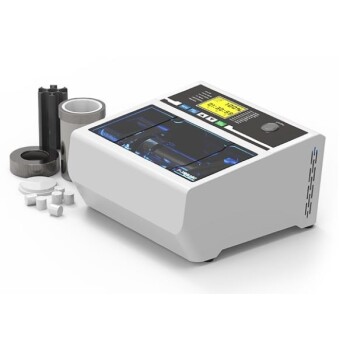
Lab-scale batch reactors provide a critical, controlled environment for efficiently optimizing hydrothermal processes. Their primary advantages lie in operational flexibility, allowing researchers to precisely manipulate solvent-to-solid ratios and heating profiles within a manageable, sealed system to determine ideal conditions.
By isolating variables in a controlled setting, these reactors transform raw agricultural waste into actionable data, providing the precise foundation required to scale operations from the laboratory to the industrial floor.
The Mechanics of Flexibility
Precise Control Over Process Variables
The defining advantage of lab-scale batch reactors is the flexibility they offer in adjusting key parameters. Researchers can easily modify the solvent-to-solid (S/F) ratio to test how different concentrations affect breakdown efficiency.
Robust Reaction Environments
These reactors feature robust sealing and manageable volumes. This design allows for the safe generation and maintenance of specific heating profiles, ensuring that pressure and temperature requirements are met consistently during the screening process.
Handling Diverse Feedstocks
Adaptability to Material Composition
Not all agricultural residues behave the same way under hydrothermal conditions. Lab-scale reactors allow for the quick determination of optimal processing conditions for widely varying feedstocks.
Optimization for Specific Residues
Whether processing high-lignin shells or high-cellulose straws, researchers can use these reactors to dial in the exact temperature and pressure combinations required for that specific material structure.
Bridging the Gap to Industry
From Screening to Scaling
The ultimate goal of using lab-scale batch reactors is not just observation, but preparation for mass production. The testing process generates a precise data foundation.
De-risking Industrial Implementation
By validating parameters at the lab scale, operators can move to industrial production with confidence. The data obtained provides the necessary roadmap to replicate results on a larger footprint.
Operational Considerations
The Scope of Lab-Scale Testing
While these reactors are ideal for screening, it is important to view them as a tool for data generation, not production.
Volume Constraints
The "manageable volume" mentioned in the primary reference is a benefit for testing but represents a limitation for throughput. The insights gained here serve as a foundation for scaling up, implying that process parameters may need fine-tuning when transferred to larger, continuous industrial machinery.
Making the Right Choice for Your Goal
To maximize the value of lab-scale batch reactors, align your testing strategy with your end goals:
- If your primary focus is Process Optimization: Prioritize manipulating the solvent-to-solid (S/F) ratio and heating profiles to find the efficiency "sweet spot" for your specific material.
- If your primary focus is Commercial Scale-up: Focus on generating consistent data points that serve as a precise foundation for designing industrial-sized systems.
Success in hydrothermal processing begins with the rigorous, small-scale validation of your parameters.
Summary Table:
| Feature | Advantage for Screening | Impact on Research |
|---|---|---|
| Variable Control | Precise adjustment of S/F ratios & heating profiles | Maximizes process efficiency and yield |
| Robust Sealing | Maintains consistent high pressure and temperature | Ensures safe and reproducible experiments |
| Feedstock Adaptability | Quick testing for various industrial/agri residues | Rapid identification of optimal material-specific conditions |
| Scale-up Readiness | Generates a precise data foundation | De-risks the transition from lab to industrial production |
Accelerate Your Research with Precision Lab Solutions
Take the guesswork out of hydrothermal processing. KINTEK specializes in high-performance laboratory equipment, providing the high-temperature high-pressure reactors and autoclaves necessary to turn agricultural and industrial residues into valuable data. Whether you are optimizing solvent-to-solid ratios or scaling for industrial implementation, our robust systems ensure the reliability your lab demands.
From high-temperature furnaces to precision hydraulic presses, we provide the tools to empower your scientific breakthroughs. Ready to optimize your process? Contact KINTEK today to consult with our experts and find the perfect reactor for your application!
References
- Fiorella P. Cárdenas‐Toro, M. Ângela A. Meireles. Obtaining Oligo- and Monosaccharides from Agroindustrial and Agricultural Residues Using Hydrothermal Treatments. DOI: 10.5923/j.fph.20140403.08
This article is also based on technical information from Kintek Solution Knowledge Base .
Related Products
- Mini SS High Pressure Autoclave Reactor for Laboratory Use
- High Pressure Laboratory Autoclave Reactor for Hydrothermal Synthesis
- Customizable Laboratory High Temperature High Pressure Reactors for Diverse Scientific Applications
- Stainless High Pressure Autoclave Reactor Laboratory Pressure Reactor
- Customizable High Pressure Reactors for Advanced Scientific and Industrial Applications
People Also Ask
- Why use high-pressure reactors for molecular sieve synthesis? Unlock Superior Crystallinity and Framework Control
- What are the advantages of using a high-pressure reactor like an autoclave? Maximize Liquefaction Speed & Yield
- Why are high-pressure reactors or autoclaves necessary for the synthesis of new functional materials? Unlock Precision.
- What is the function of a high-pressure reactor autoclave? Enhancing Cu/N Co-Doped Carbon Catalyst Synthesis
- How are high-pressure reactors used to prepare metaphosphate electrocatalysts? Master In-Situ Precursor Growth