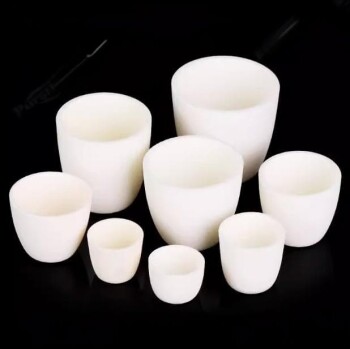
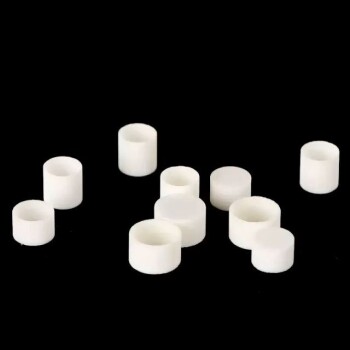
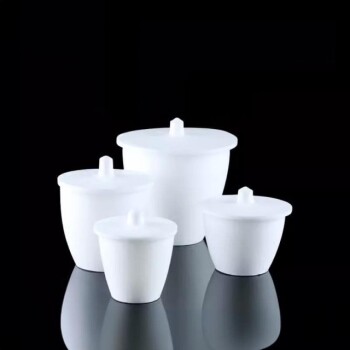
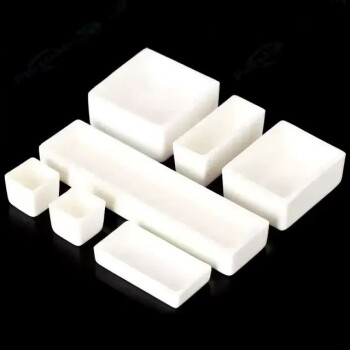
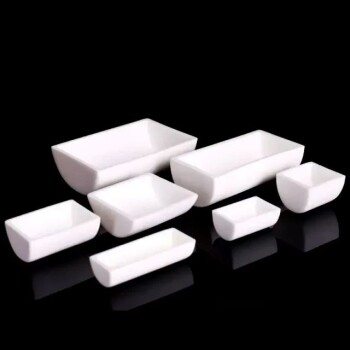
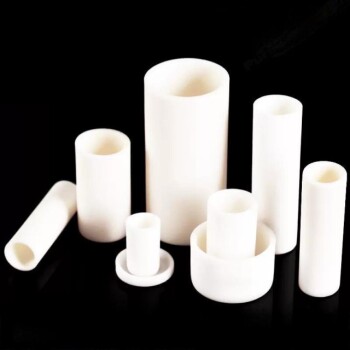
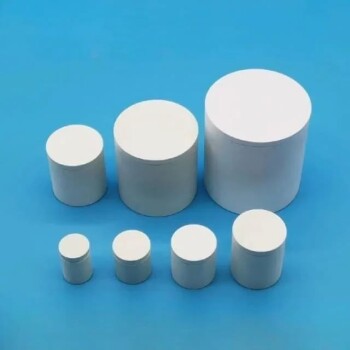
Selecting the right ceramic crucible for titanium heat treatment requires prioritizing chemical inertness and high-temperature structural integrity above all other factors. Because titanium is exceptionally reactive at elevated temperatures, the crucible must act as a completely neutral vessel to prevent alloy contamination. Key considerations include the crucible's specific material composition, its thermal shock resistance, and its ability to maintain a significant safety margin above the processing temperature.
The central takeaway: To ensure the purity and reliability of titanium alloys, one must select high-purity crucibles—typically Alumina or Zirconia—that offer a wide thermal safety margin and possess the chemical stability to resist interface reactions with the reactive titanium sample.
The Imperative of Chemical Inertness
Preventing Secondary Contamination
At temperatures exceeding 900 °C, titanium becomes highly susceptible to reacting with its environment. High-purity ceramic crucibles are essential because they prevent the introduction of external impurities that could compromise the alloy's mechanical properties. By remaining chemically indifferent to the sample, these crucibles ensure that the final chemical composition remains precisely as intended.
Managing Interface Reactions
Even though molten titanium reacts with most refractory oxides, high-quality materials can limit this interface reaction to a negligible level. For processes like vacuum induction melting, the crucible must be capable of holding the material without allowing the container walls to melt into or react with the reactants. This stability is what makes high-performance ceramics the standard for reliable experimental data.
Strategic Material Selection
Alumina (Al2O3) for Thermal Analysis
Alumina crucibles are the preferred choice for differential scanning calorimetry (DSC) and measuring phase transition temperatures, such as the Beta transus point. They can withstand temperatures exceeding 1000 °C without reacting with the titanium, ensuring that heat flow signals remain accurate. Their exceptional high-temperature stability makes them ideal for precision laboratory measurements.
Zirconia (ZrO2) for High-Temperature Melting
For vacuum melting applications, Zirconia crucibles are selected due to their exceptionally high melting point and superior chemical stability. They are considered essential consumables because they can withstand the extreme conditions of titanium melting while maintaining the purity of the melt. While more specialized than alumina, zirconia provides the necessary resistance for the most demanding thermal processes.
Structural Reliability and Thermal Safety
The 1500 °C Safety Margin
When conducting sintering processes at 1100 °C, the crucible should ideally have a rated temperature resistance of at least 1500 °C. This 400-degree safety margin provides a buffer that protects the structural integrity of the crucible during unexpected temperature spikes. Operating well below the rated limit also extends the lifespan of the crucible as a consumable.
Thermal Shock Resistance
Crucibles must possess excellent thermal shock resistance to survive rapid heating and cooling cycles without cracking. A crucible that fails structurally during heat treatment can lead to sample loss and damage to the furnace heating elements. High-performance ceramics are engineered to maintain their structural strength even when subjected to significant thermal gradients.
Understanding the Trade-offs and Limitations
The Reactivity Paradox
Despite being "inert," no ceramic is perfectly immune to titanium at extreme temperatures; it is a matter of limiting the rate of reaction. Over multiple uses, even the best zirconia or alumina crucibles may show signs of degradation or slight surface interactions. Users must monitor the crucible surface for signs of pitting or discoloration, which indicate that the material is beginning to fail.
Brittleness vs. Stability
High-purity ceramics are inherently brittle and lack the ductility of metallic containers. This means that while they offer the chemical purity required for titanium, they are highly sensitive to physical impacts and improper handling. The trade-off for high chemical purity is a requirement for meticulous handling and controlled heating rates to prevent mechanical failure.
How to Apply This to Your Project
Selecting the right crucible depends on your specific thermal process and the required purity level of your titanium alloy.
- If your primary focus is precision thermal analysis (DSC): Use Alumina (Al2O3) crucibles to ensure accurate heat flow signals and stable performance up to 1000 °C.
- If your primary focus is vacuum induction melting: Opt for high-quality Zirconia (ZrO2) crucibles to leverage their high melting point and ability to limit interface reactions with molten titanium.
- If your primary focus is long-term sintering at 1100 °C: Choose a crucible with a rated temperature of at least 1500 °C and high thermal shock resistance to ensure a sufficient safety margin.
- If your primary focus is preventing trace element contamination: Prioritize high-purity ceramic grades to avoid reactions with active elements like titanium, strontium, or samarium.
By matching the specific refractory properties of the crucible to the thermal demands of the titanium alloy, you ensure both the safety of the equipment and the integrity of the material.
Summary Table:
| Key Consideration | Recommended Material/Specification | Primary Benefit |
|---|---|---|
| Thermal Analysis (DSC) | High-Purity Alumina (Al₂O₃) | Stable heat flow signals up to 1000°C |
| Vacuum Induction Melting | Specialized Zirconia (ZrO₂) | Superior chemical stability against molten Ti |
| Sintering Safety | 1500°C Rated Resistance | Provides a 400°C safety margin for 1100°C processes |
| Cycling Durability | High Thermal Shock Resistance | Prevents crucible cracking and sample loss |
| Chemical Purity | Inert Refractory Oxides | Minimizes interface reactions and contamination |
Optimize Your Titanium Processing with KINTEK Precision
Maintaining the integrity of reactive titanium alloys requires more than just high temperatures—it requires uncompromising material purity. KINTEK specializes in high-performance laboratory equipment and consumables designed for the most demanding thermal environments.
Whether you need high-purity ceramic crucibles (Alumina, Zirconia) to prevent contamination or advanced vacuum, muffle, or induction melting furnaces to control your atmosphere, our technical team is ready to support your research. We provide a comprehensive range of solutions, from high-temperature reactors to crushing and milling systems, ensuring your workflow is efficient and your results are reliable.
Ensure the success of your next heat treatment project—Contact KINTEK Today for expert advice and premium consumables!
References
- Tinyiko Rose Nkuna, Ronald Machaka. Spark plasma sintered Ti-35Nb-7Zr-5Ta-1Cu alloy. DOI: 10.1051/matecconf/202338803011
This article is also based on technical information from Kintek Solution Knowledge Base .
Related Products
- Arc-Shaped Alumina Ceramic Crucible High Temperature Resistant for Engineering Advanced Fine Ceramics
- Engineering Advanced Fine Ceramics Alumina Crucibles (Al2O3) for Thermal Analysis TGA DTA
- Custom Machined and Molded PTFE Teflon Parts Manufacturer with PTFE Crucible and Lid
- Engineering Advanced Fine Alumina Al2O3 Ceramic Crucible for Laboratory Muffle Furnace
- Alumina Al2O3 Ceramic Crucible Semicircle Boat with Lid for Engineering Advanced Fine Ceramics
People Also Ask
- Why Use Alumina Crucibles & Powder Burial for NaSICON? Ensure Phase Purity and Prevent Elemental Volatilization
- What is the primary purpose of using alumina crucibles for LLTO ceramics? Optimize Your High-Temperature Sintering
- Why are alumina crucibles and mother powder essential for LATP sintering? Optimize Your Solid Electrolyte Performance
- Why are high-purity alumina crucibles used for liquid lead corrosion experiments? Ensure Data Accuracy at 550°C
- Primary considerations for choosing alumina crucibles and quartz tubes in indium intercalation: Ensure Material Purity