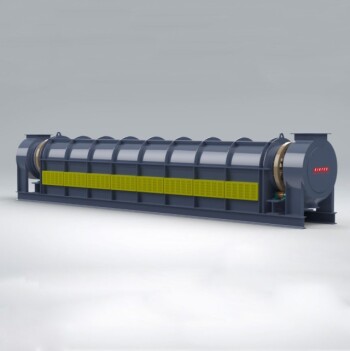
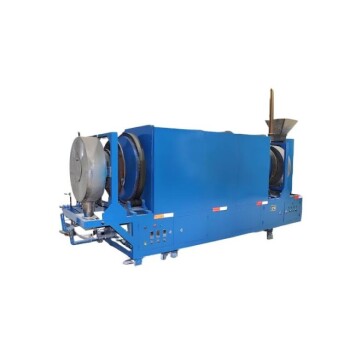
The successful conversion of yeast biomass into high-value bio-oils requires a reactor that balances extreme thermal durability with precise chemical control. For a stainless steel tubular pyrolysis reactor, the critical design priorities include selecting a material grade that resists corrosive bio-oils at temperatures between 400°C and 600°C, ensuring a perfectly anaerobic seal, and optimizing the geometry for uniform heat distribution. Failure to address these factors leads to poor vapor quality and accelerated structural fatigue.
Designing a pyrolysis reactor for yeast biomass is a multi-dimensional engineering challenge where material science meets fluid dynamics. The core objective is to create a controlled, anaerobic environment that maximizes organic cracking while maintaining the structural integrity of the vessel under high-temperature stress.
Material Selection and Corrosion Resistance
The Selection of Grade 316 Stainless Steel
While Grade 304 is often used in general applications, Grade 316 Stainless Steel is the preferred choice for biomass pyrolysis. Its superior corrosion resistance is essential for withstanding the acidic and highly corrosive nature of the bio-oil vapors produced during yeast conversion.
Structural Stability at Elevated Temperatures
The reactor must maintain mechanical strength across an operating range of 400°C to 600°C. High-quality stainless steel ensures the vessel does not warp or lose its load-bearing capacity during the prolonged thermal cycles required for efficient cracking.
Maintaining Chemical Inertness
A critical requirement for biomass conversion is a chemically inert environment. The reactor surface must not catalyze undesirable side reactions, ensuring that the resulting pyrolysis vapors remain pure and high in value.
Thermal and Kinetic Optimization
Ensuring Uniform Heat Conduction
To facilitate the cracking of organic components in oleaginous yeast, the design must provide a uniform heat conduction environment. This is typically achieved by integrating the tubular reactor with electric heating furnaces that allow for precise, zoned temperature control.
Optimizing Geometry and Aspect Ratio
The aspect ratio (length-to-diameter) of the tube significantly influences the residence time of biomass vapors. A well-optimized ratio ensures that vapors interact correctly with the heat source or catalyst bed, maximizing yield and minimizing charcoal byproduct.
Managing Flow Velocity and Heat Supply
The efficiency of the conversion is a function of the substrate’s flow velocity and the rate of heat transfer. Designers must calibrate these variables to ensure the yeast biomass reaches the required temperature quickly enough to trigger pyrolysis without over-cooking the organic matter.
Structural Integrity and Sealing
Adherence to Pressure Vessel Standards
A pyrolysis reactor should be constructed following boiler-grade pressure vessel standards, such as those using Q245R or Q345R plates. For stainless steel variants, a typical wall thickness of 16mm is often employed to handle the internal pressures generated during the gasification phase.
Round-Shaped Head Design
Using a round-shaped head for the reactor provides superior tension management compared to flat designs. This geometry helps prevent cracking at the connection points between the reactor body and the head when exposed to high pressure and thermal expansion.
Sealing for Anaerobic Conditions
Pyrolysis must occur in the absence of oxygen to prevent combustion. The reactor must feature a robust sealing performance, often utilizing a nitrogen-purged atmosphere to maintain an inert environment and ensure the safety of the process.
Understanding the Technical Trade-offs
Wall Thickness vs. Heat Transfer Efficiency
Increasing the wall thickness to 16mm enhances safety and pressure resistance but creates a significant thermal lag. Designers must find the "sweet spot" where the reactor is thick enough to be safe but thin enough to allow for responsive temperature adjustments.
Material Cost vs. Longevity
While Grade 316 stainless steel offers the best corrosion resistance, it carries a higher capital cost than Grade 304 or carbon steel boiler plates. However, using lower-grade materials in a yeast conversion environment often results in premature vessel failure and high maintenance costs.
Complexity of Design vs. Operational Cost
Simple tubular designs are cost-effective to construct and operate but may lack the throughput of more complex auger or fluidized bed systems. For slow pyrolysis, the simplicity of the tube is an advantage, but it may limit the reactor's flexibility for flash pyrolysis applications.
Making the Right Choice for Your Project
The specific design of your reactor should be dictated by your production scale and the desired end-product quality.
- If your primary focus is maximizing bio-oil purity: Prioritize Grade 316 stainless steel and a high-precision electric furnace to ensure a stable, non-reactive kinetic environment.
- If your primary focus is industrial-scale throughput: Focus on a reactor designed to boiler-grade standards with a 16mm wall thickness and a rounded head to handle the stresses of continuous operation.
- If your primary focus is low-cost research and development: A simple Grade 304 stainless steel tubular design may suffice, provided the operating temperatures are kept strictly below 500°C to minimize corrosion.
By meticulously aligning material selection with thermal dynamics, you can transform yeast biomass into a reliable source of high-value energy.
Summary Table:
| Design Feature | Recommendation | Key Benefit |
|---|---|---|
| Material Grade | Grade 316 Stainless Steel | Superior corrosion resistance against acidic bio-oils |
| Temp. Range | 400°C to 600°C | Optimized cracking of organic yeast components |
| Head Design | Round-shaped Head | Better tension management and pressure resistance |
| Wall Thickness | 16mm (Boiler-grade) | Ensures safety and durability during gasification |
| Atmosphere | Nitrogen-purged (Anaerobic) | Prevents combustion and ensures pure vapor quality |
Scale Your Bio-Energy Research with KINTEK Precision
Ready to transform yeast biomass into high-value bio-oils? KINTEK provides the advanced engineering solutions required for demanding pyrolysis applications. We specialize in high-performance laboratory equipment, including high-temperature tube and atmosphere furnaces, high-pressure reactors and autoclaves, and specialized crushing and milling systems.
Our portfolio is designed to meet the rigorous standards of biomass conversion, offering everything from precision hydraulic presses to essential ceramic and PTFE consumables. Whether you are optimizing vapor quality or ensuring reactor longevity, our experts are here to support your laboratory's success.
Contact KINTEK today to discuss your reactor requirements and achieve superior material conversion!
References
- Pongsatorn Poopisut, Apichat Boontawan. Oleaginous yeast, Rhodotorula paludigena CM33, platform for bio-oil and biochar productions via fast pyrolysis. DOI: 10.1186/s13068-023-02270-x
This article is also based on technical information from Kintek Solution Knowledge Base .
Related Products
- Electric Rotary Kiln Small Rotary Furnace Biomass Pyrolysis Plant
- Stainless High Pressure Autoclave Reactor Laboratory Pressure Reactor
- Electric Rotary Kiln Pyrolysis Furnace Plant Machine Calciner Small Rotary Kiln Rotating Furnace
- Electric Rotary Kiln Continuous Working Small Rotary Furnace Heating Pyrolysis Plant
- Customer Made Versatile CVD Tube Furnace Chemical Vapor Deposition Chamber System Equipment
People Also Ask
- What is the temperature of a rotating kiln? It Depends on Your Material and Process Goal
- What are the principles of a rotary kiln? Master the Mechanics of High-Temperature Processing
- What are the different types of calciners? A Guide to Selecting the Right Thermal Processing Equipment
- How are rotary kilns heated? Direct vs. Indirect Heating Methods Explained
- Is rotary kiln a furnace? Discover the Key Differences for Industrial Processing