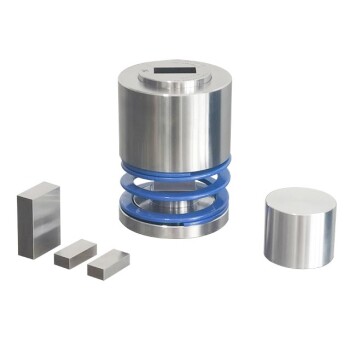
High-pressure stainless steel reactors and metal catalysts function as the critical physical vessel and chemical driver required to convert olefins (like ethylene or propylene) into aldehydes.
The reactor’s primary function is to maintain extreme pressures of several thousand psig to ensure synthesis gas (a mixture of carbon monoxide and hydrogen) remains soluble in the liquid phase. Simultaneously, homogeneous metal catalysts—specifically cobalt or rhodium—orchestrate the chemical reaction by forming complexes that insert carbon-oxygen bonds into the olefin's double bonds.
Core Takeaway: The stainless steel reactor provides the necessary high-pressure environment to force gas solubility, while the metal catalyst dictates the speed and selectivity of the reaction, enabling the efficient transformation of double bonds into linear or branched aldehydes.
The Function of the Reactor
Withstanding Extreme Pressure
The hydroformylation process requires a robust containment system capable of operating safely at pressures reaching several thousand psig.
Stainless steel is utilized for its high tensile strength and durability under these intense physical stresses.
Ensuring Reactant Availability
The central purpose of this high pressure is not just containment, but solubility.
Synthesis gas (carbon monoxide and hydrogen) must be dissolved into the liquid reaction mixture to interact with the olefins.
Without the high-pressure environment provided by the reactor, the gases would remain in the vapor phase, effectively stalling the reaction.
The Function of Metal Catalysts
Forming Active Complexes
Homogeneous catalysts, typically based on cobalt or rhodium, are the chemical engines of this process.
These metals do not act alone; they form metal complexes by binding with carbon monoxide and hydrogen within the reactor.
Driving Bond Insertion
Once the complex is formed, the catalyst induces a specific chemical change: the insertion of carbon-oxygen bonds into the olefin's double bonds.
This is the fundamental step that converts the starting material (ethylene or propylene) into the desired aldehyde product.
Understanding the Trade-offs
Pressure vs. Selectivity
While traditional methods rely heavily on extreme pressure, the choice of catalyst fundamentally alters the operating parameters.
Older cobalt-based systems often require the highest pressures to maintain stability and reaction rates.
The Advantage of Modern Rhodium
Modern rhodium complex catalysts have introduced a significant efficiency trade-off.
These catalysts allow the reaction to proceed at significantly lower pressures compared to traditional cobalt systems.
Furthermore, rhodium catalysts offer superior control over the product outcome, significantly improving the selectivity of linear versus branched products, which is often a critical requirement for downstream applications.
Making the Right Choice for Your Goal
To optimize the olefin hydroformylation process, you must balance equipment capabilities with chemical efficiency.
- If your primary focus is handling traditional high-pressure synthesis: Rely on high-grade stainless steel reactors designed to withstand thousands of psig to ensure maximum gas solubility.
- If your primary focus is product purity and energy efficiency: Prioritize modern rhodium complex catalysts to operate at lower pressures while maximizing linear aldehyde yield.
The most effective process integrates the durability of the reactor vessel with the selectivity of modern catalytic chemistry.
Summary Table:
| Component | Primary Function | Key Role in Process |
|---|---|---|
| High-Pressure Reactor | Pressure Containment | Ensures solubility of CO and H2 gas into the liquid phase. |
| Stainless Steel Material | Structural Integrity | Withstands extreme pressures (thousands of psig) and prevents corrosion. |
| Metal Catalysts (Co/Rh) | Chemical Driver | Forms active complexes to insert C-O bonds into olefin double bonds. |
| Rhodium Complexes | Process Optimization | Enables lower operating pressures and higher linear product selectivity. |
Elevate Your Chemical Synthesis with KINTEK
Precision in olefin hydroformylation requires a perfect balance between robust hardware and advanced chemistry. At KINTEK, we specialize in providing the high-performance laboratory equipment necessary for demanding research and industrial applications.
Our range of high-temperature high-pressure reactors and autoclaves is specifically engineered to handle the extreme psig requirements of synthesis gas reactions, while our PTFE products, ceramics, and crucibles ensure contamination-free environments for your most sensitive catalysts.
Why partner with KINTEK?
- Safety & Durability: Our stainless steel reactors are built to withstand the most intense physical stresses.
- Comprehensive Solutions: From high-pressure vessels to advanced cooling solutions and crushing systems, we support your entire workflow.
- Expert Support: We help research labs and industrial facilities optimize their processes for maximum yield and selectivity.
Ready to enhance your lab's efficiency and product purity? Contact our experts today to find the perfect reactor solution!
References
- Mark A. Murphy. The Emergence and Evolution of Atom Efficient and/or Environmentally Acceptable Catalytic Petrochemical Processes from the 1920s to the 1990s. DOI: 10.36253/substantia-3100
This article is also based on technical information from Kintek Solution Knowledge Base .
Related Products
- Stainless High Pressure Autoclave Reactor Laboratory Pressure Reactor
- Mini SS High Pressure Autoclave Reactor for Laboratory Use
- Customizable High Pressure Reactors for Advanced Scientific and Industrial Applications
- Customizable Laboratory High Temperature High Pressure Reactors for Diverse Scientific Applications
- High Pressure Laboratory Autoclave Reactor for Hydrothermal Synthesis
People Also Ask
- Why is a laboratory high-pressure reactor used in the hydrothermal synthesis of hydroxyapatite catalysts?
- Why is a laboratory high-pressure reactor necessary for synthesizing fly ash-based zeolite? Achieve Pure Crystallization
- What role does a laboratory high-pressure reactor play in the leaching process of spent cathode materials? Optimize Recovery
- What conditions do laboratory high-pressure reactors provide for HTC? Optimize Your Biochar Production Processes
- How are high-pressure reactors used to prepare metaphosphate electrocatalysts? Master In-Situ Precursor Growth