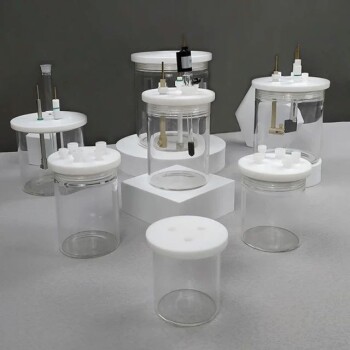
The hardware requirements for Alkaline Hydrogen Peroxide (AHP) pretreatment are significantly less demanding than those for acid treatment. While acid processes necessitate specialized pressure vessels constructed from high-grade alloys to withstand extreme heat and pressure, AHP operates effectively using standard industrial equipment. Because the reaction occurs at room temperature and atmospheric pressure, you can utilize conventional mixing tanks rather than expensive, custom-engineered reactors.
By shifting from high-pressure acid environments to ambient AHP conditions, facilities can replace specialized alloy vessels with standard industrial mixing tanks. This fundamental change dramatically reduces both the initial capital investment and the long-term maintenance burden of the production line.
The Operational Environment
Ambient vs. Extreme Conditions
Acid treatment processes are defined by their need for high temperatures and high pressures to drive the reaction.
In contrast, AHP pretreatment is efficiently conducted at room temperature (approximately 23°C) and atmospheric pressure.
Material Compatibility
The harsh environment of acid treatment requires vessels made of specialized alloys. These materials are necessary to prevent corrosion and structural failure under stress.
AHP removes this constraint. Because the chemistry operates at ambient conditions, the hardware does not need to be engineered to resist extreme thermal or baric stress.
Equipment Specifications
The Use of Standard Tanks
For AHP, you can deploy standard industrial mixing tanks.
There is no need for custom fabrication. In laboratory settings, basic stirring equipment is sufficient to achieve the necessary reaction.
Eliminating Pressure Vessels
Acid treatment mandates the use of pressure vessels, which often require ASME certification and complex safety relief systems.
Adopting AHP eliminates the need for pressure-rated hardware entirely. This simplifies the engineering design of the production line.
Understanding the Trade-offs
Capital Expenditure (CapEx) Implications
The primary "cost" of acid treatment is the high barrier to entry. Specialized alloy pressure vessels represent a massive upfront investment.
AHP offers a distinct advantage here. By utilizing off-the-shelf equipment, the investment costs for the production line are significantly lowered.
Maintenance Complexity
High-pressure systems operating at high heat require rigorous, frequent, and expensive inspections to ensure safety.
AHP equipment faces fewer physical stresses. Consequently, maintenance costs and complexity are reduced, as there are fewer critical failure points associated with pressure containment.
Making the Right Choice for Your Goal
When selecting a pretreatment process, consider your facility's constraints and budget:
- If your primary focus is minimizing capital expenditure: Choose AHP to utilize cost-effective, standard mixing tanks instead of expensive, custom alloy pressure vessels.
- If your primary focus is operational simplicity: Select AHP to avoid the rigorous safety protocols and maintenance schedules required for high-pressure, high-temperature equipment.
By leveraging ambient reaction conditions, AHP transforms pretreatment from a complex high-pressure engineering challenge into a straightforward mixing operation.
Summary Table:
| Feature | Acid Treatment Process | Alkaline Hydrogen Peroxide (AHP) |
|---|---|---|
| Temperature | High Temperatures | Room Temperature (~23°C) |
| Pressure | High Pressure (Requires ASME) | Atmospheric Pressure |
| Vessel Type | Specialized Pressure Vessels | Standard Industrial Mixing Tanks |
| Material | High-Grade Specialized Alloys | Standard Industrial Materials |
| Maintenance | High Complexity & Cost | Low Complexity & Cost |
| Capital Cost | Significant Upfront Investment | Low Barrier to Entry (Off-the-shelf) |
Optimize Your Pretreatment Workflow with KINTEK
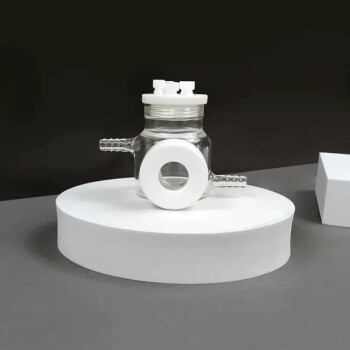
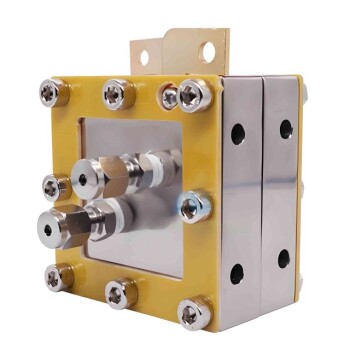
Transitioning from complex acid processes to AHP requires the right equipment to ensure consistency. KINTEK specializes in providing high-quality laboratory and industrial solutions tailored to your specific chemical needs. Whether you require high-temperature high-pressure reactors for traditional acid treatment or specialized mixing systems, electrolytic cells, and corrosion-resistant consumables for AHP applications, we have the expertise to support your research.
Our value to you:
- Comprehensive Equipment Portfolio: From standard mixing tanks and shakers to ASME-certified pressure vessels.
- Expert Guidance: We help you select the most cost-effective hardware for your specific operational environment.
- Durable Consumables: High-quality PTFE products, ceramics, and crucibles to maintain purity in every reaction.
Ready to lower your capital expenditure and simplify your maintenance? Contact KINTEK today to find the perfect reaction system for your facility!
References
- Goutami Banerjee, Jonathan D. Walton. Alkaline peroxide pretreatment of corn stover: effects of biomass, peroxide, and enzyme loading and composition on yields of glucose and xylose. DOI: 10.1186/1754-6834-4-16
This article is also based on technical information from Kintek Solution Knowledge Base .
Related Products
- Stainless High Pressure Autoclave Reactor Laboratory Pressure Reactor
- Customizable High Pressure Reactors for Advanced Scientific and Industrial Applications
- Engineering Advanced Fine Ceramics Alumina Crucibles (Al2O3) for Thermal Analysis TGA DTA
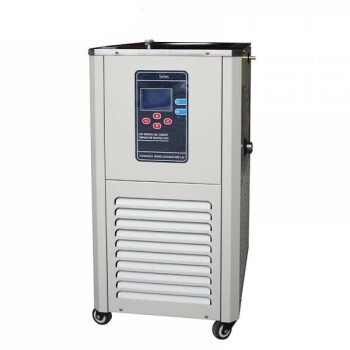
- 10L Chilling Circulator Cooling Water Bath Low Temperature Constant Temperature Reaction Bath
- Laboratory Oscillating Orbital Shaker
People Also Ask
- Why is a laboratory high-pressure reactor used in the hydrothermal synthesis of hydroxyapatite catalysts?
- What role does a laboratory high-pressure reactor play in the leaching process of spent cathode materials? Optimize Recovery
- Why is a laboratory high-pressure reactor necessary for synthesizing fly ash-based zeolite? Achieve Pure Crystallization
- What conditions do laboratory high-pressure reactors provide for HTC? Optimize Your Biochar Production Processes
- What is the function of a high-pressure reactor autoclave? Enhancing Cu/N Co-Doped Carbon Catalyst Synthesis