Excessive grinding time directly compromises the integrity of Li3V2(PO4)3 by introducing tungsten carbide (WC) impurities into the cathode material. When the milling duration extends beyond optimal limits—specifically exceeding 60 minutes—the abrasive wear of the grinding jars and balls releases contaminants that degrade both the structure and performance of the final battery component.
Core Takeaway While milling is essential for particle size reduction, extending the process creates a point of diminishing returns where the grinding media physically degrades. This introduces impurities that cause structural lattice defects, ultimately resulting in reduced specific capacity and poor cycling stability.
The Mechanism of Contamination
Wear of Grinding Media
The primary negative impact stems from the physical degradation of the equipment itself.
Tungsten carbide (WC) is an extremely hard material, but it is not immune to abrasion. During prolonged high-energy ball milling, the friction between the balls and the jar walls eventually causes the media to wear down.
The 60-Minute Threshold
The risk of contamination increases significantly with time.
Evidence suggests that grinding periods exceeding 60 minutes act as a tipping point. Beyond this duration, the rate of media wear accelerates, introducing a problematic amount of tungsten carbide directly into the precursor mixture.
Impact on Material Structure
Decreased Active Substance Purity
The immediate result of media wear is the dilution of your active material.
Instead of pure Li3V2(PO4)3, the final product becomes a composite containing foreign tungsten carbide particles. This reduces the overall purity of the active substance available for electrochemical reactions.
Lattice Defects
The damage is not just chemical; it is structural.
The introduction of WC impurities can induce structural defects within the crystal lattice of the Li3V2(PO4)3. A pristine crystal lattice is required for optimal lithium-ion diffusion; defects disrupt this ordered structure.
Consequences for Battery Performance
Reduced Specific Capacity
Structural integrity is directly linked to energy storage capability.
Because impurities displace active material and lattice defects hinder ion movement, the battery exhibits a lower specific capacity. The material simply cannot store as much energy as a pure, defect-free sample.
Compromised Cycling Stability
Long-term reliability is the final casualty of excessive grinding.
The structural defects and impurities destabilize the cathode material during repeated charge and discharge cycles. This leads to a rapid degradation of performance over time, significantly shortening the operational lifespan of the battery.
Understanding the Trade-offs
Balancing Particle Size and Purity
The goal of ball milling is usually to reduce particle size to improve reaction kinetics, but this creates a critical trade-off.
You must balance the need for fine particles against the risk of contamination. While longer grinding might yield smaller particles, the introduction of WC impurities negates those benefits by poisoning the electrochemical performance.
Material Hardness vs. Contamination Risk
Tungsten carbide is often chosen for its high density and hardness, which makes for efficient milling.
However, this same hardness means that when contamination does occur, the impurities are dense and abrasive. Operators must accept that using WC media requires strict adherence to time limits to prevent the tool from becoming a contaminant.
Making the Right Choice for Your Goal
To ensure the highest quality Li3V2(PO4)3 cathode material, you must strictly control your synthesis parameters.
- If your primary focus is material purity: Limit your grinding duration to less than 60 minutes to minimize media wear and prevent tungsten carbide contamination.
- If your primary focus is long-term battery performance: Prioritize the integrity of the crystal lattice by avoiding over-milling, as this ensures better cycling stability and specific capacity.
Precision in your preparation time is just as critical as the chemical composition of your precursors.
Summary Table:
| Impact Category | Negative Effect of Excessive Grinding (>60 mins) | Consequence for Li3V2(PO4)3 |
|---|---|---|
| Equipment Wear | Physical abrasion of WC jars and balls | Release of tungsten carbide impurities |
| Material Purity | Introduction of foreign particles | Dilution of active cathode substance |
| Crystal Structure | Induction of lattice defects | Disrupted lithium-ion diffusion pathways |
| Battery Capacity | Displacement of active material | Significantly lower specific capacity |
| Longevity | Structural destabilization | Compromised cycling stability and shorter life |
Optimize Your Battery Material Synthesis with KINTEK
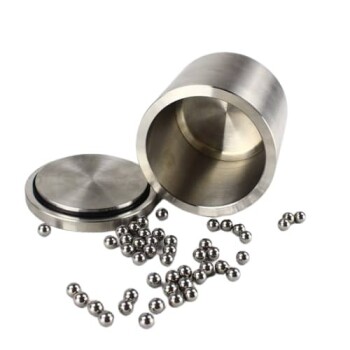
Don't let equipment wear compromise your research. KINTEK specializes in high-performance laboratory solutions, providing the precision tungsten carbide grinding jars, crushing systems, and sieving equipment necessary for advanced battery research. Whether you are developing Li3V2(PO4)3 or next-gen energy storage, our range of milling media, high-temperature furnaces, and hydraulic pellet presses ensures maximum material purity and structural integrity.
Ready to achieve superior cycling stability? Contact our experts today to find the perfect equipment and consumables for your lab's specific needs!
Related Products
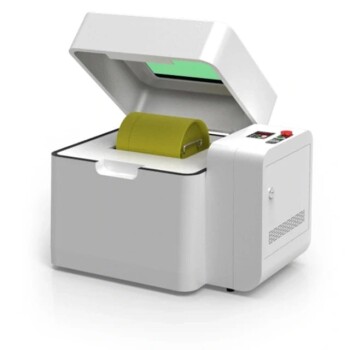
- Laboratory Jar Mill with Agate Grinding Jar and Balls
- Laboratory Ball Mill Jar Mill with Metal Alloy Grinding Jar and Balls
- Laboratory Jar Ball Mill with Alumina Zirconia Grinding Jar and Balls
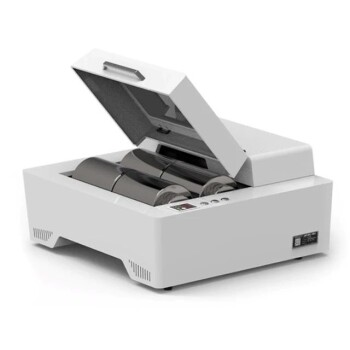
- Laboratory Single Horizontal Jar Mill
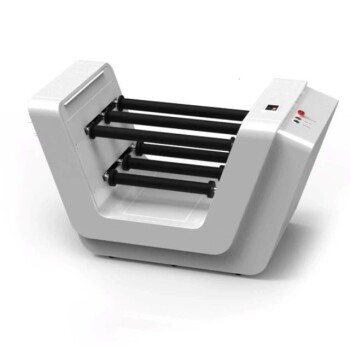
- Laboratory Four-Body Horizontal Jar Mill
People Also Ask
- What are the different types of laboratory mills? Choose the Right Grinder for Your Sample Material
- What is use for grinding in the laboratory? Select the Right Mill for Accurate Sample Prep
- What laboratory apparatus is used for grinding? Match the Right Mill to Your Sample Material
- What is the function of a laboratory grinding mill? Achieve Precise Sample Preparation for Accurate Results
- Why are agate milling jars and balls used for Mo-La2O3 powder mixing? Ensure High-Purity Material Dispersion