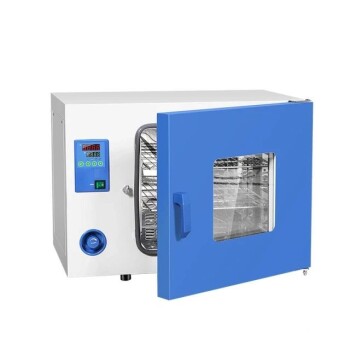
In the synthesis of manganese dioxide modified granular activated carbon (MnO2-GAC), the laboratory oven serves as the critical regulatory device for moisture control. Its primary role is to prepare the carbon's pore structure for chemical uptake and subsequently solidify the chemical precursors before high-temperature activation.
The laboratory oven functions as the bridge between wet chemical processing and thermal activation. It ensures the activated carbon is physically receptive to manganese salts and mechanically stable enough to undergo final calcination.
Pre-Treatment and Surface Preparation
The first critical application of the laboratory oven occurs immediately after the raw activated carbon has been treated with acid.
Post-Acid Washing Drying
During the initial stage, activated carbon undergoes acid washing to remove ash and impurities. This leaves the material saturated with water.
Ensuring Chemical Absorption
The oven is used to thoroughly dry this wet carbon. Removing the water is essential to clear the micropores, ensuring the carbon can efficiently absorb the manganese salt solution in the subsequent impregnation step.
Stabilizing the Chemical Precursor
The second application occurs after the activated carbon has been impregnated with manganese salts (typically manganese nitrate).
Removing Solvent Moisture
Once the impregnation is complete, the carbon is again saturated. The laboratory oven is utilized to slowly remove the moisture introduced by the manganese salt solution.
Solidifying the Precursor
Beyond simple drying, this step serves to solidify the manganese nitrate precursor deep within the microporous structure of the activated carbon.
Preparing for Calcination
This solidification creates the necessary physical conditions for the final step: high-temperature calcination. Without this intermediate oven stage, the transition to high heat would be too abrupt for the chemical structure.
Critical Considerations and Trade-offs
While the oven is a standard tool, its usage in this specific workflow requires precision to avoid compromising the final material.
The Risk of Residual Moisture
If the drying phase following acid washing is incomplete, water will occupy the pore volume. This prevents the manganese solution from fully penetrating the carbon, leading to poor modification and low catalytic activity.
Thermal Shock Prevention
Skipping the oven drying stage after impregnation is a common pitfall. Directly subjecting wet, impregnated carbon to high-temperature calcination can cause rapid evaporation, potentially damaging the pore structure or causing uneven distribution of the manganese dioxide.
Optimizing the Synthesis Workflow
To ensure the highest quality MnO2-GAC, you must tailor your oven usage to the specific stage of production.
- If your primary focus is maximizing loading capacity: Ensure the carbon is bone-dry after the acid wash to maximize the volume available for manganese salt absorption.
- If your primary focus is structural stability: Prioritize a controlled drying cycle after impregnation to solidify the precursor gently before the harsh conditions of calcination.
Correct use of the laboratory oven transforms the activated carbon from a simple absorbent into a complex, chemically modified catalytic material.
Summary Table:
| Synthesis Stage | Oven Function | Critical Impact on MnO2-GAC |
|---|---|---|
| Post-Acid Washing | Moisture removal & pore clearing | Ensures maximum absorption of manganese salt solution |
| Post-Impregnation | Solvent evaporation & precursor solidification | Prevents thermal shock and ensures even chemical distribution |
| Pre-Calcination | Structural stabilization | Prepares material for high-temperature thermal activation |
Elevate Your Material Research with KINTEK Precision
High-quality manganese dioxide modification requires rigorous thermal control. KINTEK specializes in advanced laboratory equipment designed to meet the exacting standards of material science. Whether you are performing delicate drying cycles or high-temperature activation, our comprehensive range of laboratory ovens, high-temperature furnaces (muffle, tube, and vacuum), and crushing systems ensures your research is backed by precision and reliability.
Why choose KINTEK?
- Comprehensive Solutions: From preparation to characterization, we provide everything from ceramic crucibles to isostatic hydraulic presses.
- Process Optimization: Our equipment is engineered to prevent thermal shock and protect the structural integrity of your porous materials.
- Expert Support: We help laboratory professionals and industrial researchers achieve superior catalytic activity through better thermal management.
Ready to optimize your MnO2-GAC synthesis workflow? Contact us today to find the perfect thermal solution for your lab!
References
- Jianhui Xu, Yong Ren. Destruction of Toluene by the Combination of High Frequency Discharge Electrodeless Lamp and Manganese Oxide-Impregnated Granular Activated Carbon Catalyst. DOI: 10.1155/2014/365862
This article is also based on technical information from Kintek Solution Knowledge Base .
Related Products
- Laboratory Scientific Electric Heating Blast Drying Oven
- High Temperature Muffle Oven Furnace for Laboratory Debinding and Pre Sintering
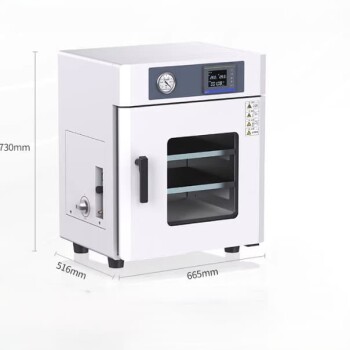
- 56L Vertical Laboratory Vacuum Drying Oven
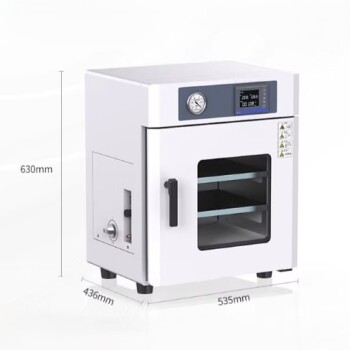
- 23L Laboratory Vacuum Drying Oven
- Multi-zone Laboratory Tube Furnace
People Also Ask
- How does a laboratory electric drying oven contribute to the formation of the initial coating? Expert Insights
- What role does a precision laboratory drying oven play in the synthesis of GO-PANI nanocomposites? Protect Material Integrity
- What role does a laboratory drying oven play in the preparation of zinc oxide nanoparticle precursors?
- What is the necessity of using a laboratory drying oven when processing MoO3/GO composite nanopowders? Find out here.
- What is the role of a laboratory drying oven in cellulose citrate production? Ensure Material Stability & Purity