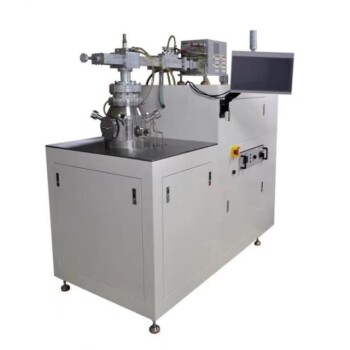
A quartz tube micro-reactor offers a distinct dual advantage: optical transparency for real-time analysis and exceptional durability against harsh reaction conditions.
For Carbon Monoxide (CO) preferential oxidation studies, this specific configuration allows researchers to simultaneously monitor the chemical state of the catalyst and the resulting reaction products, a capability often lost with opaque reactor materials.
Core Takeaway The primary value of this reactor design lies in its ability to eliminate the "black box" of experimental analysis. By combining high-temperature chemical stability with optical transparency, it enables the correlation of real-time catalyst behavior (via UV-Vis) with output performance (via Mass Spectrometry).
Material Durability in Harsh Environments
Resistance to Corrosive Gases
CO preferential oxidation studies inherently involve exposure to reactive environments. The quartz tube design offers excellent chemical stability specifically against reducing gases like Hydrogen (H2) and Oxygen (O2).
This ensures that the reactor walls do not react with the feed gases, preventing contamination of the experimental data.
High-Temperature Resilience
Oxidation reactions often require elevated temperatures to proceed efficiently.
The quartz material is engineered to offer excellent high-temperature resistance, allowing the apparatus to withstand long-term exposure to heat without structural degradation or warping.
Unlocking In-Situ Analysis
The Advantage of Optical Transparency
Standard metal reactors block light, making visual or spectral analysis impossible during the reaction.
The transparent physical properties of the quartz tube allow light beams to pass directly through the reaction chamber. This transparency is the critical feature that transforms the device from a simple vessel into an analytical tool.
Integrated Real-Time Monitoring
Because light can pass through the tube, researchers can integrate in-situ UV-Vis spectroscopy directly into the setup.
This allows for the monitoring of catalyst states at the exact moment the reaction occurs. Simultaneously, the system facilitates the connection of mass spectrometry to analyze reaction product data, providing a complete picture of the chemical process.
Operational Considerations
Scale Limitations
The device is described as a "pocket-sized" micro-reactor.
While this form factor is ideal for precise, lab-scale studies and minimizing reagent use, it is designed for analytical investigation rather than high-volume production or industrial throughput.
Physical Fragility
While quartz offers superior chemical stability compared to many metals, it possesses different physical properties.
Users must prioritize careful handling to avoid physical breakage or fracture, which is a trade-off for the optical clarity and thermal resistance that quartz provides.
Making the Right Choice for Your Goal
When designing your CO oxidation experiments, consider your primary data requirements.
- If your primary focus is Mechanistic Insight: Leverage the quartz transparency to utilize in-situ UV-Vis spectroscopy, allowing you to "see" the catalyst's behavior in real-time.
- If your primary focus is Experimental Integrity: Rely on the quartz's chemical stability to ensure that high-temperature exposure to H2 and O2 does not corrode your equipment or skew your results.
Ultimately, this micro-reactor is the optimal choice for researchers who need to bridge the gap between material durability and deep analytical visibility.
Summary Table:
| Feature | Technical Advantage | Research Benefit |
|---|---|---|
| Material | High-purity Quartz | Exceptional chemical stability against H2 and O2 |
| Optical Property | Transparent Walls | Enables in-situ UV-Vis spectroscopy during reactions |
| Thermal Limit | High-Temperature Resistance | Maintains structural integrity under extreme heat |
| System Integration | Micro-scale Design | Seamless connection to Mass Spectrometry for product analysis |
| Data Integrity | Non-reactive Surface | Eliminates wall-effect contamination and data skewing |
Elevate Your Research Precision with KINTEK
Maximize your analytical insights with KINTEK’s high-performance laboratory solutions. Whether you are conducting CO oxidation studies or complex material synthesis, our specialized equipment—ranging from high-temperature quartz tube reactors and CVD systems to high-pressure autoclaves and electrolytic cells—is engineered to meet the rigorous demands of modern research.
Why choose KINTEK?
- Precision Engineering: Our reactors and hydraulic presses ensure repeatable, high-accuracy results.
- Comprehensive Portfolio: From cooling solutions like ULT freezers to essential ceramics and crucibles, we provide the full ecosystem for your lab.
- Technical Expertise: We understand the nuances of catalyst behavior and material durability.
Don't let equipment limitations create a "black box" in your data. Contact KINTEK today to find the perfect micro-reactor or high-temperature system for your next breakthrough!
References
- Yibin Bu, H. Fredriksson. Preferential oxidation of CO in H2 on Cu and Cu/CeOx catalysts studied by in situ UV–Vis and mass spectrometry and DFT. DOI: 10.1016/j.jcat.2017.11.014
This article is also based on technical information from Kintek Solution Knowledge Base .
Related Products
- Laboratory Rapid Thermal Processing (RTP) Quartz Tube Furnace
- 1200℃ Split Tube Furnace with Quartz Tube Laboratory Tubular Furnace
- Visual High-Pressure Reactor for In-Situ Observation
- Cylindrical Resonator MPCVD Machine System Reactor for Microwave Plasma Chemical Vapor Deposition and Lab Diamond Growth
- Multi Heating Zones CVD Tube Furnace Machine Chemical Vapor Deposition Chamber System Equipment
People Also Ask
- What technical advantages does an RTP tube furnace offer for photoelectrodes? Achieve Precision & High Phase Purity
- What is the temperature of a quartz tube furnace? Master the Limits for Safe, High-Temp Operation
- How does a quartz tube furnace facilitate the synthesis of rGO? Optimize Your Cathode Matrix with Precise Pyrolysis
- What are the advantages of using an electric heating furnace with a quartz tube for liquid bismuth corrosion control?
- What is the maximum temperature for a quartz tube furnace? Key Limits for Safe & Efficient Operation