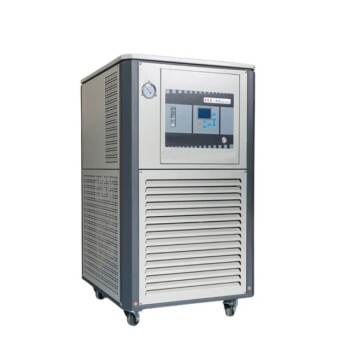
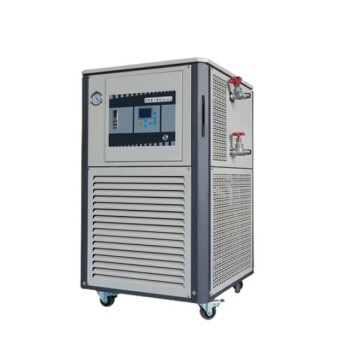
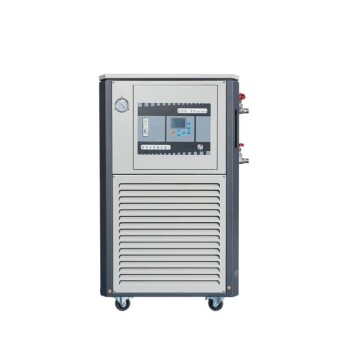
A high-pressure digestion tank or hydrothermal reactor provides a closed-system environment characterized by controlled high temperature and high pressure. By maintaining these conditions, the reactor facilitates the hydrothermal treatment of mesoporous hydroxyapatite (HA), enabling physical and chemical transformations that are not possible under standard atmospheric conditions.
The core value of this process lies in its ability to drive the recrystallization and pore growth of hydroxyapatite powders. By precisely manipulating temperature, pressure, and reaction time, the reactor creates the specific physicochemical environment needed to synthesize catalysts with high specific surface areas and superior ion-exchange capabilities.
The Mechanics of the Hydrothermal Environment
Creating a Subcritical Reaction Medium
The fundamental function of the reactor is to create a sealed environment where aqueous solutions can be heated beyond their normal boiling point without evaporating.
This creates a high-pressure state often referred to as subcritical. In this state, the solubility of precursors increases significantly, allowing for accelerated precipitation and more uniform reaction kinetics.
Facilitating Recrystallization
The primary mechanism driven by these conditions is recrystallization.
The high-temperature and high-pressure environment provides the energy required for the hydroxyapatite lattice to reorganize. This process is essential for correcting defects in the crystal structure and ensuring phase purity.
Promoting Pore Growth
Beyond simple crystallization, the reactor acts as a vessel for structural engineering.
The specific environmental conditions encourage the growth of mesopores within the material. This results in a defined pore size distribution, which is the physical basis for the material's high specific surface area.
Chemical Optimization and Doping
Controlling Molybdate Anion Concentration
The reactor allows for the precise introduction of functional groups, specifically molybdate anions.
By controlling the concentration of these anions within the closed system, the process facilitates their effective doping into the hydroxyapatite structure. This enhances the material's chemical consistency and catalytic potential.
Enhancing Ion Exchange Capabilities
The ultimate goal of this physicochemical tuning is to improve the material's interaction with other substances.
The resulting mesoporous structure, combined with the embedded molybdate anions, provides superior adsorption capabilities. This directly translates to improved efficiency in heterogeneous catalytic reactions, such as chemical oxidation.
Understanding the Trade-offs
The Balance of Time and Temperature
While high pressure and temperature are beneficial, they must be tightly regulated.
If the reaction time is too short or the temperature too low, the recrystallization process may remain incomplete, leading to poor phase purity. Conversely, excessive exposure can potentially collapse the desired mesoporous structure or alter the morphology negatively.
Solubility vs. Stability
The enhanced solubility in a high-pressure reactor accelerates synthesis but requires precise chemical balancing.
Researchers must carefully manage the equilibrium state of dissolution and recrystallization. A miscalculation in the precursor solution concentration can lead to uneven dispersion or inconsistent particle sizes, negating the benefits of the high-pressure environment.
Making the Right Choice for Your Goal
To maximize the effectiveness of a high-pressure hydrothermal reactor for HA synthesis, align your process parameters with your specific catalytic objectives:
- If your primary focus is Structural Stability: Prioritize the precise control of reaction time and temperature to ensure complete recrystallization and uniform pore growth.
- If your primary focus is Catalytic Activity: Focus on optimizing the concentration of molybdate anions within the reactor to maximize ion-exchange performance and adsorption capacity.
By mastering the variables of this closed-system environment, you convert raw hydroxyapatite into a highly efficient, purpose-built heterogeneous catalyst.
Summary Table:
| Process Condition | Core Function | Impact on HA Catalyst Performance |
|---|---|---|
| High Pressure | Creates subcritical medium | Increases precursor solubility & accelerates precipitation |
| High Temperature | Provides lattice energy | Facilitates recrystallization and ensures crystal phase purity |
| Closed System | Prevents evaporation | Enables hydrothermal treatment above normal boiling points |
| Reaction Time | Structural engineering | Controls pore growth and prevents mesoporous structure collapse |
| Doping Control | Ion introduction | Enhances adsorption and ion-exchange via molybdate anions |
Elevate Your Material Synthesis with KINTEK Precision
Unlock the full potential of your research with KINTEK’s industry-leading high-temperature high-pressure reactors and autoclaves. Whether you are developing mesoporous hydroxyapatite catalysts, exploring battery research, or performing complex chemical oxidations, our equipment provides the precise thermal and pressure control necessary for superior recrystallization and structural engineering.
Why Choose KINTEK?
- Advanced Reactor Technology: Specifically designed for hydrothermal and subcritical synthesis.
- Comprehensive Lab Solutions: From crushing and milling systems to vacuum furnaces and PTFE consumables, we equip your entire workflow.
- Expert Support: Our team understands the critical balance of solubility and stability in your experiments.
Ready to achieve consistent, high-surface-area results for your laboratory? Contact KINTEK today to find the perfect hydrothermal solution!
References
- Toshiyuki Onodera, Keitaro Hitomi. Crystal evaluation and gamma-ray detection performance of press mold thallium bromide semiconductors. DOI: 10.21175/rad.abstr.book.2023.32.2
This article is also based on technical information from Kintek Solution Knowledge Base .
Related Products
- High Pressure Laboratory Autoclave Reactor for Hydrothermal Synthesis
- Customizable Laboratory High Temperature High Pressure Reactors for Diverse Scientific Applications
- Custom PTFE Teflon Parts Manufacturer for Hydrothermal Synthesis Reactor Polytetrafluoroethylene Carbon Paper and Carbon Cloth Nano-growth
- Electric Rotary Kiln Small Rotary Furnace Biomass Pyrolysis Plant
- Stainless High Pressure Autoclave Reactor Laboratory Pressure Reactor
People Also Ask
- What role does a high-pressure reactor (autoclave) play in the synthesis of NiCuFe-LDH? Master Hydrothermal Growth
- What Role Does a High-Pressure Reactor or Autoclave Play in HA Catalyst Synthesis? Achieve High Surface Area Materials
- What equipment is required for hydrothermal synthesis of Ga0.25Zn4.67S5.08? Optimize Your Semiconductor Production
- What is the function of a high-pressure reactor in the hydrothermal synthesis of boehmite? Expert Process Insights
- What role does an autoclave play in the synthesis of MnO2 nanofibers? Mastering Hydrothermal Growth