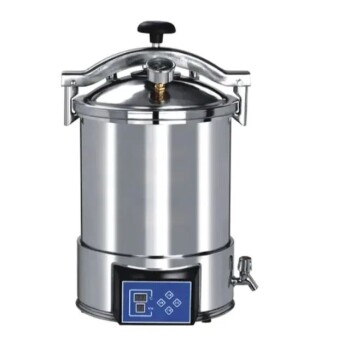
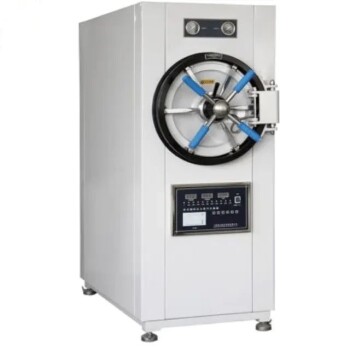
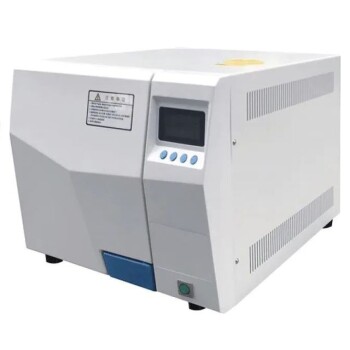
The high-pressure reactor, or autoclave, provides a sealed, high-temperature, and high-pressure environment that facilitates hydrothermal synthesis beyond standard atmospheric limits. This specialized environment allows water to generate autogenous pressure, reaching temperatures well above its normal boiling point, which is essential for increasing the solubility of precursors and accelerating chemical reaction kinetics.
Core Takeaway: The high-pressure reactor creates a controlled, subcritical environment that enables the directional growth of zinc oxide into nanosheet structures while ensuring the uniform modification of cobalt components onto their surfaces to form high-performance heterostructures.
The Role of Autogenous Pressure and Temperature
Exceeding the Normal Boiling Point
A high-pressure reactor acts as a sealed, pressure-resistant vessel that prevents the escape of vapor. This confinement allows the internal pressure to rise naturally as the temperature increases, enabling the solvent to remain in a liquid state far beyond its typical boiling point.
Enhancing Solubility and Kinetic Rates
The high-temperature and high-pressure conditions significantly increase the solubility of solid reactants that would otherwise remain undissolved at room temperature. This increased solubility provides the necessary kinetic conditions for rapid nucleation and consistent crystal growth throughout the solution.
Directing Nano-Architectures and Heterostructures
Morphological Control of ZnO Nanosheets
The reactor environment guides the directional growth of zinc oxide (ZnO) crystals into specific nanosheet structures. By manipulating the internal energy of the system, the autoclave ensures the synthesis of nanostructures with high crystallinity and specific surface morphologies that are otherwise difficult to achieve.
Uniform Cobalt Modification
The pressurized environment is critical for facilitating the uniform modification of cobalt components onto the ZnO surfaces. In particular, it enables the integration of ZIF-67-derived cobalt to form the stable heterostructures required for advanced applications like high-performance gas sensing.
Strengthening Interfacial Bonds
High-pressure conditions ensure a strong bond between the cobalt catalyst precursor and the zinc oxide substrate. This creates a durable interfacial contact that enhances the penetration of modifiers and prevents the active materials from delaminating during use.
Understanding the Trade-offs
Equipment and Safety Requirements
Operating at high pressures and temperatures requires specialized, corrosion-resistant equipment and strict safety protocols. The potential for vessel failure or thermal runaway means that process monitoring must be much more rigorous than in open-air synthesis.
Complexity of Scale-up
While hydrothermal synthesis provides excellent control at the laboratory scale, scaling the process for industrial production is technically challenging. Maintaining uniform temperature and pressure gradients across large-volume reactors is difficult and can lead to variations in nanosheet quality.
Reaction Time and Energy Consumption
Hydrothermal processes often require extended reaction times at high temperatures to ensure complete crystal growth and phase purity. This results in higher energy consumption compared to faster, low-temperature chemical vapor deposition or precipitation methods.
How to Apply This to Your Project
Making the Right Choice for Your Goal
To achieve the best results in synthesizing cobalt-modified zinc oxide nanosheets, consider your primary objective:
- If your primary focus is gas-sensing performance: Use the high-pressure environment to maximize the density of heterojunctions between the cobalt and ZnO for better sensitivity.
- If your primary focus is morphological precision: Carefully control the heating rate and peak temperature to guide the directional growth of the nanosheets into uniform, thin layers.
- If your primary focus is material durability: Leverage the high-pressure conditions to ensure a robust chemical bond between the cobalt modification and the ZnO surface.
Ultimately, the high-pressure reactor is the indispensable tool for overcoming the thermodynamic barriers to creating complex, high-crystallinity metal oxide heterostructures.
Summary Table:
| Environmental Condition | Impact on Material Synthesis |
|---|---|
| Autogenous Pressure | Enables solvents to exceed normal boiling points for faster kinetics. |
| High Temperature | Increases precursor solubility for rapid nucleation and consistent crystal growth. |
| Sealed Confinement | Facilitates directional growth into thin, uniform nanosheet structures. |
| Pressurized Environment | Ensures uniform cobalt modification and strong, durable interfacial bonding. |
Elevate Your Material Research with KINTEK
Achieve unmatched precision in your hydrothermal synthesis with KINTEK’s high-temperature high-pressure reactors and autoclaves. Specifically designed to handle the rigorous demands of nanomaterial growth, our equipment ensures the stable, controlled environments necessary for developing high-performance cobalt-modified zinc oxide structures and other advanced heterojunctions.
Beyond reactors, KINTEK specializes in a comprehensive range of laboratory solutions, including:
- High-Temperature Furnaces: Muffle, tube, vacuum, and CVD systems for advanced heat treatment.
- Sample Preparation: Hydraulic pellet presses, crushing, and milling systems.
- Specialized Labware: High-purity ceramics, crucibles, and PTFE products.
Ready to optimize your synthesis process? Contact us today to discuss your project requirements and discover how KINTEK can enhance your lab's efficiency and output.
References
- Hua Zhang, Fanli Meng. Low Detection Limit and High Sensitivity 2-Butanone Gas Sensor Based on ZnO Nanosheets Decorated by Co Nanoparticles Derived from ZIF-67. DOI: 10.3390/nano13172398
This article is also based on technical information from Kintek Solution Knowledge Base .
Related Products
- Stainless High Pressure Autoclave Reactor Laboratory Pressure Reactor
- Mini SS High Pressure Autoclave Reactor for Laboratory Use
- High Pressure Laboratory Autoclave Reactor for Hydrothermal Synthesis
- Customizable High Pressure Reactors for Advanced Scientific and Industrial Applications
- Portable High Pressure Laboratory Autoclave Steam Sterilizer for Lab Use
People Also Ask
- Why is a laboratory high-pressure reactor necessary for synthesizing fly ash-based zeolite? Achieve Pure Crystallization
- Why is a laboratory high-pressure reactor used in the hydrothermal synthesis of hydroxyapatite catalysts?
- What role does a laboratory high-pressure reactor play in the leaching process of spent cathode materials? Optimize Recovery
- What conditions do laboratory high-pressure reactors provide for HTC? Optimize Your Biochar Production Processes
- How are high-pressure reactors used to prepare metaphosphate electrocatalysts? Master In-Situ Precursor Growth