
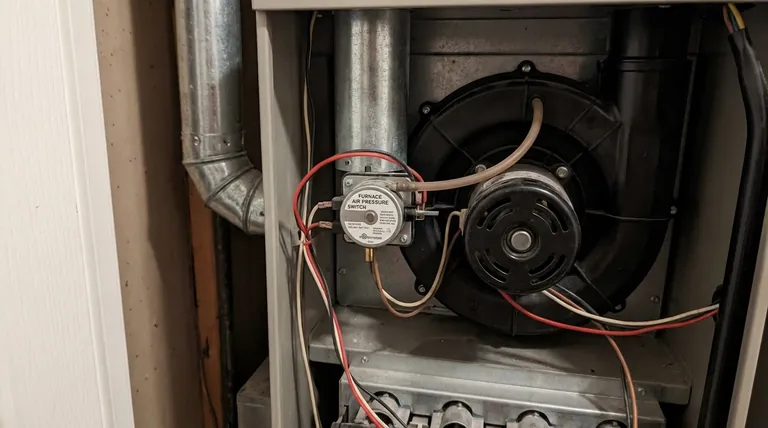
At its core, a furnace air pressure switch is a critical safety device. It acts as a sensor that confirms your furnace's venting system is working correctly before allowing the main burners to ignite. This simple check prevents the furnace from operating if dangerous exhaust gases, like carbon monoxide, cannot be safely removed from your home.
The pressure switch is your furnace's first line of defense against improper venting. It ensures the path is clear for harmful exhaust to exit before the system begins to produce it, preventing both immediate safety hazards and potential damage to the unit.
The Critical Role of a Safety Check
Modern furnaces follow a strict startup sequence to ensure safe operation. The pressure switch is a key checkpoint in this sequence, verifying that the foundation for safe combustion is in place.
Creating the Necessary Draft
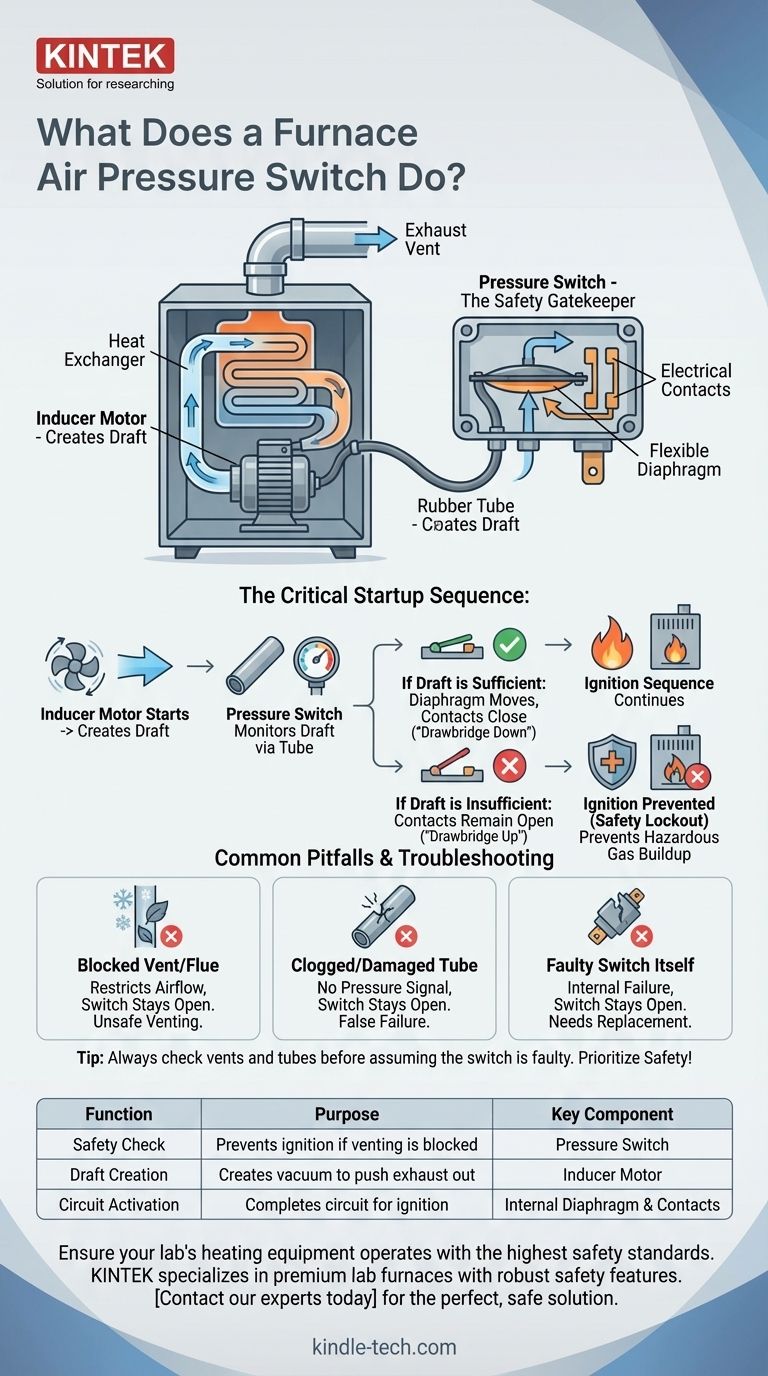
Before gas ever flows to the burners, a small fan called an inducer motor turns on. Its job is to create a draft, or a slight vacuum, that actively pulls combustion gases through the heat exchanger and pushes them out the exhaust vent.
Verifying Safe Venting
The pressure switch is connected to the inducer motor assembly by a small rubber tube. It constantly monitors the pressure created by the inducer motor. If the draft is strong enough to create the required negative pressure, the switch activates.
Preventing Dangerous Conditions
If the switch does not detect the proper draft, it will not close the circuit. This action prevents the furnace from proceeding to the ignition stage. This single step is crucial for preventing the buildup of harmful gases, inefficient furnace operation, and even small explosions from unburnt fuel inside the heat exchanger.
How the Pressure Switch Works
The mechanism is simple but effective, functioning much like a gatekeeper for the furnace's ignition sequence. It is an electrical switch that is physically activated by a change in air pressure.
The Inducer Motor and Vacuum Tube
When the inducer motor spins up, it creates suction. This suction pulls air through the small rubber hose connected to the pressure switch.
The Diaphragm and Electrical Contacts
Inside the switch is a flexible rubber diaphragm. The vacuum created by the motor pulls on this diaphragm. If the suction is sufficient, the diaphragm moves enough to press against an internal button or lever.
Completing the Circuit
Pressing this button closes a set of electrical contacts, completing a circuit. Think of it as lowering a drawbridge to allow electricity to pass through to the next component in the startup sequence, which is typically the furnace igniter. If the draft is too weak, the "drawbridge" stays up, and the furnace will not light.
Common Pitfalls and Failure Points
When a furnace fails to ignite, it's easy to blame the pressure switch. However, in many cases, the switch is not faulty; it is correctly doing its job by signaling a genuine problem elsewhere in the system.
A Blocked Vent or Flue
The most common reason for a pressure switch to remain open is a blockage in the furnace's intake or exhaust pipes. This can be caused by snow, ice, leaves, or even an animal's nest, creating a truly unsafe venting condition.
A Clogged or Damaged Tube
The small rubber tube that connects the motor to the switch can become brittle, cracked, or clogged with condensation and debris over time. This prevents the necessary vacuum from reaching the switch's diaphragm, even if the inducer motor is working perfectly.
A Faulty Switch Itself
While less common, the switch itself can fail. The internal diaphragm can become damaged or stuck, or the electrical contacts can wear out, preventing the circuit from closing even when the proper vacuum is present.
Making the Right Choice for Your Goal
Understanding what the pressure switch is telling you is key to diagnosing your furnace correctly and safely.
- If your primary focus is safety: Never bypass a pressure switch. Its failure to close is a clear signal that your furnace has detected a potentially hazardous venting issue that requires immediate investigation.
- If your primary focus is troubleshooting a furnace that won't start: Check for the simplest causes first. Ensure the exterior vent pipes are clear of obstruction and inspect the small rubber hose for cracks or blockages before assuming the switch itself has failed.
Ultimately, this small component empowers you to recognize when your furnace is actively protecting you from a dangerous situation.
Summary Table:
| Function | Purpose | Key Component |
|---|---|---|
| Safety Check | Prevents furnace ignition if venting is blocked | Pressure Switch |
| Draft Creation | Creates a vacuum to push exhaust gases out | Inducer Motor |
| Circuit Activation | Completes electrical circuit for ignition sequence | Internal Diaphragm & Contacts |
Ensure your lab's heating equipment operates with the highest safety standards. KINTEK specializes in premium lab furnaces and related equipment, designed with robust safety features like pressure switches to protect your team and research. Contact our experts today to find the perfect, safe heating solution for your laboratory needs.
Visual Guide
Related Products
- Vacuum Heat Treat and Sintering Furnace with 9MPa Air Pressure
- Vacuum Heat Treat and Pressure Sintering Furnace for High Temperature Applications
- Laboratory High Pressure Vacuum Tube Furnace
- Vacuum Hot Press Furnace Machine Heated Vacuum Press
- Vacuum Hot Press Furnace Heated Vacuum Press Machine Tube Furnace
People Also Ask
- How does the vacuum environment impact sintering of diamond-copper composites? Protect Against Thermal Damage
- Why must green bodies produced via binder jetting undergo treatment in a vacuum sintering furnace?
- What is the effect of sintering temperature on grain size? A Guide to Microstructural Control
- What are the risks associated with the sintering process? Key Strategies to Prevent Failure & Maximize Quality
- How does a sintering furnace influence EDC powder metallurgy electrodes? Optimize Your Tool for Superior Coatings











