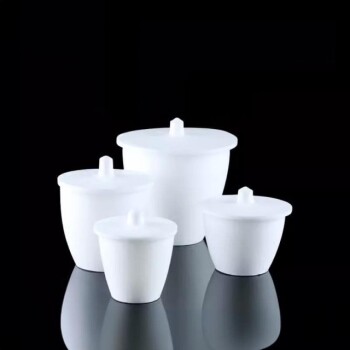
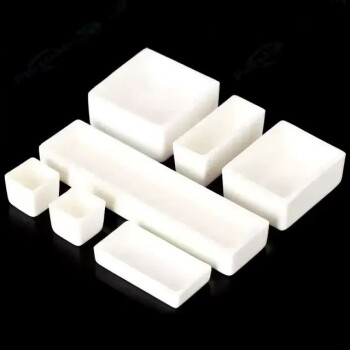
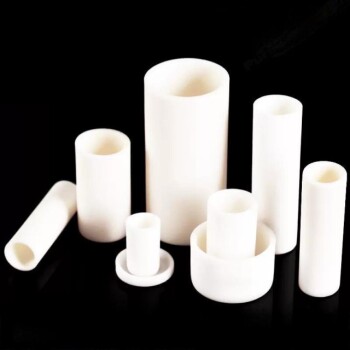
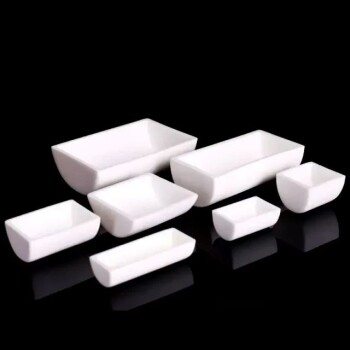
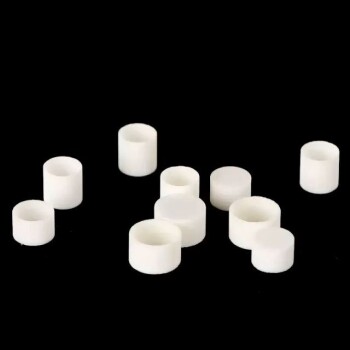
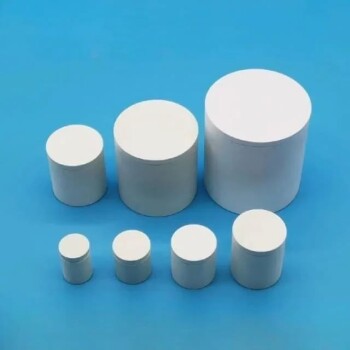
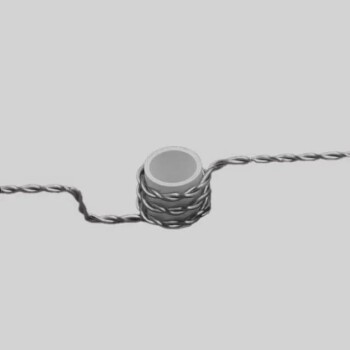
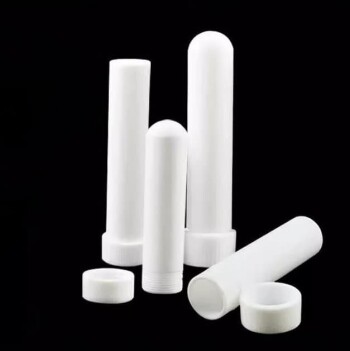
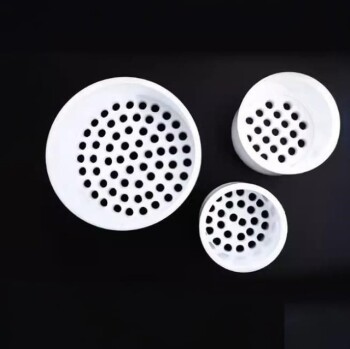
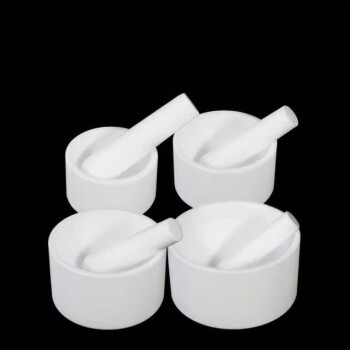
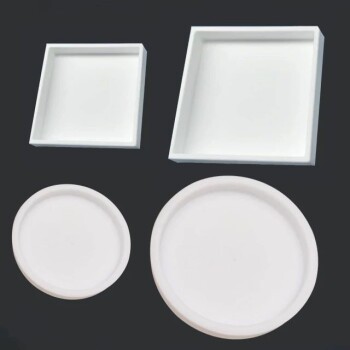
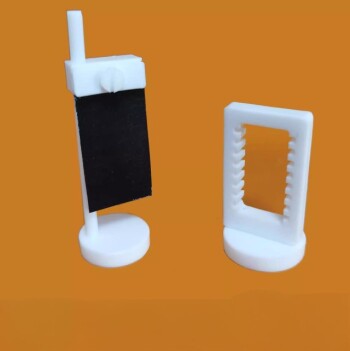
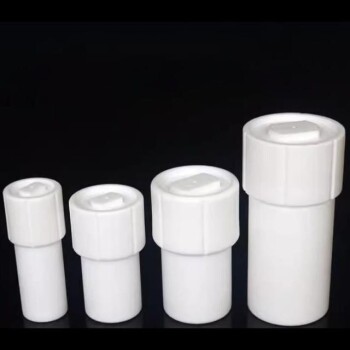
For laboratory environments demanding high temperature and chemical resistance, the essential consumables required are PTFE (polytetrafluoroethylene) products, ceramic components, and specialized crucibles. These materials are specifically selected to provide chemical inertness, thermal stability, and the ability to withstand the intense heat associated with melting or calcination processes.
Core Takeaway: The reliability of your experimental results in harsh conditions depends on selecting consumables with specific material properties: PTFE for chemical inertness and ceramics or specialized crucibles for structural integrity under extreme thermal stress.
Ensuring Chemical Resistance
To maintain the purity of samples and the safety of the apparatus, you must utilize materials that do not react with aggressive substances.
The Role of PTFE
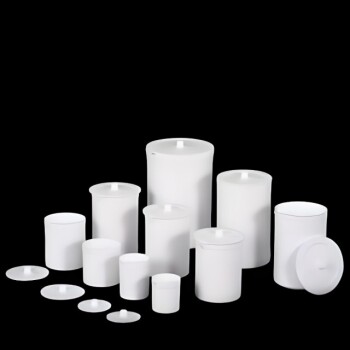
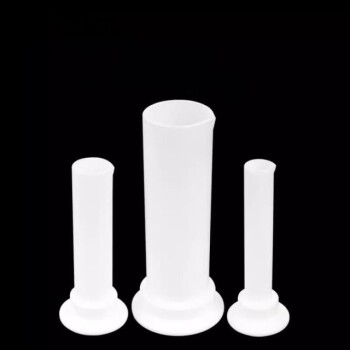
PTFE (polytetrafluoroethylene) is the standard choice for processes involving corrosive chemicals. Its primary value lies in its inert properties.
Using PTFE products prevents chemical leaching or reactions that could compromise your data or damage the laboratory equipment.
Achieving Thermal Stability
When processes involve rising temperatures, standard glassware often fails. You must transition to materials engineered for thermal endurance.
Utilizing Ceramic Components
Ceramic components are essential when thermal stability is the priority. Unlike standard materials which may warp or crack, ceramics maintain their structure under significant heat load.
These components ensure that your setup remains stable and safe throughout high-temperature protocols.
Handling Extreme Heat Applications
Certain processes, such as melting or calcination, push temperatures beyond the limits of standard thermal stability.
Specialized Crucibles
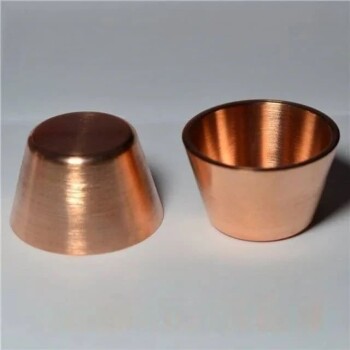
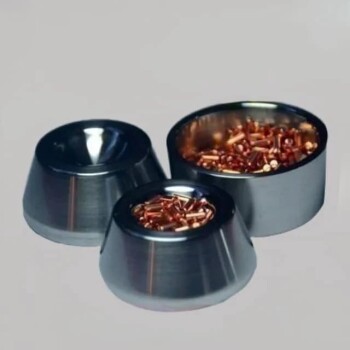
For operations involving melting or calcination, you require specialized crucibles. These are explicitly designed to withstand intense heat without failing.
They act as the primary containment vessel, ensuring that the sample remains isolated and secure even as it undergoes physical state changes at extreme temperatures.
Understanding Material Limitations
While these consumables are robust, they are designed for specific stressors. Understanding where their utility ends is critical.
Matching the Material to the Stressor
A common error is assuming one high-performance material covers all needs. PTFE is superior for chemical resistance but does not possess the same thermal ceiling as ceramics.
Conversely, ceramic components offer thermal stability but may not share the same non-reactive surface properties as PTFE for all chemical types. You must isolate the primary threat—heat or chemical corrosion—before selection.
Making the Right Choice for Your Goal
Selecting the correct consumable is about aligning the material's strength with your process's most critical requirement.
- If your primary focus is chemical purity: Prioritize PTFE products to leverage their inert properties and prevent contamination.
- If your primary focus is general high-heat stability: Utilize ceramic components to ensure the structural integrity of your setup.
- If your primary focus is material phase change (melting/calcination): You must use specialized crucibles capable of withstanding intense, direct heat.
Match the consumable to the specific stress of your experiment to ensure both safety and accuracy.
Summary Table:
| Consumable Type | Primary Strength | Key Application | Material Benefit |
|---|---|---|---|
| PTFE Products | Chemical Resistance | Corrosive handling | Inert, prevents leaching |
| Ceramic Components | Thermal Stability | High-heat protocols | Resists warping/cracking |
| Specialized Crucibles | Extreme Heat Endurance | Melting & Calcination | Structural integrity at peak temps |
Elevate Your Lab's Precision with KINTEK
Ensure the integrity of your research with high-performance consumables and equipment designed for the most demanding environments. At KINTEK, we specialize in providing cutting-edge solutions including:
- Essential Consumables: Premium PTFE products, high-grade ceramics, and durable crucibles for chemical and thermal resistance.
- Advanced Systems: High-temperature muffle, tube, and vacuum furnaces, alongside HTHP reactors and autoclaves.
- Processing Excellence: Precision crushing, milling, and hydraulic presses for sample preparation.
Don't let inferior materials compromise your results. Contact KINTEK today to discuss how our comprehensive portfolio of laboratory equipment and consumables can optimize your workflow and deliver unmatched reliability.
References
- Heping Xie, Bin Chen. Cu-modified Ni foams as three-dimensional outer anodes for high-performance hybrid direct coal fuel cells. DOI: 10.1016/j.cej.2020.128239
This article is also based on technical information from Kintek Solution Knowledge Base .
Related Products
- Custom Machined and Molded PTFE Teflon Parts Manufacturer with PTFE Crucible and Lid
- Engineering Advanced Fine Alumina Al2O3 Ceramic Crucible for Laboratory Muffle Furnace
- Engineering Advanced Fine Ceramics Alumina Al2O3 Crucible With Lid Cylindrical Laboratory Crucible
- Alumina Al2O3 Ceramic Crucible Semicircle Boat with Lid for Engineering Advanced Fine Ceramics
- Engineering Advanced Fine Ceramics Alumina Crucibles (Al2O3) for Thermal Analysis TGA DTA
People Also Ask
- Why is a PTFE crucible preferred for plasma etching? Ensure Chemical Integrity and Targeted Action
- Why are PTFE molds used for dental resin specimens? Ensure Pure Samples and Accurate Testing
- What are the advantages of using PTFE molds for preparing PUA hybrid films? Ensure High Purity and Easy Demolding
- What advantages do PTFE molds offer for composite polymer electrolyte casting? Ensure Defect-Free Membrane Fabrication
- Why are PTFE or high-quality steel molds recommended for geopolymer specimens? Ensure Data Integrity and Easy Release