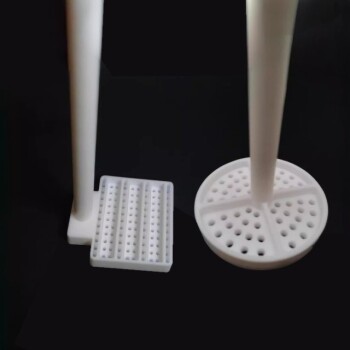
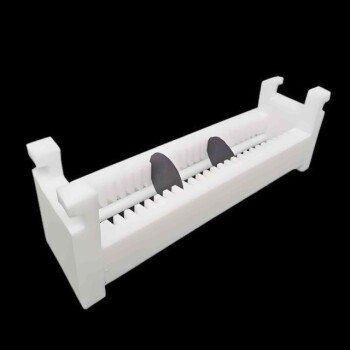
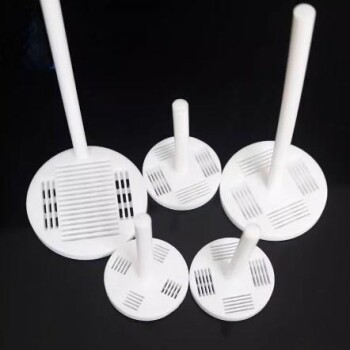
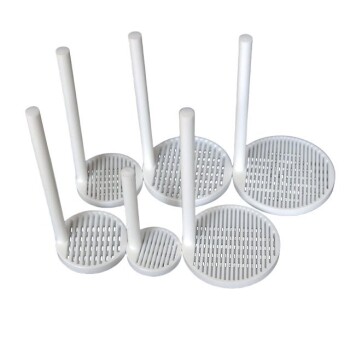
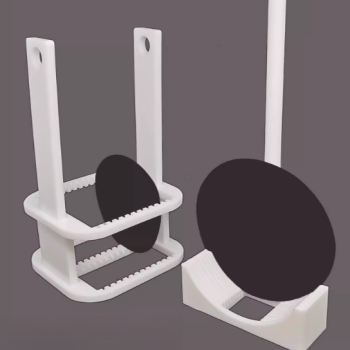
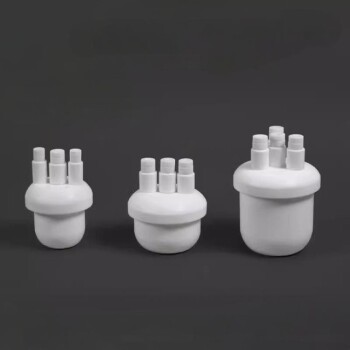
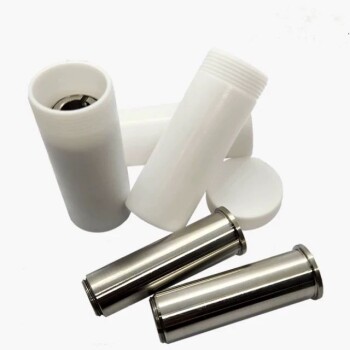
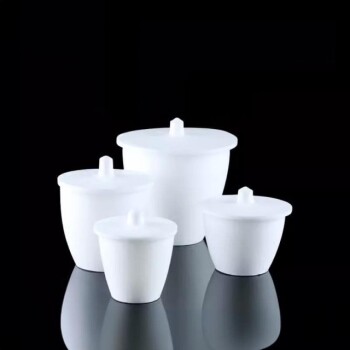
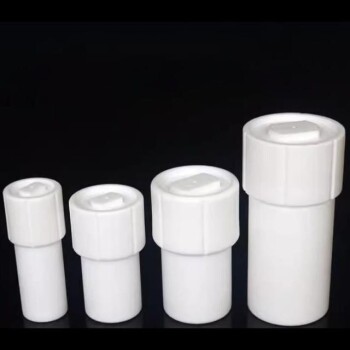
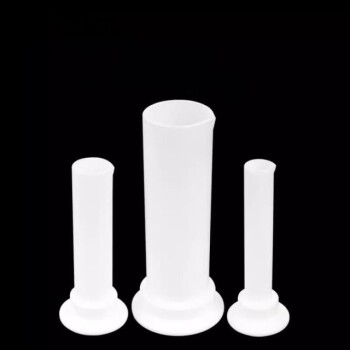
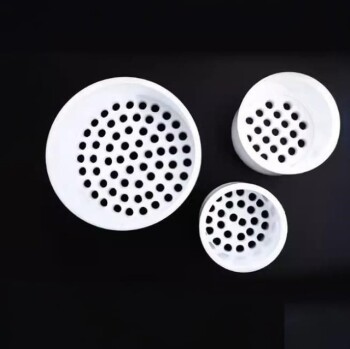
PTFE (Polytetrafluoroethylene) baskets serve as chemically inert positioning tools designed to hold formation rock samples within the center of a reaction vessel. Their primary function is to suspend these samples in a stable location while preventing experimental consumables from introducing foreign chemical contaminants into the test environment.
Core Takeaway By combining structural support with extreme chemical resistance, PTFE baskets allow researchers to isolate rock samples and manipulate their position relative to fluid levels. This ensures that observed geochemical reactions are authentic to the storage environment and not artifacts of the experimental equipment.
Preserving Chemical Integrity
One of the greatest challenges in underground hydrogen storage experiments is distinguishing between natural geochemical reactions and artificial reactions caused by the test equipment.
Eliminating Secondary Reactions
The primary value of using PTFE for these baskets is its high chemical inertness. In a high-pressure, potentially corrosive environment involving formation water and hydrogen, standard metal components could corrode or react.
Ensuring Data Purity
PTFE ensures that the basket itself acts as a "silent" participant. It prevents experimental consumables from causing secondary chemical reactions with the formation water or gases, ensuring that any measured changes in chemistry are strictly due to the interaction between the hydrogen, the rock, and the fluids.
Simulating Underground Conditions
Beyond simple containment, these baskets are essential mechanisms for replicating the physical environment of an underground reservoir.
Precision Positioning
The baskets are designed to hold the rock samples specifically in the center of the vessel. This centralization ensures uniform exposure to the surrounding environment, avoiding edge effects that might occur if the sample rested against the vessel walls.
Controlling the Water-Gas Interface
Researchers use these baskets to manipulate the sample's relationship with the fluids. By adjusting the vertical position of the basket or changing the liquid level in the vessel, scientists can precisely simulate the water-gas interface.
Replicating Multiphase Flow
This adjustability allows the experiment to mimic complex geochemical reactions under multiphase flow conditions (where gas and liquid coexist in the rock pores). This is critical for understanding how hydrogen interacts with rock when it is pumped into or withdrawn from a partially water-filled reservoir.
Understanding the Trade-offs
While PTFE is the gold standard for inertness in these specific experiments, it is important to understand the operational context.
Structural vs. Chemical Needs
The choice of PTFE prioritizes chemical non-reactivity over mechanical rigidity. While sufficient for holding rock samples, PTFE does not have the same load-bearing capacity as steel. However, in this specific context, the trade-off is necessary: using a stronger, reactive material would compromise the chemical validity of the entire experiment.
Making the Right Choice for Your Experiment
When designing reaction vessels for hydrogen storage simulation, the configuration of your sample holder is just as critical as the vessel itself.
- If your primary focus is geochemical accuracy: Prioritize PTFE baskets to eliminate the risk of heavy metal leaching or secondary reactions interfering with your water chemistry data.
- If your primary focus is interface simulation: Ensure your basket design allows for vertical adjustment to test different saturation zones (fully submerged vs. interface zone).
The PTFE basket is not merely a container; it is a control mechanism that safeguards the chemical validity of your storage simulation.
Summary Table:
| Feature | Function in Hydrogen Storage Experiments | Benefit |
|---|---|---|
| Material Inertness | Prevents secondary reactions with formation water/gases | Guarantees data purity and authentic results |
| Central Positioning | Suspends rock samples in the vessel center | Ensures uniform exposure and avoids edge effects |
| Vertical Adjustability | Controls sample position relative to fluid levels | Accurately simulates the water-gas interface |
| Extreme Resistance | Resists corrosion in high-pressure environments | Maintains structural integrity without leaching |
| Phase Simulation | Enables testing under multiphase flow conditions | Mimics real-world reservoir injection/withdrawal |
Elevate Your Geochemical Research with KINTEK Precision
Precise data in hydrogen storage simulations depends on the integrity of your experimental environment. KINTEK specializes in high-performance laboratory equipment designed to meet the rigorous demands of energy research. From our chemically inert PTFE baskets and consumables to advanced high-temperature high-pressure reactors and autoclaves, we provide the tools you need to replicate underground conditions with absolute accuracy.
Whether you are focusing on crushing and milling systems for sample preparation or require specialized electrolytic cells and cooling solutions, KINTEK is your partner in laboratory excellence.
Ready to safeguard your chemical validity? Contact our experts today to find the perfect solution for your lab!
References
- Jean Mura, Anthony Ranchou‐Peyruse. Experimental simulation of H2 coinjection via a high-pressure reactor with natural gas in a low-salinity deep aquifer used for current underground gas storage. DOI: 10.3389/fmicb.2024.1439866
This article is also based on technical information from Kintek Solution Knowledge Base .
Related Products
- Custom PTFE Teflon Parts Manufacturer Adjustable Height Flower Basket
- Custom PTFE Teflon Parts Manufacturer for Hollow Cleaning Basket and Rack Carrier
- Custom PTFE Teflon Parts Manufacturer Corrosion Resistant Cleaning Rack Flower Basket
- Custom PTFE Teflon Parts Manufacturer for Hollow Etching Flower Basket ITO FTO Developing Glue Removal
- Versatile PTFE Solutions for Semiconductor and Medical Wafer Processing
People Also Ask
- How do Teflon (PTFE) baskets facilitate glass thin-film leaching? Enhance Accuracy with Chemical Inertness
- What is the function of PTFE in a gas diffusion electrode? Mastering CO2 Electrolyzer Stability
- Is PTFE corrosion resistant? Discover the Ultimate Chemical Resistance for Your Lab
- What are the specific applications of PTFE in micro-batch slug flow systems? Enhance Your Microfluidic Reaction Purity
- How is PTFE utilized for insulation in Alloy 22 corrosion setups? Ensure Signal Purity & Accuracy