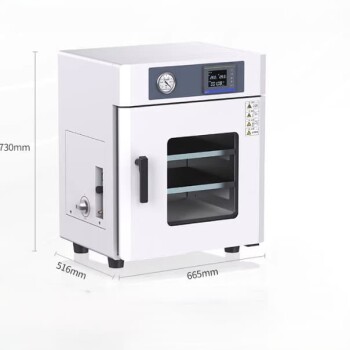
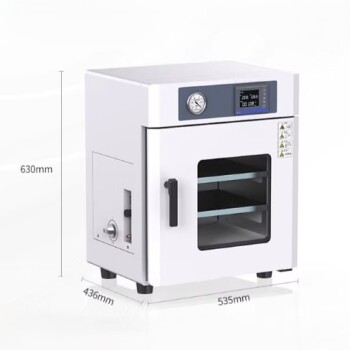
The critical function of a high vacuum oven in this specific process is to achieve the thorough removal of weak polar solvents, such as isopropyl acetate, strictly at room temperature. This equipment provides a controlled environment where solvents can be fully volatilized without the application of heat. This distinction is vital, as it allows for the preparation of a dry cathode mixture while avoiding thermal stress on the components.
By substituting high vacuum pressure for thermal energy, this process ensures complete solvent removal while protecting heat-sensitive sulfide solid electrolytes from structural degradation.
The Dual Purpose of High Vacuum Processing
Eliminating Solvents Without Heat
The primary challenge in wet mixing for all-solid-state batteries is removing the solvent used to blend the materials.
Standard drying methods rely on heat to evaporate these liquids. However, a high vacuum oven lowers the boiling point of the solvent, allowing it to evaporate efficiently at room temperature.
Preventing Side Reactions
Thorough drying is not merely a matter of consistency; it is a chemical necessity.
If traces of weak polar solvents like isopropyl acetate remain in the mixture, they will trigger side reactions during battery cycling. High vacuum ensures these volatile components are completely extracted, securing the electrochemical stability of the final cell.
Protecting Material Integrity
Preserving Sulfide Solid Electrolytes
The materials used in all-solid-state lithium-sulfur batteries are exceptionally sensitive.
Sulfide solid electrolytes, in particular, are prone to structural degradation if exposed to elevated temperatures. The high vacuum oven allows you to bypass the thermal threshold that would otherwise damage these critical components.
Maintaining Intermediate Phases
The cathode preparation process involves the formation of specific intermediate phase compounds.
These compounds are essential for the battery's performance but can be destroyed by heat. Processing at room temperature under vacuum ensures these critical intermediate phases remain intact and functional.
Understanding the Trade-offs
Process Speed vs. Material Safety
Vacuum drying at room temperature is generally a slower process compared to high-temperature thermal drying.
However, in this specific chemistry, speed is a secondary concern. The trade-off is necessary because faster, heat-based drying methods would render the sulfide electrolyte useless.
Equipment Requirements
Achieving the necessary vacuum levels requires robust sealing and pumping systems.
While this adds complexity compared to a standard convection oven, it is the only reliable method to handle isopropyl acetate removal without compromising the solid-state chemistry.
Making the Right Choice for Your Goal
To ensure the successful preparation of all-solid-state lithium-sulfur cathodes, you must prioritize the preservation of material structure over processing speed.
- If your primary focus is Electrochemical Stability: Ensure the vacuum level is sufficient to remove 100% of the solvent to prevent side reactions during cycling.
- If your primary focus is Electrolyte Integrity: Strictly monitor the chamber temperature to ensure it never exceeds room temperature, preventing degradation of the sulfide structure.
Ultimately, the high vacuum oven is not just a drying tool; it is a preservation device that enables the viability of heat-sensitive solid-state chemistries.
Summary Table:
| Feature | Function in Cathode Preparation | Key Benefit |
|---|---|---|
| Room Temp. Drying | Evaporates solvents like isopropyl acetate without heat | Prevents thermal degradation of sulfide electrolytes |
| High Vacuum Level | Lowers the boiling point of weak polar solvents | Ensures 100% solvent removal to stop side reactions |
| Phase Preservation | Maintains sensitive intermediate phase compounds | Secures the electrochemical stability of the battery |
| Controlled Environment | Provides a sealed, stable processing atmosphere | Protects material integrity for high-performance cells |
Optimize Your Battery Research with KINTEK
Precision is non-negotiable when handling heat-sensitive sulfide electrolytes and advanced solid-state chemistries. KINTEK specializes in high-performance laboratory equipment designed to protect your material integrity. From high vacuum ovens for heat-free solvent removal to battery research tools, hydraulic pellet presses, and high-temperature furnaces, we provide the comprehensive solutions your lab needs.
Ensure the electrochemical stability of your all-solid-state lithium-sulfur batteries with our reliable equipment and essential consumables, including PTFE products and specialized crucibles.
Ready to elevate your lab's efficiency? Contact our experts today to find the perfect fit for your research!
Related Products
- 2200 ℃ Graphite Vacuum Heat Treat Furnace
- Ultra-High Temperature Graphite Vacuum Graphitization Furnace
- 56L Vertical Laboratory Vacuum Drying Oven
- 23L Laboratory Vacuum Drying Oven
- 2200 ℃ Tungsten Vacuum Heat Treat and Sintering Furnace
People Also Ask
- What is the process of vacuum heat treating? Achieve Superior Hardening with a Clean, Bright Finish
- How does heat transmit in a vacuum? Mastering Thermal Radiation for Purity & Precision
- Why do you heat treat in a vacuum? Achieve Perfect Surface Finish and Material Integrity
- How does a vacuum heat treat furnace work? Achieve Pristine, Oxide-Free Metal Parts
- What is graphite heating? A Guide to Durable, High-Temp Industrial Furnace Solutions