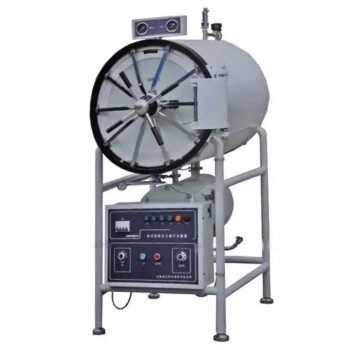
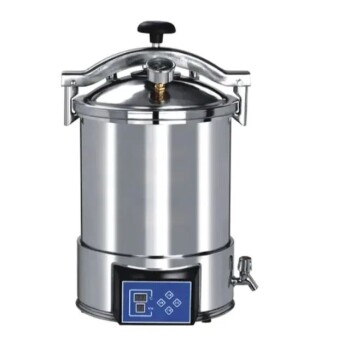
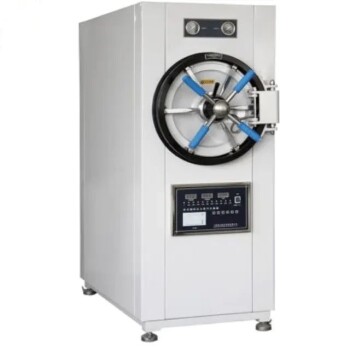
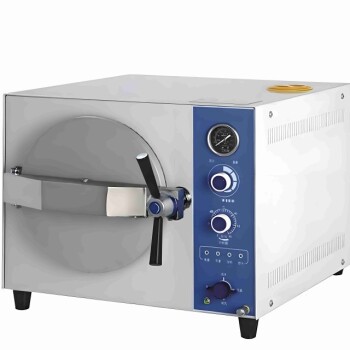
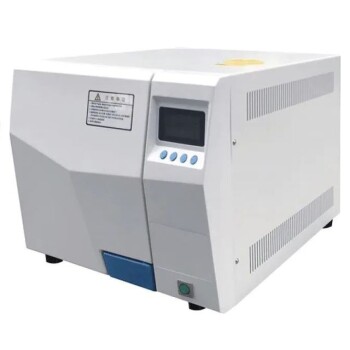
The high-pressure autoclave acts as the indispensable reactor for the hydrothermal synthesis of 1T-phase MoS2 nanosheets. It creates a sealed, high-temperature environment that facilitates the precise phase transformation of precursors within a liquid medium. This specialized environment is essential for achieving the specific crystalline structure and two-dimensional morphology required for advanced catalytic applications.
Core Takeaway: A high-pressure autoclave enables solvents to reach temperatures far exceeding their atmospheric boiling points, providing the energy and confined space necessary to drive the chemical conversion and crystallization of molybdenum and sulfur precursors into stable 1T-phase nanosheets.
Facilitating the Hydrothermal Environment
Driving Phase Transformation
The autoclave’s primary role is to provide a precisely controlled temperature (typically between 180°C and 220°C) and internal pressure. This specific environment facilitates the phase transformation of precursors within the liquid phase, allowing the transition from bulk materials to monolayer or multilayer 1T-phase nanosheets.
Enabling Supercritical Reaction Conditions
By sealing the reaction, the autoclave allows solvents to enter supercritical or near-supercritical states, where they can effectively dissolve and react with molybdenum and sulfur sources. These conditions ensure that precursors like ammonium molybdate and thiourea undergo complete chemical conversion, which is often impossible under standard atmospheric conditions.
Accelerating Reaction Kinetics
The pressurized environment significantly accelerates reaction rates and promotes faster crystallization kinetics. This efficiency is vital for the 'one-pot' synthesis method, ensuring that the molybdenum and sulfur atoms arrange themselves into the desired 1T crystalline structure before undesired secondary phases can form.
Structural Integrity and Morphology Control
Preventing Nanosheet Aggregation
The confined high-pressure space promotes uniform in-situ growth, which is critical for preventing the aggregation of nanosheets. By maintaining steady pressure, the autoclave ensures the nanosheets remain thin and dispersed, maximizing the exposure of active sites necessary for catalysis.
Promoting Directional Growth
In solvothermal applications, the autoclave environment encourages vertically aligned directional growth on substrates like titanium plates or biochar. This results in a layered structure characterized by high specific surface area and increased surface roughness, which are key metrics for high-performance electrodes and photoanodes.
Modifying Substrate Properties
The high-pressure hydrothermal process does more than just grow MoS2; it can also chemically modify the support material. For instance, it helps remove oxygen-containing functional groups from biochar, improving the hydrophobic properties and stability of the resulting composite material.
Understanding the Trade-offs
Equipment and Safety Constraints
Operating at high temperatures and pressures requires specialized liners (like Teflon or PPL) and robust safety protocols. The sealed nature of the reactor means that the reaction cannot be monitored in real-time, requiring a "black box" approach where parameters must be perfectly tuned before the run begins.
Phase Stability Risks
While the autoclave facilitates the 1T phase, this phase is often metastable compared to the 2H phase. Small fluctuations in temperature or pressure during the hydrothermal process can lead to phase impurities, meaning the precision of the autoclave's thermal control is a potential single point of failure for the entire synthesis.
How to Apply This to Your Project
Recommendations for Synthesis
- If your primary focus is maximizing active sites: Ensure your autoclave is equipped with a high-quality liner to maintain steady internal pressure, which prevents nanosheet aggregation and maintains a high specific surface area.
- If your primary focus is phase purity (1T phase): Focus on the precise calibration of the autoclave's temperature controller, as the 1T phase transformation is highly sensitive to thermal thresholds, typically around 180°C.
- If your primary focus is substrate loading (e.g., on biochar): Utilize the high-pressure environment to promote in-situ growth, which ensures a more stable and uniform loading compared to physical mixing methods.
The high-pressure autoclave is the foundational tool that turns simple chemical precursors into sophisticated, high-performance 1T-MoS2 nanostructures.
Summary Table:
| Feature | Role in 1T-MoS2 Synthesis | Key Benefit |
|---|---|---|
| Thermal Control | Maintains 180°C - 220°C range | Drives precise precursor phase transformation |
| High Pressure | Enables supercritical solvent states | Accelerates reaction kinetics and crystallization |
| Sealed Vessel | Confined space for in-situ growth | Prevents aggregation; maximizes active sites |
| Surface Chemistry | Hydrothermal substrate modification | Improves loading stability and hydrophobicity |
Elevate Your Nanomaterial Synthesis with KINTEK Precision
Achieving the perfect 1T-phase MoS2 nanosheet requires more than just chemistry—it demands absolute environmental control. KINTEK specializes in high-performance laboratory equipment designed for the rigors of advanced material research. Our industry-leading high-temperature high-pressure reactors and autoclaves provide the stability and safety necessary for supercritical hydrothermal synthesis, ensuring consistent phase purity and morphology for your most demanding catalytic applications.
Our comprehensive portfolio supports every stage of your workflow:
- Advanced Heating: Muffle, tube, vacuum, and CVD furnaces for precise heat treatment.
- Sample Preparation: Crushing, milling, and hydraulic presses (pellet, hot, isostatic) for precursor processing.
- Specialized Tools: Electrolytic cells, battery research tools, and high-purity ceramics or crucibles.
Ready to optimize your lab's synthesis capabilities? Contact our technical experts today to find the ideal reactor solution and ensure your research reaches its full potential.
References
- Mengyao Li, Jiabao Yi. Thermostable 1T‐MoS<sub>2</sub> Nanosheets Achieved by Spontaneous Intercalation of Cu Single Atoms at Room Temperature and Their Enhanced HER Performance. DOI: 10.1002/sstr.202300010
This article is also based on technical information from Kintek Solution Knowledge Base .
Related Products
- Mini SS High Pressure Autoclave Reactor for Laboratory Use
- High Pressure Laboratory Autoclave Reactor for Hydrothermal Synthesis
- Stainless High Pressure Autoclave Reactor Laboratory Pressure Reactor
- Desktop Fast High Pressure Laboratory Autoclave Sterilizer 16L 24L for Lab Use
- Portable High Pressure Laboratory Autoclave Steam Sterilizer for Lab Use
People Also Ask
- Why use high-pressure reactors for molecular sieve synthesis? Unlock Superior Crystallinity and Framework Control
- What is the function of a high-pressure reactor autoclave? Enhancing Cu/N Co-Doped Carbon Catalyst Synthesis
- What are the advantages of using a high-pressure reactor like an autoclave? Maximize Liquefaction Speed & Yield
- Why are high-pressure reactors or autoclaves necessary for the synthesis of new functional materials? Unlock Precision.
- How are high-pressure reactors used to prepare metaphosphate electrocatalysts? Master In-Situ Precursor Growth