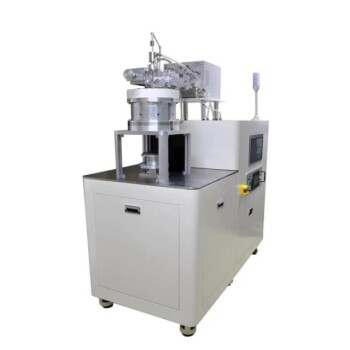
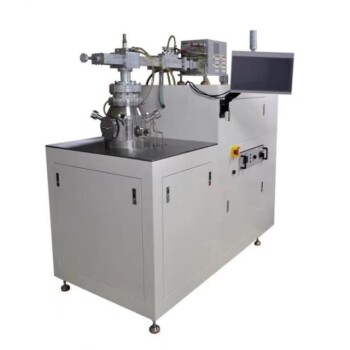
The function of a DC thermal plasma reactor is to act as the primary high-energy heat source for synthesizing Titanium Carbide (TiC). It generates the ultra-high temperature environment necessary to drive the carbothermal reduction of ilmenite, converting raw materials into high-performance ceramic filler particles.
By converting electrical energy into high-energy-density thermal energy through vertical graphite electrodes, the reactor facilitates the reaction between ilmenite and activated carbon under an argon atmosphere.
The Mechanism of Action
Generating High-Energy Density
The core function of the reactor is energy conversion. It utilizes vertical graphite electrodes to generate a powerful plasma arc.
This arc acts as the mechanism to transform electrical input into high-energy-density thermal energy. This intense heat is the catalyst required to initiate and sustain the synthesis process.
Facilitating Carbothermal Reduction
The specific chemical process supported by this reactor is carbothermal reduction. The thermal environment allows ilmenite to react effectively with activated carbon.
Without this specific high-temperature delivery system, the activation energy required to transform these raw materials into Titanium Carbide would not be met.
Atmospheric Control
The reactor maintains a specific environment for the reaction to occur. The process takes place strictly under an argon atmosphere.
This controlled setting is essential to stabilize the plasma arc and ensure the chemical integrity of the reaction between the ilmenite and carbon.
Critical Operational Requirements
Reliance on Electrode Integrity
The system's ability to generate heat is entirely dependent on the vertical graphite electrodes. The stability and consistency of the plasma arc rely on the quality and configuration of these components.
Necessity of Inert Gas
The requirement for an argon atmosphere adds a layer of operational strictness. The system must be sealed and supplied with argon to prevent contamination and maintain the plasma state, making gas control a critical operational variable.
Energy Intensity
The process is defined by its use of high-energy-density thermal energy. This implies that the reactor is a high-consumption device, converting significant electrical power to achieve the ultra-high temperatures needed for reduction.
Making the Right Choice for Your Goal
To successfully utilize a DC thermal plasma reactor for TiC synthesis, consider the following:
- If your primary focus is reaction efficiency: Ensure your power input is sufficient to maintain the high-energy density required for the complete reduction of ilmenite.
- If your primary focus is product purity: Strictly monitor the argon atmosphere to support the plasma arc and prevent environmental contamination of the ceramic filler particles.
This reactor is the definitive core equipment for converting ilmenite into high-performance ceramic materials through precisely controlled thermal energy.
Summary Table:
| Feature | Function in TiC Synthesis |
|---|---|
| Energy Source | Converts electrical energy into high-density thermal plasma |
| Electrodes | Vertical graphite electrodes generate the primary plasma arc |
| Reaction Type | Facilitates carbothermal reduction of ilmenite and carbon |
| Atmosphere | Maintains a controlled argon environment for purity |
| Output | Produces high-performance Titanium Carbide (TiC) filler particles |
Elevate Your Advanced Material Synthesis with KINTEK
Precision in high-temperature synthesis requires more than just heat—it requires total environmental control and equipment reliability. KINTEK specializes in providing the specialized laboratory equipment and consumables essential for cutting-edge material science. Whether you are performing carbothermal reduction in high-temperature furnaces or processing raw materials with our crushing and milling systems, we provide the tools to ensure your research achieves maximum purity and efficiency.
Our comprehensive portfolio supports every stage of the synthesis workflow:
- Advanced Heating: Muffle, tube, vacuum, and CVD furnaces for precise thermal processing.
- Reaction Vessels: High-temperature high-pressure reactors, autoclaves, and specialized crucibles.
- Preparation & Analysis: Hydraulic pellet presses, sieving equipment, and milling systems.
Ready to optimize your TiC synthesis or ceramic research? Contact our technical experts today to discover how KINTEK’s precision-engineered solutions can drive your next breakthrough.
References
- Sangita Mohapatra, S. K. Singh. Performance Evaluation of Glass-Epoxy-TiC Hybrid Composites Using Design of Experiment. DOI: 10.1155/2014/670659
This article is also based on technical information from Kintek Solution Knowledge Base .
Related Products
- Microwave Plasma Chemical Vapor Deposition MPCVD Machine System Reactor for Lab and Diamond Growth
- 915MHz MPCVD Diamond Machine Microwave Plasma Chemical Vapor Deposition System Reactor
- Cylindrical Resonator MPCVD Machine System Reactor for Microwave Plasma Chemical Vapor Deposition and Lab Diamond Growth
- Customizable Laboratory High Temperature High Pressure Reactors for Diverse Scientific Applications
- Electric Rotary Kiln Small Rotary Furnace Biomass Pyrolysis Plant
People Also Ask
- How does a microwave plasma reactor facilitate the synthesis of diamond? Master MPCVD with Precision Technology
- What are the advantages of a Microwave Plasma CVD reactor for MCD/NCD coatings? Precision Multilayer Diamond Engineering
- How do vacuum pumps and valves collaborate in MPCVD? Achieve Precise Pressure Control for Superior CNT Synthesis
- How does MPCVD work? A Guide to Low-Temperature, High-Quality Film Deposition
- What is microwave plasma chemical vapor deposition? A Guide to High-Purity Diamond Film Growth