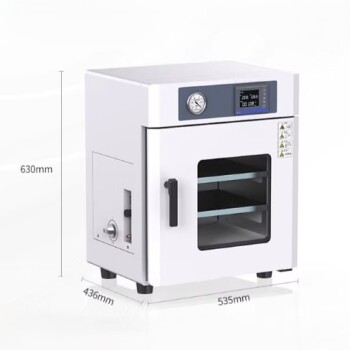
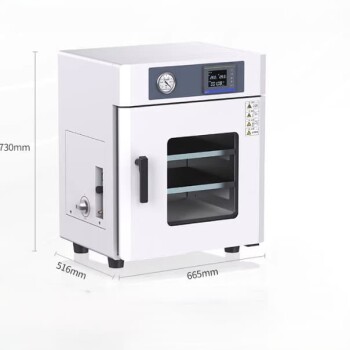
The primary function of a forced air drying oven in this context is to efficiently purge residual solvents and moisture from the catalyst's structure. Specifically, for dolomite catalysts that have been washed with n-hexane, the oven utilizes forced convection to maintain a uniform 110°C environment. This rapidly evaporates fluids trapped within the micropores, restoring the catalyst to a dry physical state required for further use.
By ensuring the complete removal of washing agents like n-hexane, the drying process resets the catalyst's baseline. This allows for accurate measurement of catalytic stability and performance over multiple reuse cycles without interference from residual liquids.
The Mechanics of Regeneration
Solvent Removal via Forced Convection
The regeneration cycle typically involves washing the used dolomite catalyst with a solvent, such as n-hexane, to strip away contaminants.
However, this leaves the catalyst saturated with the washing agent.
The forced air oven uses mechanical fans to circulate heated air, creating a forced convection environment. This airflow significantly accelerates the evaporation rate compared to static heating, ensuring the solvent is removed quickly and thoroughly.
Restoring Micropore Accessibility
For a catalyst to function, its internal surface area must be accessible to reactants.
Residual n-hexane or moisture can block the catalyst micropores, physically preventing the chemical reaction from occurring.
The oven clears these blockages, effectively "opening" the active sites of the dolomite for the next reaction cycle.
The Role of Temperature Control
Maintaining the 110°C Standard
The primary reference establishes 110°C as the target temperature for this specific regeneration process.
This temperature is selected because it is sufficiently higher than the boiling point of n-hexane (approx. 69°C) and water.
It ensures complete vaporization of these residuals without subjecting the dolomite to excessive thermal stress that might alter its chemical phase.
Ensuring Data Integrity for Stability Studies
A major goal of regeneration is to study how well the catalyst holds up over time (its stability).
If the catalyst is not dried to a consistent physical state between cycles, residual solvent could skew the reaction kinetics.
The oven ensures that every reuse cycle starts from a uniform, dry baseline, making the data regarding the catalyst's longevity reliable.
Understanding the Trade-offs
Forced Air vs. Vacuum Drying
While forced air ovens are excellent for removing surface and pore moisture at atmospheric pressure, they rely on thermal convection.
In contrast, vacuum drying ovens are often used for more sensitive materials (like ionic liquids) to lower the boiling point of solvents.
If your catalyst is heat-sensitive, a standard forced air oven might require higher temperatures than the material can withstand to achieve the same dryness.
Structural Integrity Risks
Rapid drying is efficient, but it introduces physical stress.
As noted in general catalyst preparation, removing solvents too aggressively can sometimes cause the internal structure to collapse or crack.
While 110°C is generally safe for dolomite, it is critical to ensure the drying duration is sufficient to reach a constant weight without "shocking" the material.
Making the Right Choice for Your Goal
To ensure your regeneration process is effective, consider the following specific objectives:
- If your primary focus is removing n-hexane from dolomite: Ensure your oven is set to exactly 110°C with active forced convection to clear micropores rapidly.
- If your primary focus is long-term stability testing: Prioritize drying until a constant weight is achieved to ensure residual solvents do not alter the reaction kinetics of the next cycle.
Ultimately, the forced air oven acts as the reset button for your catalyst, bridging the gap between a cleaning wash and a successful re-application.
Summary Table:
| Feature | Function in Catalyst Regeneration | Benefit |
|---|---|---|
| Forced Convection | Accelerates evaporation of n-hexane and moisture | Rapid, uniform drying of catalyst particles |
| 110°C Temp Control | Exceeds boiling points of common washing agents | Ensures complete removal of residuals without thermal stress |
| Micropore Clearing | Removes liquids trapped within internal structures | Restores active sites for subsequent reaction cycles |
| Baseline Reset | Establishes a consistent dry weight | Ensures data integrity for long-term stability studies |
Maximize Your Catalyst Life with KINTEK Precision
Ensure your regeneration cycles are flawless with KINTEK’s high-performance laboratory solutions. From advanced forced air drying ovens for rapid moisture removal to high-temperature furnaces (muffle, vacuum, and tube) and high-pressure reactors for specialized chemical synthesis, we provide the tools needed for rigorous research and industrial excellence.
Whether you are performing stability testing on dolomite catalysts or developing next-gen battery materials, KINTEK specializes in laboratory equipment and consumables tailored to your needs—including PTFE products, ceramics, and crushing systems.
Ready to upgrade your laboratory efficiency? Contact us today to find the perfect equipment for your application!
References
- Eglė Sendžikienė, Kiril Kazancev. APPLICATION OF DOLOMITE AS A HETEROGENEOUS CATALYST OF BIODIESEL SYNTHESIS. DOI: 10.3846/transport.2018.6723
This article is also based on technical information from Kintek Solution Knowledge Base .
Related Products
- 23L Laboratory Vacuum Drying Oven
- 56L Vertical Laboratory Vacuum Drying Oven
- Laboratory Scientific Electric Heating Blast Drying Oven
- High Temperature Muffle Oven Furnace for Laboratory Debinding and Pre Sintering
People Also Ask
- Why is a laboratory vacuum drying oven recommended for rice straw residues? Protect Your Biomass Integrity
- What role does a laboratory vacuum drying oven play in the preparation of modified multi-walled carbon nanotubes?
- What is the importance of using a laboratory vacuum drying oven? Preserving Slow-Release Microcapsule Integrity
- Why is a Laboratory Vacuum Drying Oven recommended for PBAT microspheres? Protect Sensitive Polymer Integrity
- What role does a laboratory vacuum drying oven play in processing nanoparticle powder samples? Protect Sample Integrity