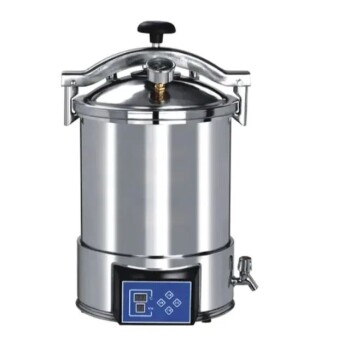
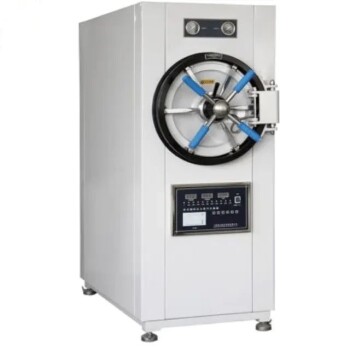
The primary function of a High-Pressure Hydrothermal Autoclave is to generate a sealed, high-temperature, and high-pressure environment that accelerates the dissolution, recrystallization, and phase transformation of raw materials in an aqueous solution. By isolating the reaction, the device drives the physical and chemical changes necessary to convert precursor powders into synthesized hydroxyapatite.
Core Takeaway The autoclave is not merely a vessel; it is a precision tool that enables the synthesis of mesoporous materials with high reproducibility. It allows for exact control over critical parameters—such as phase composition, dispersibility, and morphology—which are required to uniformly incorporate molybdate anions and maximize catalytic activity.
Mechanisms of Synthesis
Accelerating Phase Transformation
The autoclave creates a unique environment where the boiling point of water is raised significantly.
This high-pressure condition accelerates the dissolution and recrystallization processes. It forces the raw material powders to break down and reform into the desired hydroxyapatite structure more rapidly and completely than standard atmospheric methods would allow.
Facilitating Ion Exchange
For the specific preparation of hydroxyapatite containing molybdate anions, the reactor enables complex ion exchange.
The supersaturated solution within the autoclave facilitates the uniform doping of molybdate anions into the hydroxyapatite lattice. This ensures the chemical composition is homogeneous throughout the material.
Precision Control of Material Properties
Regulating Phase Composition
The sealed environment provides a constant temperature and pressure, which allows for the precise regulation of the material's chemical makeup.
By adjusting the exposure time and thermal conditions, you can strictly control the phase composition. This ensures high purity and reproducibility between different batches of powder.
Optimizing Dispersibility and Morphology
A key challenge in powder synthesis is preventing agglomeration (clumping) and ensuring uniform particle shape.
The High-Pressure Hydrothermal Autoclave improves the dispersibility of the particles within the solution. It grants control over the microscopic morphology, resulting in powders with consistent particle sizes and shapes.
Developing Mesoporous Structures
To function effectively as a catalyst, the material requires a large specific surface area.
The hydrothermal treatment promotes the formation of a mesoporous structure (pores within the 2-50 nm range). This structural evolution significantly increases the surface area, which is critical for enhancing the catalytic activity of the final product.
Understanding the Operational Requirements
Parameter Sensitivity
While the autoclave allows for control, the process is highly sensitive to input variables.
Small deviations in temperature or residence time can significantly alter the pore structure or phase composition. Achieving the desired mesoporous structure requires rigorous adherence to preset parameters.
Equipment Constraints
The reaction relies entirely on a closed system.
Because the environment is sealed to maintain pressure, in-situ monitoring is difficult. You must rely on the initial setup and external controls to ensure the internal conditions remain stable throughout the crystallization process.
Making the Right Choice for Your Goal
The utility of a High-Pressure Hydrothermal Autoclave depends on the specific characteristics you need to isolate in your final powder.
- If your primary focus is Catalytic Performance: Prioritize the mesoporous structure formation; the high surface area created by the autoclave is the defining factor for reactivity.
- If your primary focus is Chemical Consistency: Focus on the reproducibility aspect; the sealed environment is best used to ensure uniform doping of molybdate anions across large batches.
The High-Pressure Hydrothermal Autoclave is the definitive tool for converting raw precursors into highly active, uniform, and structurally complex hydroxyapatite catalysts.
Summary Table:
| Feature | Function in Synthesis | Impact on Final Product |
|---|---|---|
| Phase Transformation | Accelerates dissolution and recrystallization | Ensures high purity and structural integrity |
| Ion Exchange | Facilitates uniform doping of molybdate anions | Achieves chemical homogeneity and consistency |
| Morphology Control | Regulates particle shape and prevents clumping | Enhances dispersibility and uniform particle size |
| Mesoporous Formation | Promotes 2-50 nm pore development | Maximizes surface area for higher catalytic activity |
Elevate Your Material Synthesis with KINTEK Precision
Unlock the full potential of your research with KINTEK’s industry-leading high-temperature high-pressure reactors and autoclaves. Whether you are developing advanced mesoporous hydroxyapatite catalysts or exploring complex battery materials, our equipment provides the stability and precision required for reproducible results.
From high-temperature furnaces (muffle, vacuum, CVD) to specialized crushing, milling, and hydraulic press solutions, KINTEK offers a comprehensive ecosystem for laboratory excellence. Our value to you: Robust engineering, superior thermal control, and a commitment to helping you achieve exact phase composition and morphology.
Ready to optimize your synthesis process? Contact us today to find the perfect solution for your lab!
References
- Raluca Ivan. Fabrication of hybrid nanostructures by laser technique for water decontamination. DOI: 10.21175/rad.abstr.book.2023.15.4
This article is also based on technical information from Kintek Solution Knowledge Base .
Related Products
- High Pressure Laboratory Autoclave Reactor for Hydrothermal Synthesis
- Mini SS High Pressure Autoclave Reactor for Laboratory Use
- Stainless High Pressure Autoclave Reactor Laboratory Pressure Reactor
- Automatic High Temperature Heated Hydraulic Press Machine with Heated Plates for Lab
- Customizable High Pressure Reactors for Advanced Scientific and Industrial Applications
People Also Ask
- What role does a high-pressure reactor (autoclave) play in the synthesis of NiCuFe-LDH? Master Hydrothermal Growth
- What Role Does a High-Pressure Reactor or Autoclave Play in HA Catalyst Synthesis? Achieve High Surface Area Materials
- What equipment is required for hydrothermal synthesis of Ga0.25Zn4.67S5.08? Optimize Your Semiconductor Production
- What is the function of a high-pressure reactor in the hydrothermal synthesis of boehmite? Expert Process Insights
- What role does an autoclave play in the synthesis of MnO2 nanofibers? Mastering Hydrothermal Growth