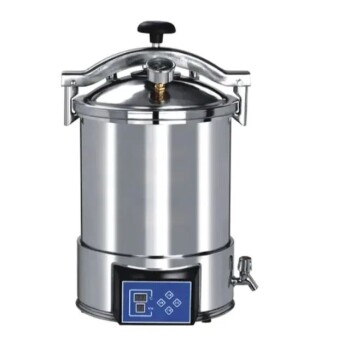
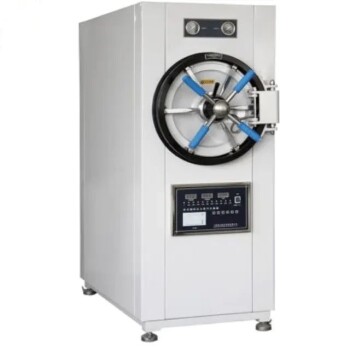
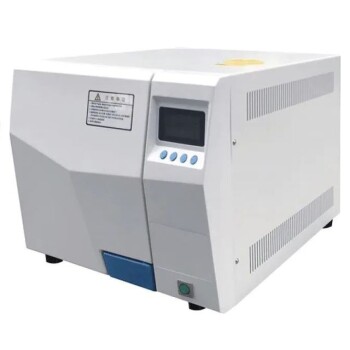
High-pressure reactors, or autoclaves, function as the essential vessel for creating the specific solvothermal or hydrothermal environments required to synthesize advanced semiconductor catalysts. By sealing reactants in a closed system, these reactors generate elevated temperatures and pressures that force distinct materials to crystallize together. This process is necessary to engineer the atomic-scale interfaces that ultimately drive the electronic properties of the catalyst.
The primary value of the high-pressure reactor is its ability to induce tight, atomic-scale heterojunctions between materials. It is this intimate physical contact that enables Fermi level equilibration and band bending, directly resulting in the formation of the desired built-in electric fields.
The Physics of the Reaction Environment
Enforcing a Closed System
The fundamental function of the autoclave is to provide a sealed environment where pressure can build well beyond atmospheric limits.
This creates a hydrothermal or solvothermal state, often allowing solvents to remain liquid at temperatures where they would normally boil (e.g., above 100°C).
Driving Hydrolysis and Polycondensation
Inside this pressurized vessel, precursor mixtures—such as silicon or titanium sources—undergo accelerated chemical changes.
The environment facilitates hydrolysis and polycondensation reactions, which are the initial steps in breaking down precursors to form new solid structures.
Controlling Nanocrystal Growth
The reactor allows for the precise regulation of the thermodynamic conditions governing crystal growth.
By manipulating these variables, you can dictate the morphology, size, and crystallinity of specific nanocrystals, such as ZnIn2S4 or Bi2Se3.
Linking Synthesis to Electronic Properties
Creating the Heterojunction Interface
The most critical function of the reactor in this context is forcing two different semiconductor materials to fuse at an atomic level.
Standard mixing often results in loose physical contact, which is insufficient for charge transfer. The high-pressure environment promotes ordered self-assembly, ensuring a "tight" interface.
Generating the Built-in Electric Field
The built-in electric field is not an external input; it is a result of the physics at the interface created by the reactor.
When the reactor forces two materials with different Fermi levels into atomic contact, electrons flow to equilibrate the energy levels.
The Role of Band Bending
This electron flow causes "band bending" at the junction points.
The result is a permanent, internal electric field that separates charge carriers (electrons and holes) efficiently, which is the ultimate goal for high-performance photocatalysts.
Understanding the Trade-offs
Sensitivity to Regulation
While powerful, the autoclave process relies heavily on the "precise regulation" of pressure and temperature.
Deviations in these parameters can lead to poor crystallinity or disordered interfaces, which destroys the built-in electric field and renders the catalyst ineffective.
Complexity of Self-Assembly
The high-pressure environment facilitates self-assembly, but it can also be aggressive.
Without the correct surfactants or guiding agents, the reactants may agglomerate randomly rather than forming the ordered, mesoporous frameworks required for maximum surface area.
Optimizing Your Synthesis Strategy
To ensure you are leveraging the high-pressure reactor effectively for heterojunction formation, consider the following technical focus areas:
- If your primary focus is Interface Quality: Prioritize the precision of your temperature ramp and pressure hold times to ensure atomic-level tightness at the heterojunction.
- If your primary focus is Crystal Morphology: Utilize specific surfactants within the precursor mixture to guide the ordered self-assembly of the framework under pressure.
- If your primary focus is Reproducibility: rigorous monitoring of the reactor's seal integrity is essential, as pressure leaks will alter the thermodynamic environment and change the resulting electronic band structure.
Success in creating built-in electric fields lies not just in mixing materials, but in using the reactor to mechanically and thermally force a unified electronic structure.
Summary Table:
| Function Category | Key Mechanism | Impact on Catalyst |
|---|---|---|
| Thermodynamics | Pressurized Hydrothermal State | Enables crystallization above boiling points |
| Structural Growth | Polycondensation & Self-Assembly | Controls nanocrystal morphology and crystallinity |
| Electronic Engineering | Fermi Level Equilibration | Creates tight interfaces for band bending |
| Field Generation | Atomic-scale Contact | Establishes the built-in electric field for charge separation |
Elevate Your Semiconductor Research with KINTEK Precision
Achieving the perfect built-in electric field requires uncompromising control over your reaction environment. KINTEK specializes in premium laboratory equipment, including high-temperature high-pressure reactors and autoclaves designed specifically for the rigorous demands of catalyst synthesis and hydrothermal processing.
Whether you are developing mesoporous frameworks or complex heterojunctions, our technology ensures the stability and precision needed for atomic-level interface engineering. Beyond reactors, explore our full suite of solutions, from high-temperature muffle furnaces and vacuum systems to PTFE consumables and ceramics.
Ready to optimize your synthesis strategy? Contact KINTEK today to discover how our high-performance tools can enhance your laboratory’s efficiency and breakthrough potential.
References
- Fengxiang Qiao, Bo Li. Engineering internal electric fields in photoelectrochemical systems for enhanced hydrogen evolution: mechanisms, characterization and design strategies. DOI: 10.1039/d5im00112a
This article is also based on technical information from Kintek Solution Knowledge Base .
Related Products
- Stainless High Pressure Autoclave Reactor Laboratory Pressure Reactor
- Customizable High Pressure Reactors for Advanced Scientific and Industrial Applications
- Mini SS High Pressure Autoclave Reactor for Laboratory Use
- High Pressure Laboratory Autoclave Reactor for Hydrothermal Synthesis
- Desktop Fast High Pressure Laboratory Autoclave Sterilizer 16L 24L for Lab Use
People Also Ask
- Why is a laboratory high-pressure reactor used in the hydrothermal synthesis of hydroxyapatite catalysts?
- Why is a laboratory high-pressure reactor necessary for synthesizing fly ash-based zeolite? Achieve Pure Crystallization
- What role does a laboratory high-pressure reactor play in the leaching process of spent cathode materials? Optimize Recovery
- What conditions do laboratory high-pressure reactors provide for HTC? Optimize Your Biochar Production Processes
- How are high-pressure reactors used to prepare metaphosphate electrocatalysts? Master In-Situ Precursor Growth