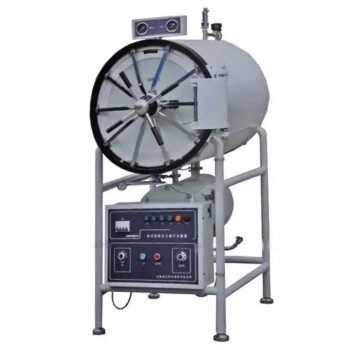
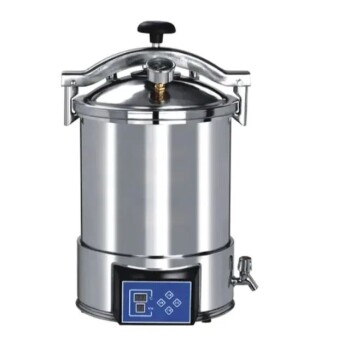
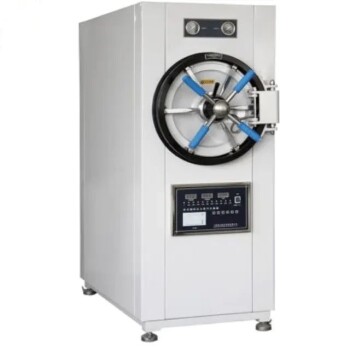
The high-pressure reactor acts as a containment vessel that forces the thermal decomposition of volatile precursors to occur on the target substrate rather than escaping into the atmosphere. Specifically, it creates a sealed, high-pressure argon environment that allows iron pentacarbonyl to decompose at elevated temperatures (e.g., 200 °C) while maintaining the necessary concentration for reaction.
The reactor's primary utility is the suppression of volatility to drive efficient deposition. By trapping the precursor in a closed, high-pressure system, it forces metal atoms to penetrate and coat the boron nitride surface, achieving a synthesis quality impossible in open atmospheric systems.
Controlling Volatility and Deposition
The central challenge in synthesizing magnetic nanocomposites using iron carbonyl is the precursor's physical properties. The high-pressure reactor solves two distinct problems regarding the behavior of this chemical.
Preventing Precursor Loss
Iron pentacarbonyl is highly volatile. In an open heating system, the precursor would evaporate and disperse before it could effectively decompose and deposit onto the hexagonal boron nitride (h-BN) nanosheets.
The sealed nature of the autoclave creates a closed environment. This prevents the significant loss of the iron source during the heating phase.
By retaining the precursor within the vessel, you ensure that the maximum amount of iron is available for the actual synthesis reaction.
Enhancing Surface Penetration
Simply retaining the gas is not enough; it must interact with the substrate. The high pressure generated within the reactor plays a kinetic role.
The pressure promotes the efficient deposition of metal atoms onto the h-BN surface. It forces the decomposing iron atoms into closer contact with the nanostructures.
This leads to better penetration of the metal into the h-BN framework. The result is a more uniform and robust magnetic nanocomposite compared to low-pressure coating methods.
The Role of the Inert Environment
While pressure is the mechanical driver, the chemical environment is equally critical for the purity of the magnetic composite.
The Argon Atmosphere
The primary reference specifies an argon environment within the reactor. This inert gas blanket is essential during the thermal decomposition process.
It prevents the iron from reacting with oxygen or moisture in the air during the high-temperature phase (around 200 °C).
This ensures that the metallic iron is deposited directly onto the boron nitride, maintaining the desired magnetic properties without unwanted oxidation.
Understanding the Trade-offs
While the high-pressure reactor is effective for this specific synthesis, it introduces operational constraints that must be managed.
Batch Processing Limitations
Autoclaves are inherently batch-process devices. Unlike continuous flow chemical vapor deposition (CVD) systems, you are limited to the volume of the vessel.
This makes the process excellent for high-quality, controlled synthesis but potentially slower for large-scale industrial production.
"Black Box" Monitoring
Because the reaction occurs inside a thick-walled, sealed steel vessel, real-time monitoring of the deposition is difficult.
You cannot easily adjust parameters like flow rate or concentration once the vessel is sealed and heating begins.
Success relies heavily on precise pre-calculation of precursor ratios and strict adherence to established temperature profiles.
Optimizing Your Synthesis Strategy
When deciding whether to utilize a high-pressure reactor for your nanocomposite synthesis, consider your specific end goals.
- If your primary focus is material efficiency: Use the high-pressure reactor to minimize the waste of expensive or volatile precursors like iron carbonyl.
- If your primary focus is coating density: Rely on the pressurized environment to drive the metal atoms deep into the nanostructure for a more robust composite.
- If your primary focus is process scalability: Evaluate if the batch-nature of the autoclave creates a bottleneck, and weigh this against the superior coating quality it provides.
The high-pressure reactor is not just a heating vessel; it is a mechanism for forcing volatile chemistry to behave in a controlled, efficient manner.
Summary Table:
| Feature | Role in Synthesis | Benefit to Nanocomposite |
|---|---|---|
| Sealed Containment | Prevents evaporation of volatile precursors | Maximizes precursor efficiency and material yield |
| High Pressure | Forces metal atoms into the h-BN framework | Ensures deep surface penetration and uniform coating |
| Argon Atmosphere | Provides a chemically inert environment | Prevents oxidation, ensuring high magnetic purity |
| Thermal Control | Regulates decomposition temperature (e.g., 200°C) | Drives precise chemical vapor deposition (CVD) |
Elevate Your Material Research with KINTEK
Precision in synthesis requires equipment that can handle the pressure. KINTEK specializes in high-performance high-temperature high-pressure reactors and autoclaves designed specifically for the rigorous demands of magnetic nanocomposite and battery research.
Whether you need robust CVD/PECVD systems, precision crushing and milling tools, or specialized inert atmosphere furnaces, our comprehensive portfolio empowers laboratory excellence. Don't let precursor volatility compromise your results—leverage our expertise in high-pressure thermal solutions to achieve superior coating density and material purity.
Ready to optimize your synthesis workflow? Contact KINTEK today for a tailored solution.
References
- Levan Chkhartishvili, Roin Chedia. Obtaining Boron Carbide and Nitride Matrix Nanocomposites for Neutron-Shielding and Therapy Applications. DOI: 10.3390/condmat8040092
This article is also based on technical information from Kintek Solution Knowledge Base .
Related Products
- Stainless High Pressure Autoclave Reactor Laboratory Pressure Reactor
- Mini SS High Pressure Autoclave Reactor for Laboratory Use
- High Pressure Laboratory Autoclave Reactor for Hydrothermal Synthesis
- Customizable High Pressure Reactors for Advanced Scientific and Industrial Applications
- Portable High Pressure Laboratory Autoclave Steam Sterilizer for Lab Use
People Also Ask
- Why is a laboratory high-pressure reactor used in the hydrothermal synthesis of hydroxyapatite catalysts?
- Why is a laboratory high-pressure reactor necessary for synthesizing fly ash-based zeolite? Achieve Pure Crystallization
- What role does a laboratory high-pressure reactor play in the leaching process of spent cathode materials? Optimize Recovery
- What conditions do laboratory high-pressure reactors provide for HTC? Optimize Your Biochar Production Processes
- How are high-pressure reactors used to prepare metaphosphate electrocatalysts? Master In-Situ Precursor Growth