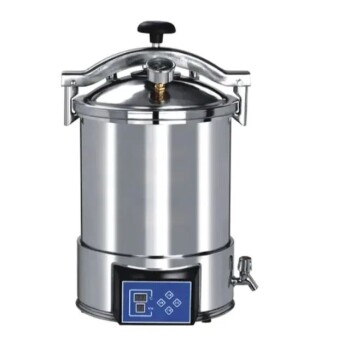
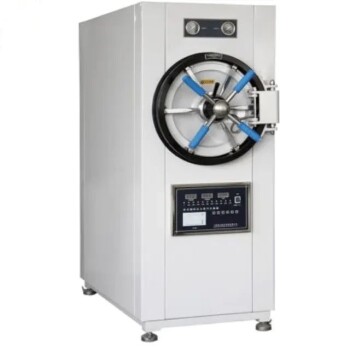
A high-pressure hydrothermal autoclave functions as a precision synthesis vessel that creates the sealed, high-temperature, and high-pressure environment necessary to produce mesoporous hydroxyapatite (HA) powders. By maintaining these specific thermodynamic conditions, the device drives the chemical precipitation reactions in aqueous solutions, allowing for the controlled substitution of molybdate anions into the crystal lattice. This process is critical for defining the material's phase composition, optimizing its morphology, and ensuring the formation of a mesoporous structure essential for catalysis.
The autoclave provides the thermodynamic conditions necessary to accelerate dissolution and recrystallization, ensuring high reproducibility and the formation of high-surface-area mesoporous structures optimized for catalytic activity.
Regulating the Reaction Environment
Creating a Sealed System
The fundamental function of the autoclave is to provide a closed system where pressure can rise significantly above atmospheric levels. This sealed environment prevents the loss of solvents and volatile components during the reaction.
Precise Thermodynamic Control
The device allows for the exact regulation of temperature and reaction time. These parameters directly control the kinetics of precipitation and phase transformation, which are difficult to manage in open-air synthesis methods.
Accelerating Chemical Processes
Under these high-pressure conditions, the dissolution and recrystallization of raw material powders are accelerated. This facilitates the rapid and uniform transformation of precursors into the desired hydroxyapatite phase.
Driving Structural and Chemical Modifications
Facilitating Ion Substitution
The hydrothermal environment is essential for guiding the substitution of active ions, specifically molybdate anions, into the hydroxyapatite crystal lattice. This chemical integration is what transforms standard hydroxyapatite into a functional heterogeneous catalyst.
Developing Mesoporous Architecture
The physical environment within the autoclave is critical for forming mesoporous structures. This results in a material with a high specific surface area, which is a key requirement for enhancing adsorption performance and ion exchange capacity.
Optimizing Dispersion and Morphology
By adjusting the reaction time and temperature, the microscopic morphology of the powder can be fine-tuned. This optimization prevents agglomeration and ensures good dispersibility, maximizing the material's performance in catalytic applications.
Understanding the Trade-offs
Sensitivity to Parameters
Because the system is sealed and pressurized, the synthesis is highly sensitive to process variables. Slight deviations in temperature or exposure time can drastically alter the phase composition, meaning strict adherence to protocols is required to maintain reproducibility.
Lack of Visual Feedback
The "black box" nature of a steel autoclave means you cannot monitor crystal growth in real-time. Operators must rely entirely on pre-set parameters rather than visual cues, which requires extensive preliminary testing to establish the correct settings.
Making the Right Choice for Your Goal
To maximize the effectiveness of your synthesis, align your autoclave parameters with your specific material requirements.
- If your primary focus is high catalytic activity: Prioritize the autoclave settings that maximize specific surface area and mesopore formation to enhance the availability of active sites.
- If your primary focus is material consistency: Utilize the autoclave's ability to maintain constant pressure and temperature to ensure high reproducibility of phase composition across different batches.
By leveraging the precise control of a hydrothermal autoclave, you can successfully transform raw chemical precursors into a sophisticated, highly active heterogeneous catalyst.
Summary Table:
| Feature | Function in HA Synthesis | Key Benefit |
|---|---|---|
| Sealed Environment | Prevents solvent loss & maintains pressure | High reproducibility of material phases |
| High Temperature | Accelerates dissolution & recrystallization | Rapid transformation into HA phase |
| Pressure Control | Facilitates molybdate ion substitution | Creates active heterogeneous catalysts |
| Morphology Tuning | Regulates particle growth & dispersion | Formation of high-surface-area mesopores |
Elevate Your Material Research with KINTEK Precision
Unlock the full potential of your chemical synthesis with KINTEK’s advanced laboratory solutions. Whether you are developing heterogeneous catalysts or exploring ion substitution in hydroxyapatite, our high-performance high-temperature high-pressure reactors and autoclaves provide the stability and control your research demands.
From crushing and milling systems to high-temperature furnaces and specialized PTFE or ceramic consumables, KINTEK specializes in providing global researchers with the tools needed for superior material morphology and phase composition.
Ready to optimize your mesoporous structure development? Contact us today to discuss how our tailored equipment can enhance your lab's efficiency and results!
References
- Ondřej Pašta, Marcin Kopeć. Debris fretting testing in PWR conditions. DOI: 10.21175/rad.abstr.book.2023.19.11
This article is also based on technical information from Kintek Solution Knowledge Base .
Related Products
- High Pressure Laboratory Autoclave Reactor for Hydrothermal Synthesis
- Mini SS High Pressure Autoclave Reactor for Laboratory Use
- Stainless High Pressure Autoclave Reactor Laboratory Pressure Reactor
- Laboratory High Pressure Horizontal Autoclave Steam Sterilizer for Lab Use
- Customizable High Pressure Reactors for Advanced Scientific and Industrial Applications
People Also Ask
- What role does a high-pressure reactor (autoclave) play in the synthesis of NiCuFe-LDH? Master Hydrothermal Growth
- What Role Does a High-Pressure Reactor or Autoclave Play in HA Catalyst Synthesis? Achieve High Surface Area Materials
- What equipment is required for hydrothermal synthesis of Ga0.25Zn4.67S5.08? Optimize Your Semiconductor Production
- What is the function of a high-pressure reactor in the hydrothermal synthesis of boehmite? Expert Process Insights
- What role does an autoclave play in the synthesis of MnO2 nanofibers? Mastering Hydrothermal Growth