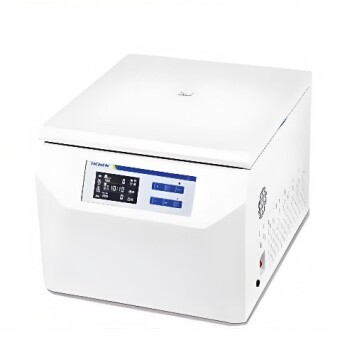
The primary function of a high-pressure reactor in this context is to create a sealed, high-temperature environment that drives the chemical transformation of the niobium source. This apparatus facilitates controlled hydrolysis and polycondensation reactions under alkaline conditions, which are necessary to form the initial nano-network structure acting as the foundation for single-crystal nanorods.
Core Takeaway The high-pressure reactor is not merely a vessel for heating; it is an active reaction enabler. It generates the specific physical conditions required to convert a raw niobium source into a complex nano-network, serving as the critical structural "blueprint" for the final Sandia Octahedral Molecular Sieve (SOMS) material.
The Role of the Reaction Environment
The synthesis of SOMS precursors relies on specific chemical behaviors that cannot occur under standard ambient conditions. The high-pressure reactor is the tool used to force these behaviors.
Enabling Controlled Hydrolysis
The reactor maintains a sealed environment that allows the reaction mixture to reach temperatures and pressures conducive to breaking down the niobium source. Under these specific alkaline conditions, the niobium undergoes hydrolysis, a chemical breakdown involving water, which is the first step in unlocking the metal for restructuring.
Driving Polycondensation
Following hydrolysis, the high-pressure environment promotes polycondensation. This is the process where the hydrolyzed niobium species link together. The reactor ensures these reactions proceed efficiently, allowing the individual molecules to bond into larger, more complex entities.
Structural Implications
The ultimate goal of using a high-pressure reactor is to dictate the morphology (shape and structure) of the final material.
Forming the Nano-Network
The immediate output of the reactions inside the reactor is the formation of a nano-network structure. This is not the final product, but rather a precursor framework. The high pressure ensures this network forms uniformly, establishing a consistent lattice or arrangement.
Foundation for Nanorods
This initial nano-network serves as the essential structural foundation. The organization achieved within the reactor prepares the material for its subsequent conversion into single-crystal nanorods. Without the specific densification and organization provided by the high-pressure treatment, the transition to a rod-like single-crystal morphology would not be possible.
Understanding the Trade-offs
While high-pressure reactors are essential for SOMS synthesis, they introduce specific challenges that must be managed.
Process Visibility
Because the reactor must be sealed to generate autogenous pressure (pressure generated by the heating of the solvent itself), real-time monitoring of the reaction progress is difficult. You cannot easily adjust parameters mid-reaction without breaking the seal and disrupting the thermodynamic equilibrium.
Scalability Limits
High-pressure hydrothermal synthesis is typically a batch process. Scaling this up for industrial production is more complex than continuous flow processes, as larger vessels require robust engineering to withstand the internal pressures safely.
Making the Right Choice for Your Goal
The use of a high-pressure reactor is dictated by the specific requirements of the niobium chemistry involved in SOMS production.
- If your primary focus is Structural Definition: Ensure the reactor temperature and seal integrity are maintained strictly, as these control the extent of polycondensation and the quality of the nano-network.
- If your primary focus is Morphology Control: Recognize that the high-pressure phase is only the foundational step; the uniformity achieved here directly correlates to the quality of the eventual single-crystal nanorods.
The high-pressure reactor effectively acts as a "molecular forge," applying the necessary heat and pressure to reshape niobium compounds into a precise architectural precursor.
Summary Table:
| Feature | Function in SOMS Synthesis | Impact on Material |
|---|---|---|
| Sealed Environment | Generates autogenous pressure & high temperature | Drives hydrolysis of niobium source |
| Polycondensation Control | Facilitates molecular linking | Forms the initial nano-network structure |
| Morphology Regulation | Establishes structural "blueprints" | Enables transition to single-crystal nanorods |
| Thermodynamic Stability | Maintains equilibrium during heating | Ensures uniform lattice and network density |
Elevate Your Materials Synthesis with KINTEK Precision
Achieving the perfect nano-network for Sandia Octahedral Molecular Sieve (SOMS) precursors requires more than just heat—it requires the precise environment provided by KINTEK’s industry-leading high-temperature high-pressure reactors and autoclaves.
At KINTEK, we specialize in empowering researchers and industrial manufacturers with top-tier laboratory equipment, including:
- Advanced Reactors: High-pressure and high-temperature systems for complex hydrothermal synthesis.
- Comprehensive Material Processing: From crushing and milling systems to hydraulic presses (pellet, isostatic) and sieving equipment.
- Thermal Expertise: A full range of muffle, tube, vacuum, and CVD furnaces for every stage of material development.
- Laboratory Essentials: High-purity ceramics, crucibles, and cooling solutions like ULT freezers and freeze dryers.
Whether you are refining niobium chemistry or scaling nanorod production, our team of experts is ready to provide the durable, high-performance tools your laboratory demands. Contact KINTEK today to optimize your synthesis process!
References
- Rana Faryad Ali, Byron D. Gates. Disordered microporous Sandia octahedral molecular sieves are tolerant to neutron radiation. DOI: 10.1039/d4lf00317a
This article is also based on technical information from Kintek Solution Knowledge Base .
Related Products
- Customizable Laboratory High Temperature High Pressure Reactors for Diverse Scientific Applications
- Customizable High Pressure Reactors for Advanced Scientific and Industrial Applications
- Stainless High Pressure Autoclave Reactor Laboratory Pressure Reactor
- Mini SS High Pressure Autoclave Reactor for Laboratory Use
- High Pressure Laboratory Autoclave Reactor for Hydrothermal Synthesis
People Also Ask
- How do high-pressure and high-temperature reactors ensure the effective treatment of lignocellulosic wastewater in WAO?
- What equipment is required for high-pressure high-temperature reactions? Master Extreme Chemistry Safely
- How do you control high pressure in a reactor? A Guide to Safe & Stable Operation
- Why is argon better than nitrogen for inert atmosphere? Ensure Absolute Reactivity & Stability
- How does initial oxygen pressure affect the wet oxidation of pharmaceutical sludge? Master Your Oxidation Depth