The primary function of a laboratory drying oven in this context is the precise thermal dehydration of biomass materials. For Tanjong leaves specifically, the oven is employed to subject the raw material to a constant temperature of 105 °C, ensuring the complete removal of moisture prior to further processing.
The critical value of this step is not just drying, but chemical stabilization. By eliminating water content, you prevent the dilution of the final bio-oil product, maintain its high heating value, and ensure a stable environment for the subsequent pyrolysis reaction.
The Mechanics of Biomass Pretreatment
Achieving Complete Moisture Removal
The laboratory oven operates by maintaining the biomass at a specific set point, typically 105 °C for Tanjong leaves.
This temperature is selected because it is just above the boiling point of water, sufficient to drive off moisture without inducing significant thermal decomposition of the biomass structure itself.
Uniformity Through Circulation
While the primary goal is heat application, the effectiveness of the oven relies on its internal airflow.
As noted in standard laboratory equipment specifications, these ovens utilize forced air circulation where fresh air passes over heating elements. This ensures the temperature remains uniform throughout the chamber, preventing "cold spots" that could leave pockets of moisture in the leaves.
Why Moisture Removal is Critical for Bio-oil
Preventing Product Dilution
The presence of water in the raw material directly correlates to the quality of the bio-oil produced later.
If the leaves are not dried thoroughly, the moisture vaporizes during pyrolysis and condenses into the final liquid product. This dilutes the bio-oil, significantly reducing its concentration and utility.
Preserving Heating Value
For biomass to serve as an effective fuel source, its energy density must be maximized.
Retained moisture acts as a heat sink; it absorbs energy during combustion to vaporize water rather than producing heat. Pre-drying ensures the bio-oil maintains a high heating value, making it a more efficient fuel.
Ensuring Pyrolysis Stability
The conversion of biomass into bio-oil usually occurs through pyrolysis (thermal decomposition in the absence of oxygen).
Excess moisture in the feedstock can destabilize this reaction, causing fluctuations in reactor temperature and pressure. Thorough drying in the oven guarantees a predictable and stable reaction process.
Understanding the Trade-offs
Temperature Precision vs. Degradation
It is vital to adhere strictly to the target temperature (e.g., 105 °C) rather than simply maximizing heat to dry the material faster.
While these ovens can often reach 300 °C, exceeding the prescribed drying temperature can lead to premature torrefaction or scorching. This alters the chemical structure of the leaves before the pyrolysis stage even begins, potentially skewing your experimental data.
Energy Consumption
Running a drying oven for an "extended period" is energy-intensive.
You must balance the need for absolute dryness against the energy cost and time required. However, in high-precision contexts like bio-oil production, the cost of drying is generally outweighed by the quality gains in the final product.
Making the Right Choice for Your Goal
When configuring your pretreatment protocols, consider your end objectives:
- If your primary focus is Fuel Quality: Prioritize the duration of the drying cycle to ensure 0% residual moisture, maximizing the heating value of your bio-oil.
- If your primary focus is Process Stability: Focus on the temperature uniformity of the oven to ensure no wet pockets remain that could destabilize the pyrolysis reactor.
Proper usage of the drying oven is the single most controllable variable for ensuring the consistency of your biomass feedstock.
Summary Table:
| Feature | Function in Biomass Pretreatment | Impact on Final Product |
|---|---|---|
| Temperature Control | Sustained 105 °C dehydration | Prevents thermal degradation of biomass |
| Air Circulation | Forced air uniformity | Eliminates moisture pockets for stable pyrolysis |
| Moisture Removal | Complete thermal dehydration | Prevents bio-oil dilution and low energy density |
| Chemical Stability | Pre-pyrolysis preparation | Ensures predictable reactor temperature & pressure |
Maximize the energy density of your biomass research with KINTEK's precision equipment. From high-performance laboratory drying ovens to advanced high-temperature reactors and autoclaves, we provide the tools necessary for stable pyrolysis and superior bio-oil quality. Whether you need reliable crushing systems for feedstock preparation or ULT freezers for sample preservation, KINTEK supports every stage of your lab's workflow. Contact our experts today to discover how our comprehensive range of furnaces and laboratory consumables can enhance your research outcomes!
References
- Leni Maulinda, Ahmadi Ahmadi. The Influence of Pyrolysis Time and Temperature on the Composition and Properties of Bio-Oil Prepared from Tanjong Leaves (Mimusops elengi). DOI: 10.3390/su151813851
This article is also based on technical information from Kintek Solution Knowledge Base .
Related Products
- 56L Vertical Laboratory Vacuum Drying Oven
- Laboratory Scientific Electric Heating Blast Drying Oven
- 23L Laboratory Vacuum Drying Oven
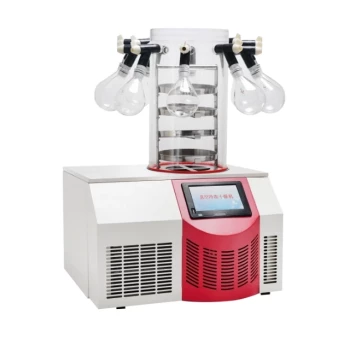
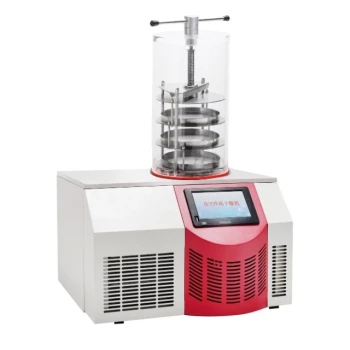
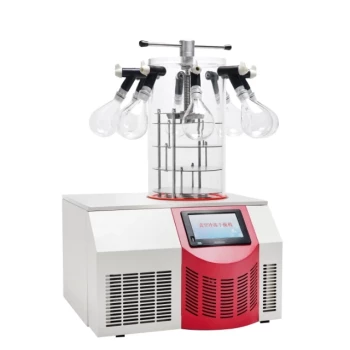
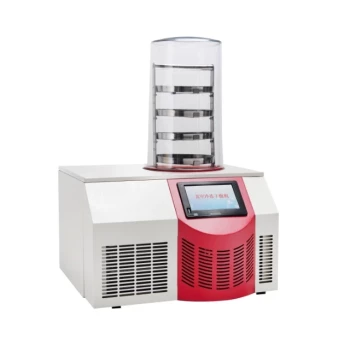
- High Performance Laboratory Freeze Dryer
- High Performance Laboratory Freeze Dryer for Research and Development
People Also Ask
- Why is a laboratory vacuum drying oven recommended for rice straw residues? Protect Your Biomass Integrity
- What role does a laboratory vacuum drying oven play in the preparation of modified multi-walled carbon nanotubes?
- What is the importance of using a laboratory vacuum drying oven? Preserving Slow-Release Microcapsule Integrity
- Why is a Laboratory Vacuum Drying Oven recommended for PBAT microspheres? Protect Sensitive Polymer Integrity
- What role does a laboratory vacuum drying oven play in processing nanoparticle powder samples? Protect Sample Integrity