In organic dye adsorption kinetics, the laboratory shaker is the engine of uniform interaction. It provides continuous mechanical agitation to keep adsorbent particles suspended, ensuring that dye molecules move efficiently from the liquid bulk to the adsorbent's internal pores. This process is essential for eliminating the resistance of the diffusion boundary layer, which would otherwise skew the measurement of the material’s true adsorption rate and capacity.
The laboratory shaker functions as a critical control mechanism that eliminates external mass transfer barriers. By providing constant mechanical energy, it ensures maximum contact between dye molecules and adsorbent surfaces, allowing researchers to measure the intrinsic kinetics of the material rather than the physical limitations of the surrounding liquid.
Overcoming Physical Barriers to Adsorption
Elimination of the Diffusion Boundary Layer
In a static solution, a "stagnant film" or boundary layer forms around the adsorbent particle, acting as a barrier that slows down the movement of dye molecules. The shaker uses mechanical force to disrupt this layer, facilitating rapid transport from the bulk solution to the adsorbent's surface. This ensures that the measured data reflects the material's actual chemical affinity rather than physical transport delays.
Maintaining Homogeneous Particle Suspension
To maximize the available surface area, adsorbent particles must be fully distributed throughout the dye solution. The shaker’s constant oscillation prevents sedimentation, keeping the entire surface area available for adsorption at all times. Without this suspension, particles settled at the bottom of a flask would be shielded from the dye, leading to a significant underestimation of the material's capacity.
Increasing Collision Frequency
The continuous mechanical perturbation increases the kinetic energy within the system, leading to a higher frequency of collisions between dye molecules and the adsorbent’s active sites. This acceleration helps the system reach reaction equilibrium faster. Consequently, researchers can more accurately determine the equilibrium time and fit mathematical models like the pseudo-second-order kinetic equation.
Ensuring Data Accuracy and Repeatability
Precise Temperature Integration
Many modern shakers, such as incubator or water-bath shakers, provide simultaneous temperature control. Because adsorption is a thermodynamic process, even slight temperature fluctuations can alter the kinetic energy of the molecules and the adsorption capacity. A constant temperature environment eliminates these variables, ensuring that the kinetic data is reproducible and representative of specific thermal conditions.
Standardizing Mass Transfer Resistance
By maintaining a constant rotation speed (e.g., 180 or 250 rpm), the shaker ensures that external mass transfer resistance is consistently minimized across different samples. This standardization allows for a fair comparison between different adsorbent materials. It ensures that any observed differences in adsorption rates are due to the material's internal pore structure and chemical properties rather than variations in how the flask was handled.
Understanding the Trade-offs and Pitfalls
Mechanical Attrition of Fragile Materials
While high-speed shaking is effective for eliminating film resistance, it can physically break down delicate adsorbents like carbon aerogels or certain bio-composites. This process, known as mechanical attrition, changes the particle size distribution during the experiment. If the particles break into smaller fragments, the surface area increases artificially, potentially leading to inaccurate kinetic results.
The Impact of Excessive Agitation Speed
There is often a "diminishing returns" point where increasing the shaker speed no longer improves mass transfer but may introduce errors. Excessive speeds can cause splashing, leading to dye loss on the upper walls of the vessel or even vortex formation that traps air and reduces the liquid-solid contact area. Finding the optimal speed is critical to balancing mass transfer elimination with physical stability.
How to Apply This to Your Project
When setting up your adsorption experiments, the choice and configuration of your shaker should align with your specific research goals.
- If your primary focus is measuring intrinsic pore diffusion: Use a high agitation speed (200+ RPM) to ensure the liquid film resistance is completely eliminated, allowing you to see how dye moves within the pores.
- If your primary focus is studying fragile or low-density adsorbents: Opt for a lower, more gentle oscillation speed to prevent particle breakage while still maintaining suspension.
- If your primary focus is thermodynamic modeling: Ensure you utilize an incubator shaker or water-bath shaker to maintain a strictly controlled temperature (e.g., 298 K) throughout the kinetic run.
- If your primary focus is high-viscosity wastewater samples: Increase the mechanical force to overcome the higher resistance of the fluid and ensure heavy metal or dye ions reach the active sites.
By precisely controlling the mechanical environment, you transform a simple mixing process into a rigorous scientific measurement of material performance.
Summary Table:
| Key Function | Impact on Kinetics Experiment | Primary Research Benefit |
|---|---|---|
| Boundary Layer Removal | Disrupts the "stagnant film" around particles | Measures intrinsic chemical affinity, not physical delays |
| Particle Suspension | Prevents sedimentation and maximizes surface area | Ensures full utilization of adsorbent capacity |
| Collision Frequency | Increases kinetic energy and molecular contact | Accelerates the system toward reaction equilibrium |
| Thermal Regulation | Maintains a constant temperature environment | Ensures thermodynamic reproducibility and data precision |
| Standardization | Minimizes external mass transfer resistance | Allows for fair performance comparison between materials |
Elevate Your Research Precision with KINTEK
Achieving accurate adsorption kinetics requires more than just a stir—it demands precise, reliable mechanical control. KINTEK specializes in high-performance laboratory equipment designed for the most rigorous scientific applications.
From our advanced laboratory shakers and homogenizers that ensure uniform mass transfer, to our comprehensive range of high-temperature furnaces (muffle, tube, vacuum) and high-pressure reactors, we provide the tools you need to eliminate variables and secure repeatable data. Whether you are working on wastewater treatment, battery research, or material synthesis, our portfolio includes everything from crushing and milling systems to isostatic hydraulic presses and essential ceramics.
Ready to optimize your lab's workflow and data integrity? Contact our experts today to find the perfect equipment solution tailored to your specific research goals.
References
- Youngho Jeon, Jungmok You. Multiscale Porous Carbon Materials by In Situ Growth of Metal–Organic Framework in the Micro-Channel of Delignified Wood for High-Performance Water Purification. DOI: 10.3390/nano13192695
This article is also based on technical information from Kintek Solution Knowledge Base .
Related Products
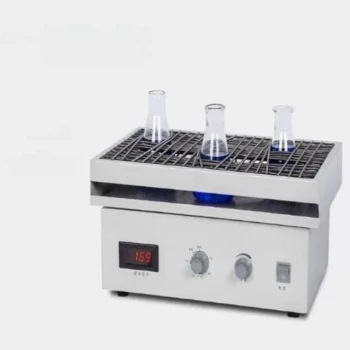
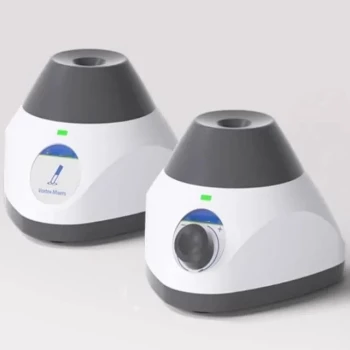
- Laboratory Multifunctional Small Speed-Adjustable Horizontal Mechanical Shaker for Lab
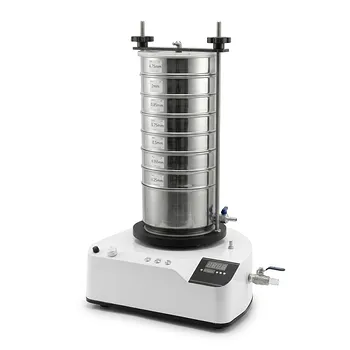
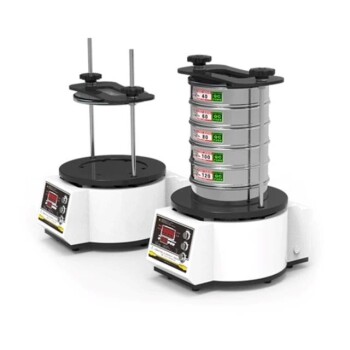
- Laboratory Vibratory Sieve Shaker Machine for Dry and Wet Three-Dimensional Sieving
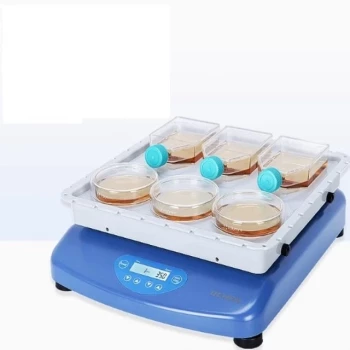
- Laboratory Oscillating Orbital Shaker
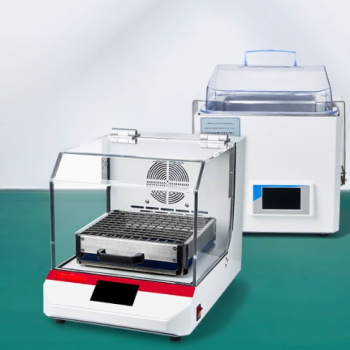
- Shaking Incubators for Diverse Laboratory Applications
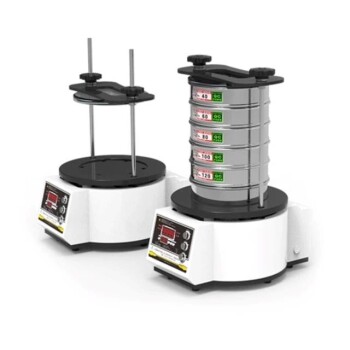
- Laboratory Vibratory Sieve Shaker Machine Slap Vibrating Sieve
People Also Ask
- How do static culture and shaking culture affect the morphology of BC? Optimize Lab Shaker Results
- What is the role of a laboratory shaker in silane sol preparation? Master Uniform Aramid Fabric Coating
- Why is a laboratory shaker required for continuous 24-hour catalyst treatment? Achieve Deep Uniform Impregnation
- What is the function of a laboratory shaker in evaluating Fe-C@C nanoparticles? Optimize Methylene Blue Adsorption
- How do laboratory shakers or stirrers influence the efficiency of hydrogen production during dark fermentation?