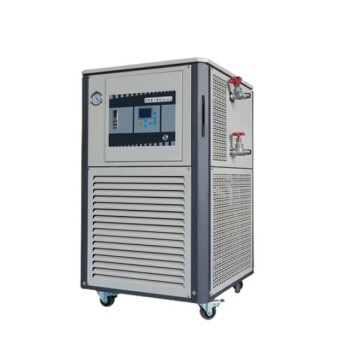
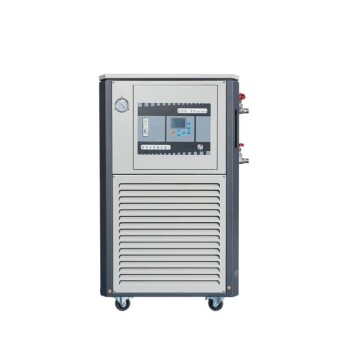
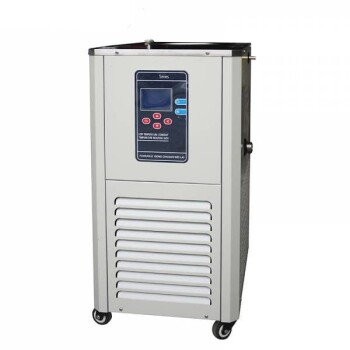
The programmed temperature control tube reactor serves as the functional core of an NH3-SCR catalytic activity evaluation system. It is designed to simulate industrial flue gas environments by executing precise, automated heating programs. This automation allows researchers to subject catalysts to a range of working temperatures to accurately measure their denitration performance.
Core Insight This reactor is not just a heater; it is a dynamic simulation tool. By replicating the thermal fluctuations of real-world industrial processes, it enables the precise identification of a catalyst's "light-off" temperature and its effective operational window.
Simulating Industrial Conditions
Replicating Thermal Environments
The primary role of the reactor is to move beyond static testing. It uses automated heating programs to mimic the temperature variations found in actual industrial flue gas systems.
This ensures that the data collected reflects how the catalyst will behave when deployed in a working facility, rather than just in a controlled steady state.
Controlling Filtration Velocities
The reactor allows for the evaluation of catalysts under specific flow conditions. It assesses performance at different filtration velocities, specifically ranging from 1 to 4 m/min.
This control allows researchers to verify if the catalyst maintains its efficiency when gas flows change speed, a common variable in industrial exhaust systems.
Defining Catalyst Performance
Determining the Light-Off Temperature
One of the most critical functions of the reactor is pinpointing the light-off temperature. This is the specific thermal point at which the catalyst becomes active and begins the chemical reaction effectively.
Accurate identification of this temperature is vital for energy efficiency, as it dictates how much heat must be applied before the system works.
Mapping the Effective Process Window
Beyond the starting point, the reactor helps define the effective process window. This is the temperature range in which the catalyst operates at peak efficiency.
For specific materials, such as Mn-Ce-Mo/LDPC catalysts, this data confirms the upper and lower thermal limits before performance degrades.
Understanding the Trade-offs
Reliance on Programming Precision
The validity of the data is entirely dependent on the accuracy of the automated heating program.
If the temperature ramp rate is inconsistent, the determination of the light-off temperature may be skewed. The system requires rigorous calibration to ensure the "simulated" environment matches the intended industrial reality.
Complexity of Stability Assessment
While the system evaluates denitration efficiency stability, it does so within the confines of the tube reactor.
Testing at filtration velocities of 1 to 4 m/min provides necessary data, but it requires precise control of flow dynamics to ensure the stability readings are not artifacts of the equipment itself.
Making the Right Choice for Your Goal
To maximize the value of a programmed temperature control tube reactor, align your testing parameters with your specific data needs.
- If your primary focus is Energy Efficiency: Concentrate on the light-off temperature data to determine the minimum heat required to activate the catalyst.
- If your primary focus is Operational Reliability: Analyze the stability of denitration efficiency across the full range of filtration velocities (1–4 m/min) to ensure consistent performance under load.
This reactor transforms theoretical catalyst chemistry into actionable, industrially relevant performance data.
Summary Table:
| Feature | Function in NH3-SCR Evaluation |
|---|---|
| Automated Heating | Replicates industrial thermal fluctuations and ramp rates |
| Temperature Window | Identifies the catalyst's "light-off" point and peak efficiency range |
| Flow Control | Evaluates performance at filtration velocities (1–4 m/min) |
| Process Simulation | Transforms theoretical chemistry into actionable industrial data |
Elevate Your Catalyst Research with KINTEK
Maximize the accuracy of your denitration studies with KINTEK’s advanced laboratory solutions. Whether you are mapping process windows for NH3-SCR catalysts or testing material stability, our high-performance tube reactors, CVD systems, and atmosphere furnaces provide the precision your data demands.
Why Choose KINTEK?
- Comprehensive Range: From high-temperature high-pressure reactors to precise hydraulic presses and crushing systems.
- Industry Expertise: Tailored solutions for battery research, ceramics, and industrial flue gas simulation.
- Reliable Consumables: High-quality crucibles and ceramics to support long-term testing.
Contact KINTEK today to discover how our high-precision equipment can streamline your laboratory's path to industrial innovation.
References
- Tao Zhou, Hua Zhang. Mn-Ce catalysts/LDPC Modified by Mo for Improving NH3-SCR Performance and SO2 Resistance at Low Temperature. DOI: 10.3390/met13050938
This article is also based on technical information from Kintek Solution Knowledge Base .
Related Products
- Customer Made Versatile CVD Tube Furnace Chemical Vapor Deposition Chamber System Equipment
- Laboratory Rapid Thermal Processing (RTP) Quartz Tube Furnace
- Multi Heating Zones CVD Tube Furnace Machine Chemical Vapor Deposition Chamber System Equipment
- Customizable Laboratory High Temperature High Pressure Reactors for Diverse Scientific Applications
- 1700℃ Controlled Atmosphere Furnace Nitrogen Inert Atmosphere Furnace
People Also Ask
- What is a CVD tube furnace? A Complete Guide to Thin-Film Deposition
- What is the function of a high-temperature CVD tube furnace in 3D graphene foam prep? Master 3D Nanomaterial Growth
- How does a CVD tube furnace inhibit the sintering of silver supports? Boost Membrane Durability and Performance
- What is the function of a tube furnace in CVD SiC synthesis? Achieving Ultra-Pure Silicon Carbide Powders
- What is the difference between hot wall CVD and cold wall CVD? Choose the Right System for Your Process