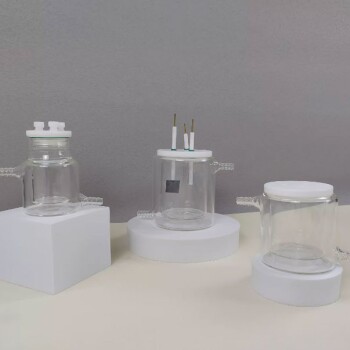
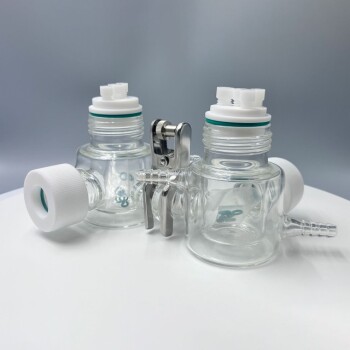
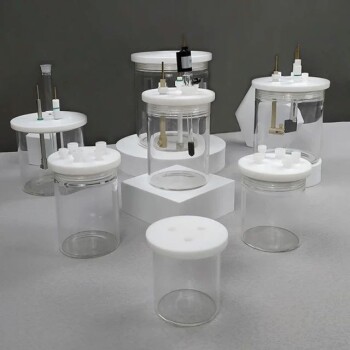
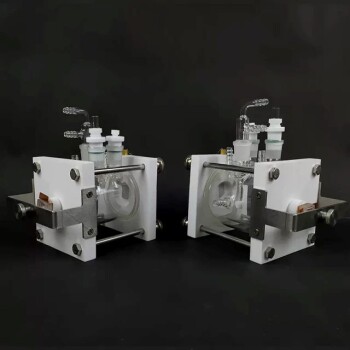
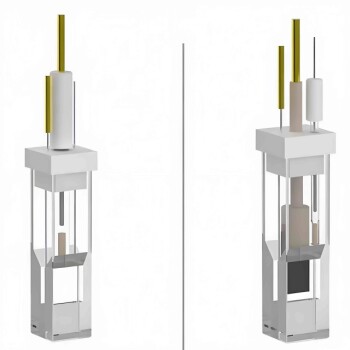
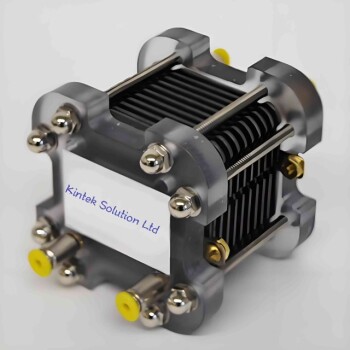
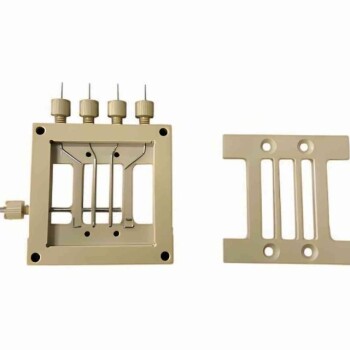
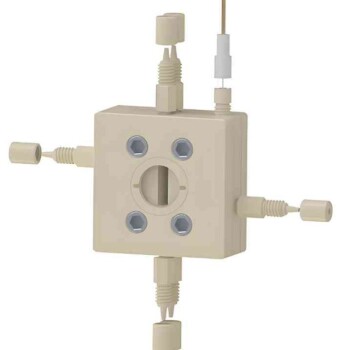
The fundamental function of a two-compartment electrolytic cell in this context is to create a controlled, isolated reductive environment that physically separates the anode and cathode while allowing necessary ion migration. This separation allows for the targeted application of cathode polarization to break down stubborn contaminants that traditional methods cannot easily remove.
Core Takeaway By isolating the cathode region, the cell facilitates the electrochemical reduction of insoluble hematite (iron oxide) into soluble divalent iron. This dynamic process significantly accelerates the cleaning of ion exchange resins, outperforming the dissolution rates of static acid leaching.
The Mechanics of the Two-Compartment Design
Physical Separation with Ion Connectivity
The defining feature of this cell is the division of the anode and cathode regions.
While these compartments are physically distinct, the design maintains specific channels for ion migration. This ensures that while the chemical environments remain separate to prevent interference, the electrical circuit remains complete.
Creating a Specific Reductive Environment
The primary purpose of separating the compartments is to manipulate the conditions at the cathode.
This configuration enables cathode polarization, creating a highly specific reductive environment. This localized chemical state is the engine that drives the decontamination process.
The Chemical Decontamination Process
Targeting Insoluble Contaminants
Ion exchange resins are often fouled by hematite (iron oxide), a prevalent and stubborn contaminant.
In its natural state on the resin, hematite is insoluble and difficult to wash away. The two-compartment cell is specifically engineered to address this stability.
Transformation to Soluble Iron
Within the reductive environment of the cathode compartment, a critical chemical transformation occurs.
The system reduces the insoluble hematite into soluble divalent iron ions. Once transformed into this soluble state, the iron can be easily flushed from the resin, effectively restoring its function.
Advantages Over Traditional Methods
Accelerating Dissolution Rates
The transition from static methods to dynamic electrochemical decontamination represents a major leap in efficiency.
Traditional static acid leaching is often slow and less effective against crystallized deposits like hematite.
The Dynamic Advantage
By utilizing an electrochemical driver rather than passive chemical contact, the two-compartment cell significantly accelerates the dissolution rate.
This ensures that the resin is cleaned faster and more thoroughly, reducing downtime for the ion exchange system.
Making the Right Choice for Your Goal
To determine if this decontamination method aligns with your operational needs, consider the following specific objectives:
- If your primary focus is removing iron oxide deposits: This method is superior because it chemically alters insoluble hematite into a soluble form through reduction.
- If your primary focus is process speed: The dynamic electrochemical approach offers significantly faster dissolution rates compared to passive static acid leaching.
This technology bridges the gap between physical separation and chemical transformation to restore resin efficiency.
Summary Table:
| Feature | Electrochemical (Two-Compartment) | Static Acid Leaching |
|---|---|---|
| Mechanism | Dynamic Cathode Polarization | Passive Chemical Contact |
| Iron Removal | Reduces insoluble hematite to soluble iron | Limited dissolution of crystallized iron |
| Processing Speed | Highly Accelerated | Slow and Time-Consuming |
| Environment | Controlled Reductive Environment | Uniform Acidic Environment |
| Efficiency | High (Restores resin function rapidly) | Moderate (May leave stubborn deposits) |
Optimize Your Electrochemical Decontamination with KINTEK
Maximize the efficiency of your ion exchange resin restoration using high-performance laboratory solutions from KINTEK. Whether you are developing dynamic decontamination protocols or conducting advanced material research, our specialized electrolytic cells and electrodes provide the precision and durability required for targeted cathode polarization and iron reduction.
Beyond electrochemical tools, KINTEK offers a comprehensive range of laboratory equipment including:
- High-Temperature Furnaces: Muffle, tube, vacuum, and CVD systems.
- Processing Equipment: Crushing, milling, and hydraulic presses (pellet, hot, isostatic).
- Advanced Reactors: High-temperature high-pressure reactors and autoclaves.
- Lab Essentials: ULT freezers, freeze dryers, and high-quality ceramics/PTFE consumables.
Ready to upgrade your lab's capabilities? Contact us today to consult with our experts and find the perfect equipment tailored to your specific research goals.
References
- Eduard Tokar, Andrei Egorin. Electro-Decontamination of Spent Ion Exchange Resins Contaminated with Iron Oxide Deposits under Dynamic Conditions. DOI: 10.3390/su13094756
This article is also based on technical information from Kintek Solution Knowledge Base .
Related Products
- Double-Layer Water Bath Electrolytic Electrochemical Cell
- Double Layer Five-Port Water Bath Electrolytic Electrochemical Cell
- H-Type Double-Layer Optical Electrolytic Electrochemical Cell with Water Bath
- Electrolytic Electrochemical Cell with Five-Port
- Customizable PEM Electrolysis Cells for Diverse Research Applications
People Also Ask
- What does the routine maintenance of a double-layer water-bath electrolytic cell involve? A Guide to Ensuring Precision and Longevity
- What is the typical experimental system used with a double-layer water-bath electrolytic cell? Achieve Precise Electrochemical Control
- What are the procedures for after using a double-layer water-bath electrolytic cell? Ensure Equipment Longevity and Data Accuracy
- When is professional repair required for a double-layer water-bath electrolytic cell? Protect Your Lab's Precision and Safety
- What are the key features of a double-layer water-bath electrolytic cell? Achieve Precise Temperature Control for Your Experiments