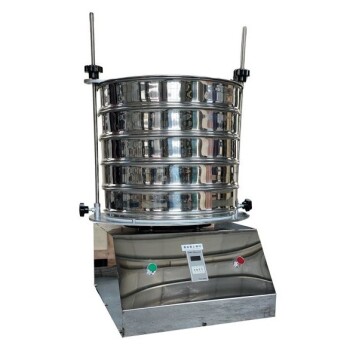
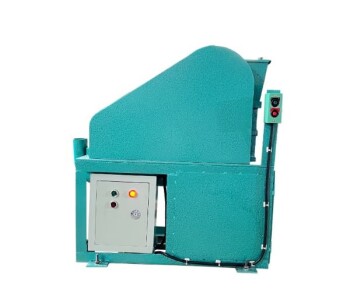
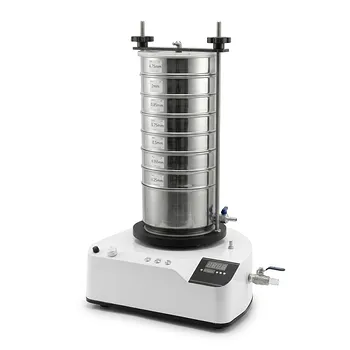
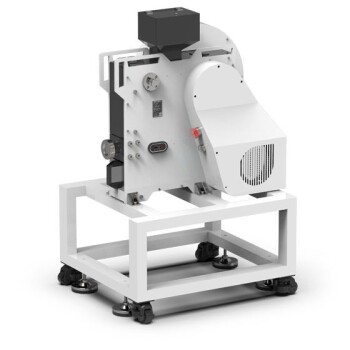
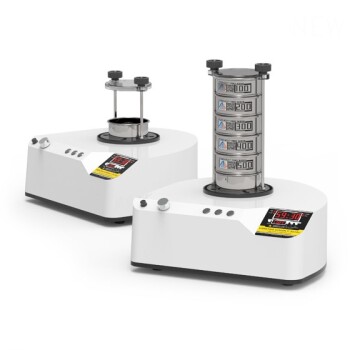
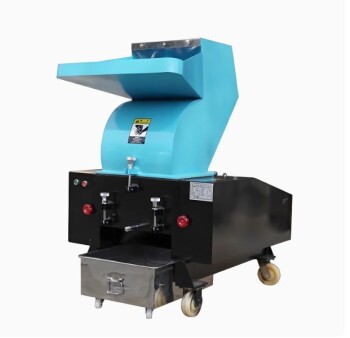
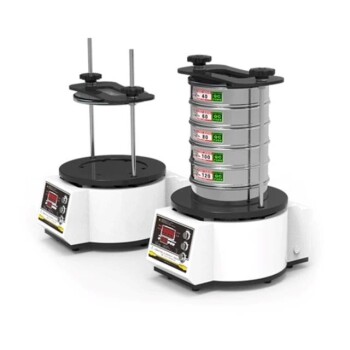
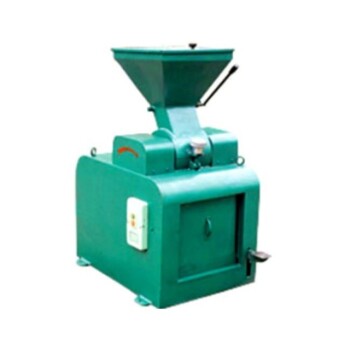
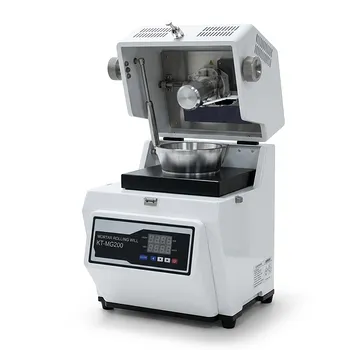
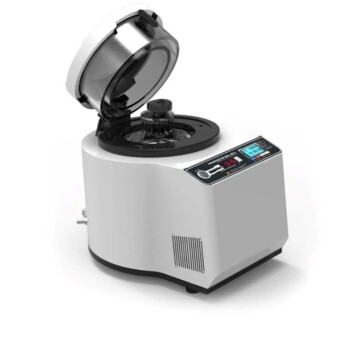
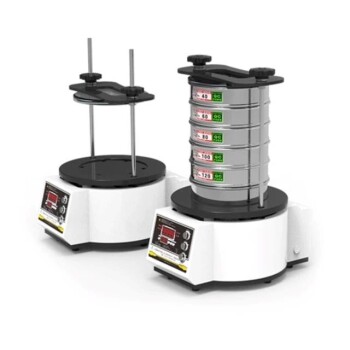
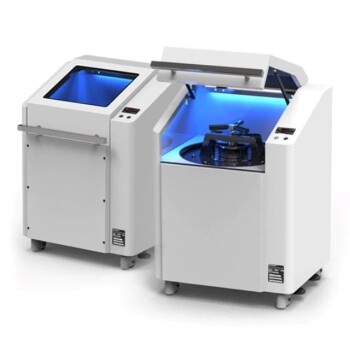
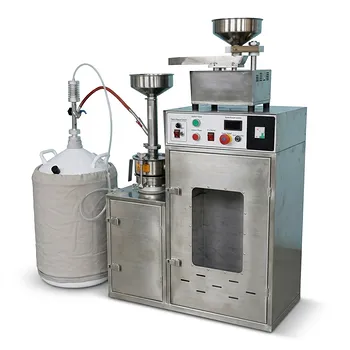
Crushing and sieving equipment is utilized to transform heterogeneous food waste into a standardized powder with specific particle dimensions. This physical pretreatment serves three primary functions: it drastically increases the material's total surface area, ensures uniform chemical contact during aluminum chloride ($AlCl_3$) immersion, and stabilizes the thermal conditions required for the subsequent pyrolysis reaction.
The core purpose of these systems is to eliminate physical variability in raw food waste, enabling predictable chemical impregnation and uniform thermal decomposition. By standardizing particle size, engineers ensure that the final aluminum-impregnated biochar possesses a consistent chemical structure and high adsorption reproducibility.
Maximizing Chemical Reactivity through Surface Area Expansion
Increasing Available Impregnation Sites
Mechanical crushing breaks down the complex physical structure of food waste into a fine powder. This process significantly increases the specific surface area, exposing a greater number of functional groups and internal pores to the environment.
Optimizing Fluid-Solid Interaction
A higher surface-to-volume ratio allows the aluminum chloride solution to penetrate the biomass more efficiently. This ensures that the aluminum ions are distributed deeply and evenly throughout the material rather than just coating the exterior of large chunks.
Enhancing Structural and Chemical Uniformity
Facilitating Consistent Pyrolysis
Uniform particle sizes, often regulated to 2 mm or smaller, are critical for maintaining consistent heat and mass transfer during pyrolysis. This prevents the formation of "cold spots" or unevenly charred material, resulting in a more homogenous biochar product.
Standardizing Experimental Reproducibility
Precision sieving ensures that the raw material meets strict size specifications, such as a 60-mesh (0.25 mm) or 2 mm threshold. This standardization is fundamental for ensuring that subsequent adsorption experiments yield reproducible data across different batches.
Improving Mechanical Stability
In applications where biochar is formed into pellets, uniform particle distribution enhances the interlocking capability between particles. When combined with binders, these small, crushed particles produce a final product with higher density and compressive strength.
Understanding the Technical Trade-offs
The Risk of Material Loss and Dust
While finer particles improve reactivity, excessive milling can lead to the creation of fine fractions smaller than 1mm. These particles are prone to becoming airborne dust, which can lead to material loss and necessitate complex dust collection systems.
Energy Consumption vs. Reactivity
Achieving a very fine powder requires significant mechanical energy and time in hammer mills or grinding systems. Engineers must balance the desire for maximum surface area with the operational costs associated with prolonged milling.
Sieving Constraints and Waste
Standardizing size through sieving inevitably creates oversized rejects that must be recirculated for further crushing. This adds complexity to the processing workflow and requires careful management of the recirculation loop to maintain throughput.
How to Apply This to Your Project
Making the Right Choice for Your Goal
- If your primary focus is maximizing aluminum loading: Prioritize fine milling (e.g., sub-0.5 mm) to maximize the contact points between the biomass and the aluminum solution.
- If your primary focus is industrial scalability: Utilize a hammer mill with a 2 mm sieve to balance high throughput with sufficient particle uniformity for pyrolysis.
- If your primary focus is experimental precision: Use laboratory-grade grinding mills and standardized mesh sieves (like 60-mesh) to ensure a tight particle size distribution and data consistency.
By precisely controlling the physical dimensions of the raw food waste, you establish the necessary foundation for a high-performance, aluminum-functionalized biochar.
Summary Table:
| Pretreatment Step | Key Technical Function | Benefit for Biochar Production |
|---|---|---|
| Mechanical Crushing | Surface Area Expansion | Increases sites for $AlCl_3$ impregnation and chemical reactivity. |
| Precision Sieving | Particle Standardization | Ensures uniform heat transfer during pyrolysis and reproducibility. |
| Size Optimization | Fluid-Solid Interaction | Deep penetration of aluminum ions throughout the biomass matrix. |
| Structural Milling | Enhanced Interlocking | Improves mechanical stability and density for pelletized final products. |
Elevate Your Biochar Research with KINTEK Precision
Achieving the perfect particle size is the foundation of high-performance functionalized biochar. KINTEK specializes in advanced laboratory solutions designed to streamline your material pretreatment and thermal processing. Our comprehensive range includes:
- High-Efficiency Crushing & Milling Systems: Achieve consistent sub-mm powders for maximum surface area.
- Precision Sieving Equipment: Ensure strict particle size distribution for reproducible experimental data.
- Advanced High-Temperature Furnaces: Optimized for uniform pyrolysis of impregnated biomass.
Ready to maximize your chemical impregnation efficiency and adsorption results? Contact our technical experts today to find the ideal equipment for your laboratory or pilot-scale project!
References
- Jin-Kyu Kang, Seong‐Jik Park. Optimization of the Preparation Conditions of Aluminum-Impregnated Food Waste Biochar Using RSM with an MLP and Its Application in Phosphate Removal. DOI: 10.3390/w15162997
This article is also based on technical information from Kintek Solution Knowledge Base .
Related Products
- Laboratory Test Sieves and Sieving Machines
- Sealed Jaw Crusher High Efficiency Environmental Protection Safe and Reliable
- Laboratory Vibratory Sieve Shaker Machine for Dry and Wet Three-Dimensional Sieving
- Laboratory Jaw Crusher
- Three-dimensional electromagnetic sieving instrument
People Also Ask
- What are laboratory test sieves used for? A Guide to Particle Size Analysis
- How do you calculate the sieve test? Master Particle Size Distribution for Quality Control
- How does a lab test sieve contribute to biomass charcoal powder preparation? Achieve Uniform Particle Size
- What are the specifications for test sieves? A Guide to ASTM & ISO Standards for Accurate Particle Analysis
- What materials are required for sieving? Achieve Accurate Particle Size Analysis