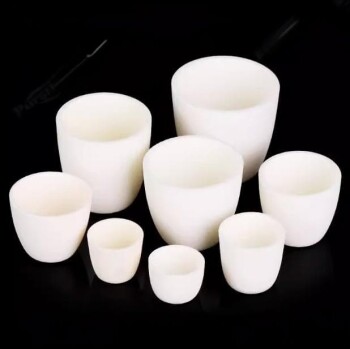
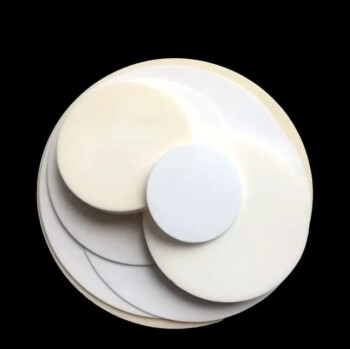
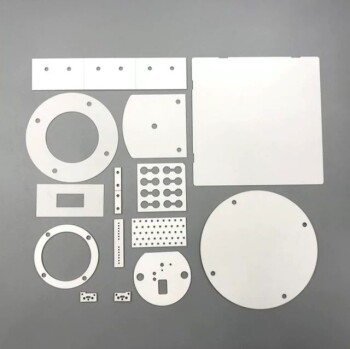
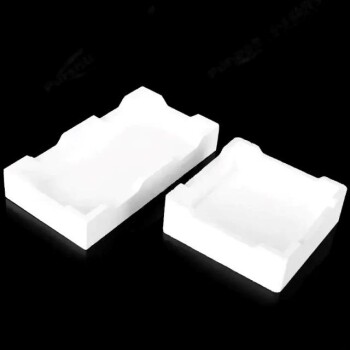
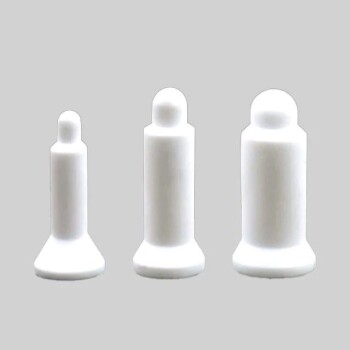
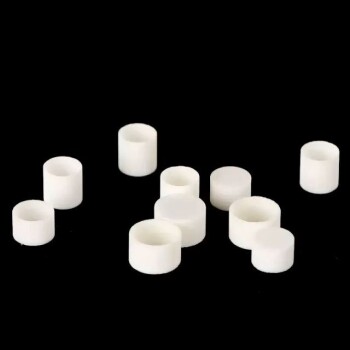
High-purity alumina insulating disks serve as critical electrical isolation barriers within the sputtering system. Their primary function is to physically separate the substrate from the cathode, ensuring the substrate maintains a "floating" electrical potential rather than being grounded or biased.
By maintaining the substrate at a floating potential, alumina disks eliminate plasma irregularities like edge effects and overheating. This stability is essential for achieving a uniform, high-quality Titanium Nitride (TiN) thin film.
The Mechanics of Isolation
Establishing a Floating Potential
The core function of the alumina disk is to break the electrical continuity between the cathode and the substrate. This physical separation prevents the substrate from taking on the cathode's potential.
Creating a Stable Plasma Environment
Instead of being subjected to forced bias, the substrate is held at a floating potential. This state is crucial for regulating how the plasma interacts with the surface during deposition.
Preventing Common Deposition Defects
Eliminating Edge Effects
In many plasma processes, electrical fields concentrate at the sharp corners of the substrate. This phenomenon, known as edge effects, causes uneven deposition rates at the perimeter.
Mitigating Localized Overheating
Without proper isolation, the substrate can suffer from intense, localized heating due to the plasma current. The alumina disk acts as a shield, preventing this thermal damage and protecting the integrity of the growing TiN film.
Ensuring Film Uniformity
Facilitating Diffusive Deposition
By neutralizing electrical irregularities, the disks create a calmer environment for the sputtered species. This allows the Titanium and Nitrogen atoms to deposit onto the surface through natural diffusion.
Achieving Consistent Thickness
The result of this controlled diffusion is a highly uniform film. The thickness and structural quality of the TiN layer remain consistent across the entire surface area of the substrate.
Understanding Operational Criticality
The Importance of Material Purity
The text specifies high-purity alumina for a reason. Any conductive impurities within the ceramic disk could compromise the electrical isolation, leading to a loss of the floating potential and a return of plasma defects.
Reliance on Physical Integrity
Because the process relies on physical separation to prevent overheating, the disk must remain intact. A cracked or compromised disk would fail to prevent localized heating, potentially ruining the substrate.
Making the Right Choice for Your Goal
To maximize the quality of your Titanium Nitride thin films, consider how these disks align with your specific processing needs:
- If your primary focus is film uniformity: Utilize high-purity alumina disks to eliminate edge effects and ensure even deposition across the entire substrate.
- If your primary focus is thermal management: Rely on the electrical isolation of the disk to prevent localized overheating and protect temperature-sensitive substrates.
Proper electrical isolation is the hidden variable that transforms a chaotic plasma process into a precise, high-quality deposition.
Summary Table:
| Key Function | Technical Benefit | Impact on TiN Thin Film |
|---|---|---|
| Electrical Isolation | Establishes a floating potential | Prevents substrate from taking on cathode bias |
| Plasma Stabilization | Eliminates edge effects | Ensures uniform film thickness at perimeters |
| Thermal Management | Mitigates localized overheating | Protects substrate integrity from plasma current |
| Diffusion Control | Facilitates diffusive deposition | Results in consistent structural quality and density |
Elevate Your Thin Film Precision with KINTEK
Achieving the perfect Titanium Nitride (TiN) layer requires more than just high-quality precursors—it demands superior electrical and thermal isolation. KINTEK specializes in high-performance laboratory equipment and precision consumables, including high-purity alumina and ceramic components designed to withstand rigorous sputtering environments.
Whether you are refining battery research, developing advanced semiconductors, or optimizing dental and industrial coatings, our expertise in high-temperature furnaces, PVD/CVD components, and ceramic crucibles ensures your laboratory achieves consistent, reproducible results. Don't let plasma irregularities compromise your research.
Ready to optimize your deposition process? Contact KINTEK today to discover our comprehensive range of high-purity insulating solutions and laboratory equipment!
References
- Natália de Freitas Daudt, Clodomiro Alves. Effect of cage configuration in structural and optical properties of tin films grown by cathodic cage discharge. DOI: 10.1590/s1516-14392013005000065
This article is also based on technical information from Kintek Solution Knowledge Base .
Related Products
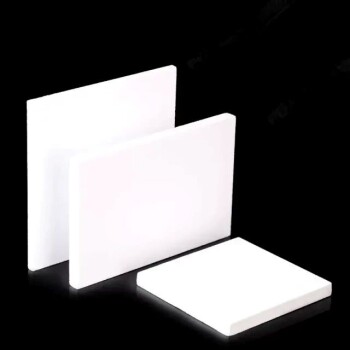
- High Temperature Wear-Resistant Alumina Al2O3 Plate for Engineering Advanced Fine Ceramics
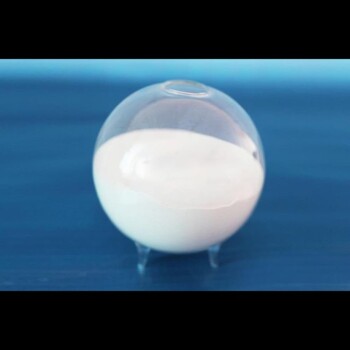
- High Purity Alumina Granulated Powder for Engineering Advanced Fine Ceramics
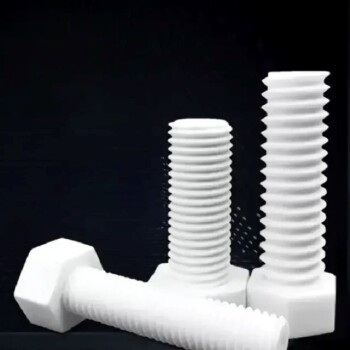
- High Quality Alumina Ceramic Screw for Engineering Advanced Fine Ceramics with High Temperature Resistance and Insulation
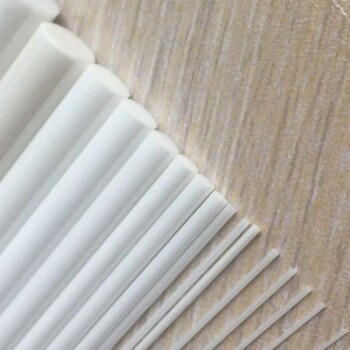
- Engineering Advanced Fine Alumina Al2O3 Ceramic Rod Insulated for Industrial Applications
- High Temperature Alumina (Al2O3) Furnace Tube for Engineering Advanced Fine Ceramics
People Also Ask
- What are the process advantages of selecting an alumina plate for CuO nanofilm synthesis? Achieve Superior Purity
- What function do alumina ceramic plates serve as supports in the preparation of molecular sieve membranes?
- How is alumina ceramic made? A Guide to Manufacturing Methods and Material Properties
- Why use high-purity alumina plates for sintering porous stainless steel? Ensure Purity & Precision
- What is the function of alumina setter plates for LATP? Protect Material Purity & Prevent Adhesion