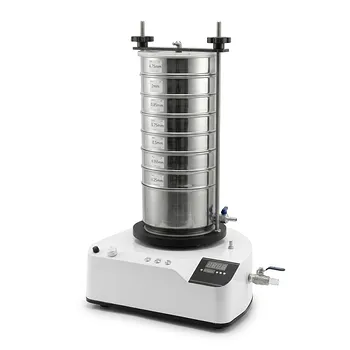
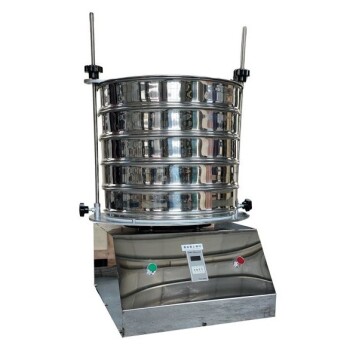
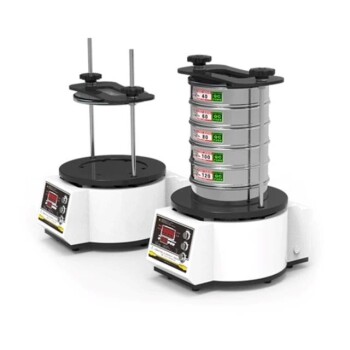
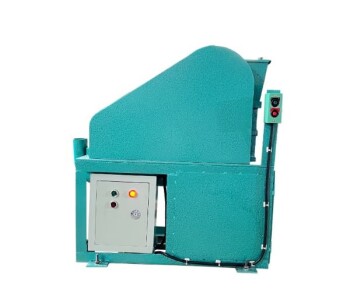
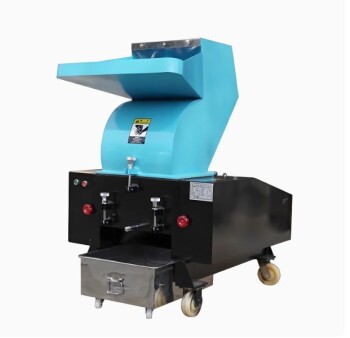
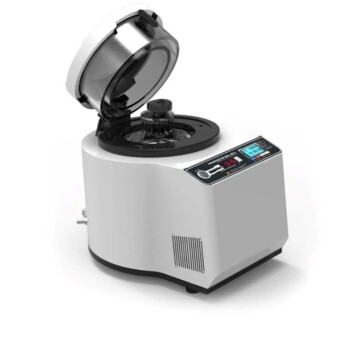
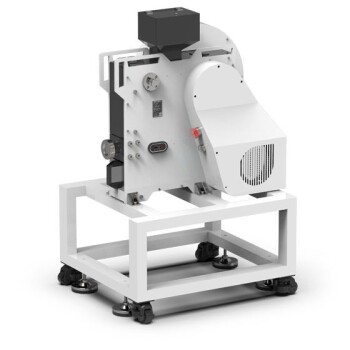
Industrial-grade sieving equipment serves as the primary mechanism for particle size classification in pulverized coal pretreatment. This equipment precisely grades crushed coal into narrow, specific size ranges—such as 53–125 µm or 75–150 µm—to ensure a highly consistent particle size distribution. This consistency is a technical prerequisite for achieving uniform heating rates and minimizing the influence of physical dimensions on volatile release kinetics during downstream processes like pressurized fast pyrolysis.
Core Takeaway: Precise sieving transforms raw crushed coal into a standardized feedstock, eliminating particle size as a variable to ensure that thermal and chemical reactions are driven by the coal's intrinsic properties rather than physical inconsistencies.
Optimizing Thermal and Kinetic Performance
Ensuring Uniform Heating Rates
In thermal processing, different particle sizes absorb heat at different rates, leading to "thermal lag" in larger particles. Sieving ensures that all particles within a batch reach target temperatures simultaneously, which is critical for pressurized fast pyrolysis.
Minimizing Volatile Release Variations
The kinetics of volatile matter release are highly sensitive to the distance gas must travel to escape the particle. By narrowing the size range, sieving minimizes the impact of particle variation on devolatilization data, ensuring more predictable reaction profiles.
Eliminating Internal Temperature Gradients
Larger particles often suffer from internal temperature gradients, where the core is significantly cooler than the surface. High-precision sieving limits the maximum particle diameter, ensuring the entire volume of the coal sample responds uniformly during kinetic modeling.
Enhancing Analytical Reliability and Reproducibility
Achieving Sample Homogeneity
For chemical characterization techniques like CHNS elemental analysis or FTIR spectroscopy, the sample must be representative of the whole. Sieving to fine thresholds (e.g., -212 µm) ensures sample homogeneity and provides the clear spectral responses necessary for accurate measurement.
Improving Experimental Repeatability
In laboratory environments, experimental accuracy depends on the ability to replicate conditions exactly. Precise grading of coal powder ensures that different batches of the same sample will exhibit identical combustion and kinetic characteristics in high-temperature environments.
Standardizing Surface Area for Chemical Reaction
In processes involving chemical activators, such as the production of activated coke, particle size dictates the available surface area. Sieving ensures a uniform specific surface area, which promotes consistent penetration of chemicals and uniform reaction kinetics.
Understanding the Trade-offs and Technical Limits
The Risk of Sieve Blinding and Material Loss
During high-precision sieving, fine coal particles can become lodged in the mesh, a phenomenon known as blinding. This reduces sieving efficiency and can lead to a loss of valuable sample material, particularly when working with limited research quantities.
Potential for Sample Contamination
Mechanical sieving involves prolonged contact between the coal and the metal mesh or cleaning balls. In highly sensitive elemental analyses, there is a minor risk of trace metal contamination or cross-contamination if equipment is not rigorously cleaned between different coal ranks.
Physical Limitations of Dry Sieving
While industrial sieving is effective for many ranges, extremely fine coal powders (below 45 µm) often exhibit agglomeration due to electrostatic forces. In these cases, dry sieving may become inaccurate, potentially requiring specialized ultrasonic or wet-sieving techniques to maintain precision.
How to Apply Grading Strategies to Your Project
Making the Right Choice for Your Goal
- If your primary focus is kinetic modeling or pyrolysis research: Use a narrow sieve fraction (e.g., 40–63 μm) to eliminate internal temperature gradients and ensure uniform heating.
- If your primary focus is chemical activation or impregnation: Grade materials to a slightly broader range (e.g., 75–150 µm) to balance high surface area with the structural integrity required for subsequent activation steps.
- If your primary focus is analytical spectroscopy (FTIR/CHNS): Ensure the entire sample passes through a fine mesh (e.g., -212 µm) to guarantee representativeness and eliminate particle-induced noise in the data.
- If your primary focus is pelletizing or mechanical production: Remove all particles above a specific threshold (e.g., 2 mm) to prevent uneven density distribution and brittle cracks in the final compressed product.
By mastering the precision of your sieving process, you ensure that your coal analysis results are a true reflection of the material's chemistry, unaffected by the noise of physical inconsistency.
Summary Table:
| Key Function | Technical Impact | Recommended Application |
|---|---|---|
| Particle Classification | Eliminates thermal lag and internal temperature gradients. | Kinetic modeling & fast pyrolysis |
| Surface Area Control | Ensures uniform chemical penetration and reaction rates. | Chemical activation & impregnation |
| Sample Homogeneity | Reduces spectral noise and ensures representativeness. | CHNS analysis & FTIR spectroscopy |
| Threshold Removal | Prevents uneven density and brittle cracking. | Pelletizing & mechanical production |
Optimize Your Coal Research with Precision Equipment
Achieving accurate and repeatable coal analysis starts with flawless sample pretreatment. KINTEK specializes in high-performance laboratory solutions designed to eliminate variables and ensure data integrity. Whether you are performing kinetic modeling or chemical characterization, our comprehensive range of equipment supports every stage of your workflow:
- Sample Preparation: High-precision crushing and milling systems, industrial-grade sieving equipment, and hydraulic pellet presses.
- Thermal Processing: Advanced high-temperature furnaces (muffle, tube, vacuum, and CVD) and high-pressure reactors/autoclaves.
- Analytical Support: Durable ceramics, crucibles, and specialized consumables.
Ready to enhance your lab's efficiency and experimental accuracy? Contact our technical experts today to find the perfect equipment configuration for your coal research projects.
References
- Wenda Zhang, Dongdong Feng. Transformation Mechanism of C And N During Rapid Devolatilization of Pulverized Coal Particles Under The Pressurized Active Atmosphere. DOI: 10.2139/ssrn.4385289
This article is also based on technical information from Kintek Solution Knowledge Base .
Related Products
- Three-dimensional electromagnetic sieving instrument
- Laboratory Vibratory Sieve Shaker Machine for Dry and Wet Three-Dimensional Sieving
- Laboratory Test Sieves and Sieving Machines
- Laboratory Test Sieves and Vibratory Sieve Shaker Machine
- Laboratory Wet Three-Dimensional Vibratory Sieve Shaker Machine
People Also Ask
- Why is sieving equipment essential for the classification of processed bio-activated carbon? Optimize Performance
- What are the limitations of sieving? Understanding the Constraints of Particle Size Analysis
- What are advantages and disadvantages of sieving method? A Guide to Reliable & Cost-Effective Particle Sizing
- How is sieving important? The Critical Role of Particle Size Analysis in Quality Control
- What is sieving and how does it work? A Guide to Accurate Particle Size Analysis