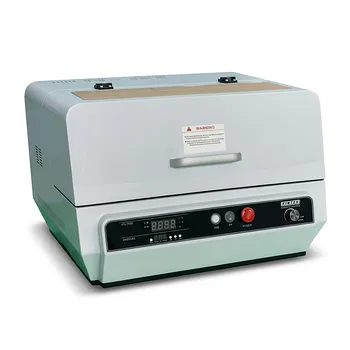
Planetary ball milling is the essential high-energy preparation stage used to forcibly mix and refine raw material powders. In the synthesis of $CaYAlO_4:Eu$, this process reduces the average particle size of precursors like alumina, calcium carbonate, and yttria while increasing their contact surface area. This physical transformation significantly enhances the chemical activity and structural uniformity required for successful high-temperature solid-state reactions.
The primary function of planetary ball milling is to transform coarse raw materials into a high-activity precursor powder. By maximizing particle contact and ensuring uniform dopant distribution, it creates the ideal conditions for forming pure-phase crystals during subsequent heating.
Mechanical Refinement of Precursor Powders
Reduction of Particle Size
Planetary ball milling uses high-energy impact and shear forces to break down the crystalline structure of raw materials like $Al_2O_3$ and $Y_2O_3$. This mechanical action produces finer powders with a significantly higher surface-to-volume ratio. Smaller particles are vital because they provide more sites for chemical reactions to initiate.
Maximizing Contact Surface Area
In solid-state synthesis, reactions occur at the interfaces where different particles touch. By refining the powder, ball milling increases the number of contact points between the calcium, yttrium, and aluminum sources. This high contact area is a prerequisite for the efficient exchange of atoms during the firing process.
Ensuring Uniform Dopant Dispersion
The "Eu" in $CaYAlO_4:Eu$ represents the europium dopant, which must be distributed perfectly throughout the host lattice to ensure high-quality luminescence. High-speed milling prevents local concentration imbalances, ensuring that dopant ions are deeply and uniformly integrated into the precursor mixture.
Enhancing Reaction Kinetics
Shortening Diffusion Distances
Solid-state reactions rely on ions migrating through solid structures, a process that is naturally slow. By reducing particle size to the sub-micron level, ball milling shortens the distance ions must travel to react with one another. This allows the formation of the $CaYAlO_4$ phase to occur more rapidly and completely.
Lowering Reaction Temperatures
Because the milling process increases the chemical activity and stored mechanical energy of the powders, the energy barrier for the reaction is lowered. This often allows the final ceramic phosphor to be synthesized at lower temperatures than would be possible with simple hand-mixing.
Promoting Pure-Phase Formation
A primary challenge in phosphor synthesis is the appearance of unwanted secondary phases. The atomic-level uniformity achieved through planetary ball milling ensures that the chemical components are in the correct stoichiometric ratio at every point in the sample, favoring the growth of pure-phase $CaYAlO_4$ crystals.
Understanding the Trade-offs
Potential for Material Contamination
The high-energy nature of planetary milling can lead to wear and tear of the grinding media, such as zirconia balls or the milling jar itself. If not carefully managed, small amounts of these materials can introduce impurities into the phosphor, potentially quenching its luminescence.
Processing Time and Energy
While effective, planetary ball milling is a time-intensive process that requires significant energy input. Over-milling can also lead to powder agglomeration, where particles begin to fuse together prematurely, potentially hindering the uniformity of the final product.
Applying This to Your Synthesis Goals
How to Apply This to Your Project
To achieve the best results when synthesizing phosphors or similar ceramic materials, tailor your milling strategy to your specific technical requirements.
- If your primary focus is Maximum Luminescence Brightness: Prioritize the uniformity of dopant dispersion through extended milling times to ensure every activator ion is correctly positioned in the host lattice.
- If your primary focus is Phase Purity: Focus on achieving the smallest possible particle size to ensure complete chemical conversion and avoid the formation of intermediate or secondary oxides.
- If your primary focus is Minimizing Impurities: Use high-hardness grinding media like zirconia and consider "wet milling" in a medium like ethanol to reduce friction-based contamination.
By masterfully controlling the mechanical energy of planetary ball milling, you lay the necessary foundation for high-performance optical materials.
Summary Table:
| Key Function | Impact on Synthesis | Primary Benefit |
|---|---|---|
| Particle Refinement | Increases surface-to-volume ratio | Higher chemical activity |
| Dopant Dispersion | Uniform activator distribution | Superior luminescence quality |
| Kinetic Enhancement | Shortens ion diffusion distances | Lower reaction temperatures |
| Stoichiometric Control | Atomic-level precursor mixing | Pure-phase crystal formation |
Elevate Your Phosphor Synthesis with KINTEK
Achieve unparalleled precision in your material science research with KINTEK’s high-energy planetary ball mills and crushing systems. Whether you are optimizing $CaYAlO_4:Eu$ phosphors for maximum brightness or developing advanced technical ceramics, our equipment ensures the exact particle refinement and uniform dopant dispersion required for high-performance results.
Our laboratory portfolio supports your entire workflow:
- Milling & Crushing: Precision planetary ball mills and high-purity grinding media.
- Thermal Processing: High-temperature muffle, tube, and vacuum furnaces for pure-phase sintering.
- Sample Preparation: Hydraulic presses and specialized consumables like alumina and zirconia crucibles.
Ready to enhance your lab's efficiency and material purity? Contact KINTEK experts today for a tailored solution!
References
- Ju Hyun Oh, Seunghun Lee. Influence of Ga Substitution on the Local Structure and Luminescent Properties of Eu-Doped CaYAlO4 Phosphors. DOI: 10.3390/inorganics11080329
This article is also based on technical information from Kintek Solution Knowledge Base .
Related Products
- High Energy Planetary Ball Mill for Laboratory Horizontal Tank Type Milling Machine
- Laboratory Planetary Ball Mill Rotating Ball Milling Machine
- High-Energy Omnidirectional Planetary Ball Mill Milling Machine for Laboratory
- High Energy Planetary Ball Mill Milling Machine for Laboratory
- Laboratory Horizontal Planetary Ball Mill Milling Machine
People Also Ask
- What is the role of a planetary ball mill in sulfide-based solid-state batteries? Engineer High-Performance Cathodes
- What are the parameters of a planetary ball mill? Master Speed, Time, and Media for Perfect Grinding
- What is the function of a planetary ball mill for nanostructured eutectic steel? Essential Prep for High-Strength Alloys
- What role does a planetary ball mill play in the preparation of NASICON-type solid electrolytes like LATP and LAGP?
- What is the function of a planetary ball mill in solid-state electrolyte prep? Milling vs. SDS Methods Explained